 Save to Pinterest
 My neighbor once knocked on my door at 6 PM on a Tuesday, apologizing for the smell of ginger and garlic wafting through our shared wall—turns out she was making these noodles and couldn't stop herself from doubling the recipe. She handed me a bowl still steaming, and I understood immediately why she'd gotten a little obsessed. The sauce clung to each strand like it was meant to be there, and the fresh scallions added this bright snap that made everything feel alive. Now whenever I'm standing at the stove with ginger hitting that hot oil, I think about her grinning apology and make extra to share.
I made this for my partner on a rainy evening when we were both tired and nothing in the fridge felt inspiring, and watching their face light up when they tasted it reminded me that sometimes the best meals aren't complicated—they're just made with attention. There's something about the ritual of slicing scallions and ginger, the precision of it, that turned an ordinary weeknight into something that felt intentional and caring.
Ingredients
- Wheat noodles (350 g): Lo mein works beautifully, but honestly, good ramen or even spaghetti will give you that tender bite you're after—just don't overcook them or they'll turn mushy when you toss them with the hot glaze.
- Neutral oil (4 tbsp): Canola or grapeseed keeps the focus on the aromatics without adding competing flavors, and it heats evenly in the pan.
- Scallions (4, plus 1 for garnish): Splitting the white and green parts matters more than you'd think—the whites go in early for depth, the greens finish things off for brightness and texture.
- Fresh ginger (2 tbsp, minced): This is where the soul of the dish lives, so use fresh and mince it fine so it releases its oils into the oil and coats every noodle.
- Garlic cloves (2, minced): Freshly minced garlic will perfume your kitchen within seconds of hitting the hot oil, signaling that something delicious is happening.
- Red chili (1 small, optional): If you like gentle heat, include this; if you want more punch, add a second one or drizzle with chili oil at the end.
- Soy sauce (4 tbsp): This is your base umami, so use one you actually enjoy tasting straight from a spoon.
- Dark soy sauce (1 tbsp, optional): It deepens the color and adds a slight sweetness that rounds out the glaze beautifully.
- Oyster sauce (1 tbsp): The secret ingredient that adds body and complexity—use vegan oyster sauce if you're keeping this plant-based.
- Brown sugar (1 tbsp): A touch of sweetness balances the saltiness and coats the noodles like a gentle gloss.
- Rice vinegar (1 tbsp): Just enough acidity to lift the flavors and prevent the dish from tasting flat or one-dimensional.
- Toasted sesame oil (1 tsp): A small amount goes a long way—this is for drizzling, not drenching, so it adds fragrance without overwhelming.
- Water (2 tbsp): This helps the glaze coat evenly and prevents it from reducing too much before the noodles are fully dressed.
- Toasted sesame seeds (1 tsp): Sprinkle these right before serving for a nutty crunch that grounds the dish.
- Fresh cilantro (optional): If you have it, a small handful scattered on top adds an herbal note that feels almost celebratory.
Tired of Takeout? 🥡
Get 10 meals you can make faster than delivery arrives. Seriously.
One email. No spam. Unsubscribe anytime.
Instructions
- Boil the noodles until they're just tender:
- Follow the package timing but taste them a minute before it says they're done—you want them yielding but with a tiny bit of resistance still there. Drain them quickly, then rinse under cold water for just a few seconds to stop the cooking and wash away excess starch so they don't clump together.
- Mix your glaze while the noodles cook:
- Whisk together all those soy, oyster, sugar, and vinegar components in a small bowl and leave it waiting—this prep step means you won't be fumbling with bottles while everything's hot and fragrant in the pan.
- Heat oil and toast the aromatics:
- Warm your oil over medium heat, then add the white scallion parts along with the minced ginger, garlic, and chili if you're using it. Stir constantly for about a minute until the whole kitchen smells like an Asian restaurant and the mixture looks slightly golden but not at all brown—you want fragrance, not bitterness.
- Bring the noodles into the pan:
- Add your drained noodles to the skillet and toss them through the hot aromatics for a minute or so, letting them absorb those flavors directly from the oil.
- Pour in the glaze and toss everything together:
- Add your prepared soy mixture all at once and keep tossing for 2 to 3 minutes—the glaze will bubble slightly, coat every strand, and the noodles will glisten. You'll smell the sesame oil warming through and know you're close.
- Finish with fresh elements:
- Remove the pan from heat, scatter the green scallion parts over everything, and give it one final gentle toss so they stay bright and don't wilt too much from the residual heat.
- Plate and garnish immediately:
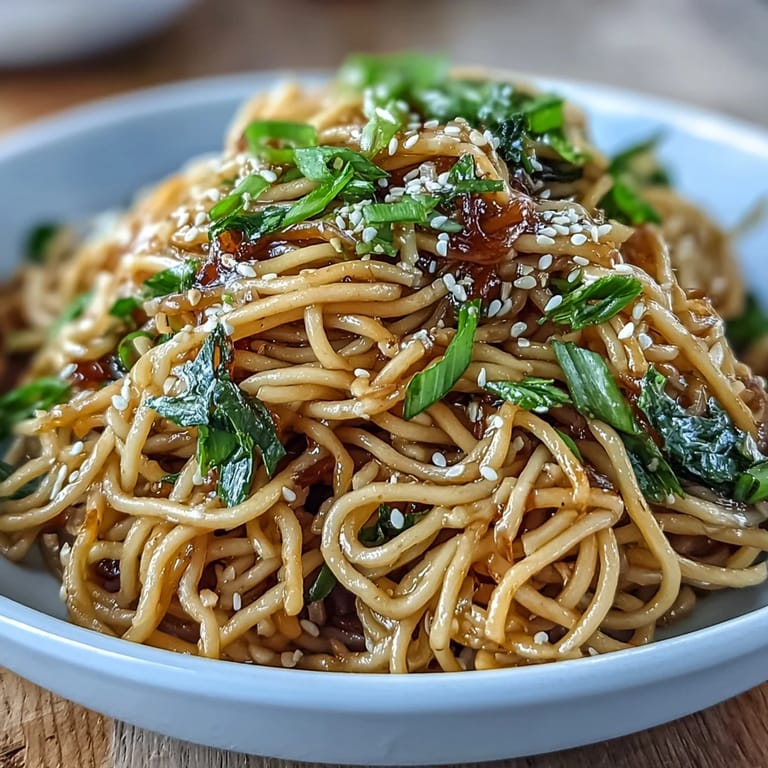
- Divide among bowls while everything is still steaming, top with sesame seeds and extra scallion greens, and serve right away so the noodles stay tender and the aromatics stay alive.
 Save to Pinterest
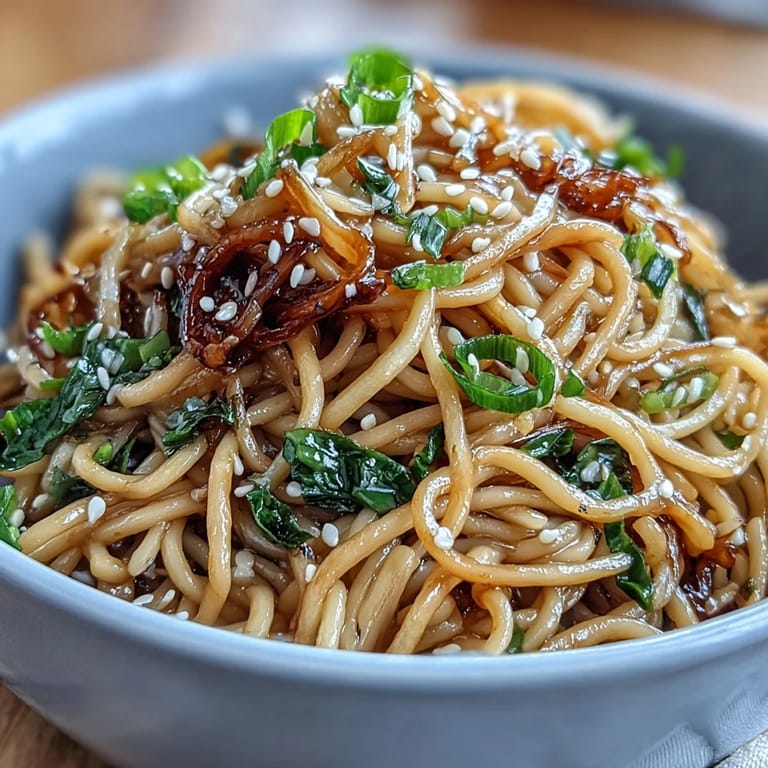
 There's a moment right after you toss in that glaze when you realize every single strand is coated and shimmering, and that's the moment this stops being just dinner and becomes a small victory. My sister called it my signature dish after I made it once, which was silly, but also somehow perfect because it felt personal in a way that mattered.
Building Flavor Without Fussiness
What makes these noodles work is respecting the order of operations and understanding why each step exists. The aromatics hitting hot oil creates a foundation of flavor that regular cold sauce never could, and the glaze coating warm noodles means every bite tastes deliberate instead of like a pile of noodles with sauce on top. It's not complicated technique—it's just attention to what's happening in the pan.
Variations That Actually Work
I've made these noodles at least twenty different ways, and they've never disappointed. Roasted mushrooms add umami depth, shredded carrots bring sweetness and color, bok choy wilts into the heat at the last second, and snap peas give you crunch if you add them raw as a garnish. You could also stir in a beaten egg at the end for richness, or toss with tofu that you've pressed and pan-fried until golden. The glaze is forgiving enough that it carries whatever you add to it.
Making This Meal Your Own
The beauty of this recipe is how it invites you to make it yours without requiring you to be a good cook, just someone willing to taste as they go. If you like things spicier, don't hold back on the chili—add two, or drizzle with chili oil at the end until it's got the heat you want. If you prefer it sweeter, add an extra half tablespoon of brown sugar to the glaze.
- Pickled cucumbers or kimchi on the side cuts through the richness and adds a brightness that feels necessary.
- A drizzle of extra sesame oil over the top at the very end adds a final whisper of fragrance that elevates the whole thing.
- Don't be afraid to cook this for two people instead of four—the ratio stays exactly the same, you just make less.
 Save to Pinterest
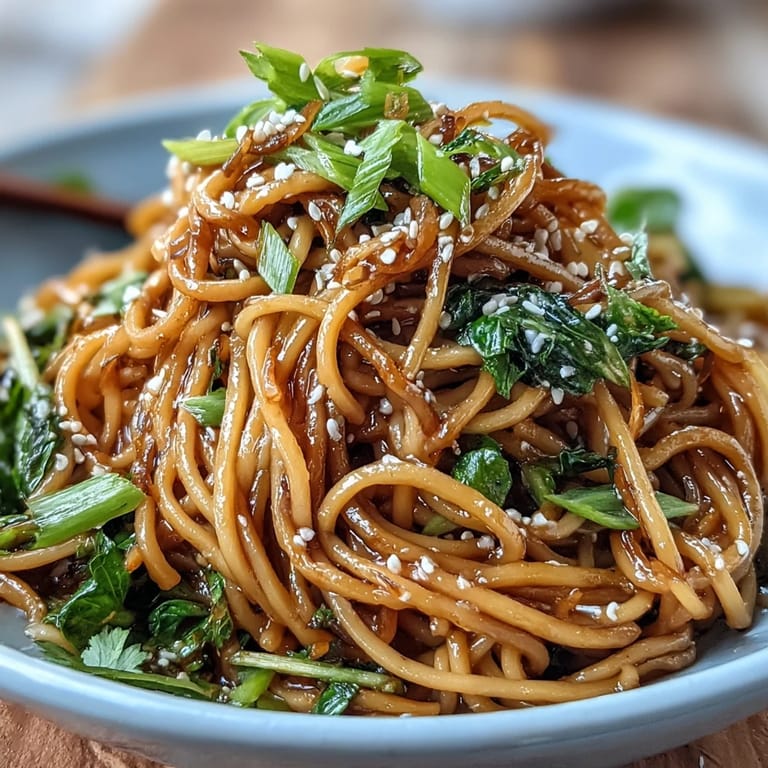
 Every time I make these noodles, I remember why simple dishes matter—because when you get the fundamentals right, everything else falls into place. There's something deeply satisfying about a meal that tastes like it took hours but took you half that time instead.
Recipe FAQs
- → What type of noodles work best?
Wheat noodles like lo mein, ramen, or spaghetti hold the sauce well and provide the right texture for this dish.
- → Can I make this dish vegan?
Yes, substitute oyster sauce with vegan oyster sauce or extra soy sauce to keep it plant-based.
- → How do I add extra vegetables?
Sautéed mushrooms, shredded carrots, bok choy, or snap peas can be added for more color and nutrients.
- → Is the soy glaze sweet or savory?
The glaze balances savory soy sauce with a hint of brown sugar sweetness and a touch of acidity from rice vinegar.
- → What garnishes complement this dish?
Toasted sesame seeds, thinly sliced scallion greens, and fresh cilantro add crunch and fresh flavor.