 Save to Pinterest
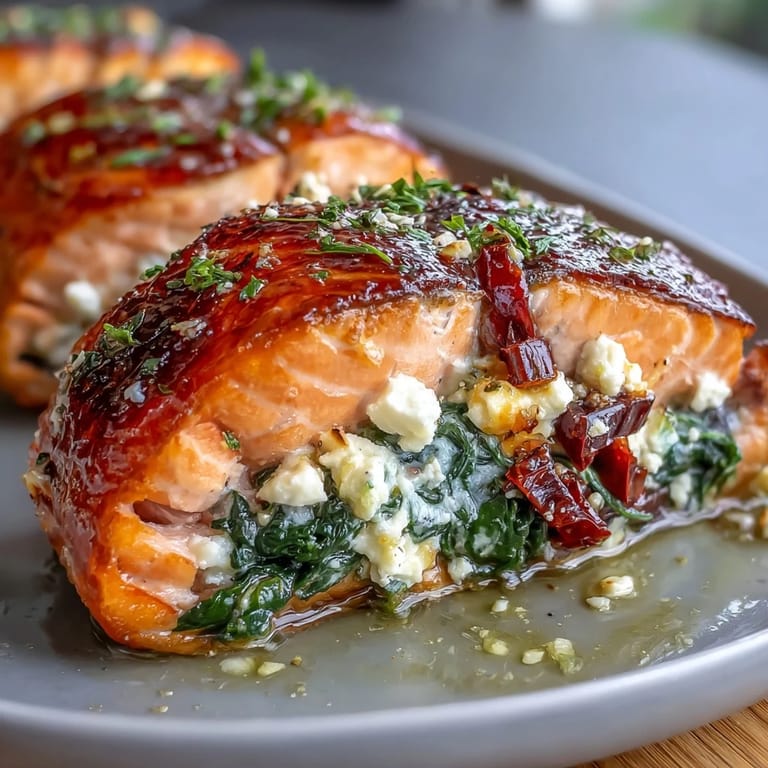
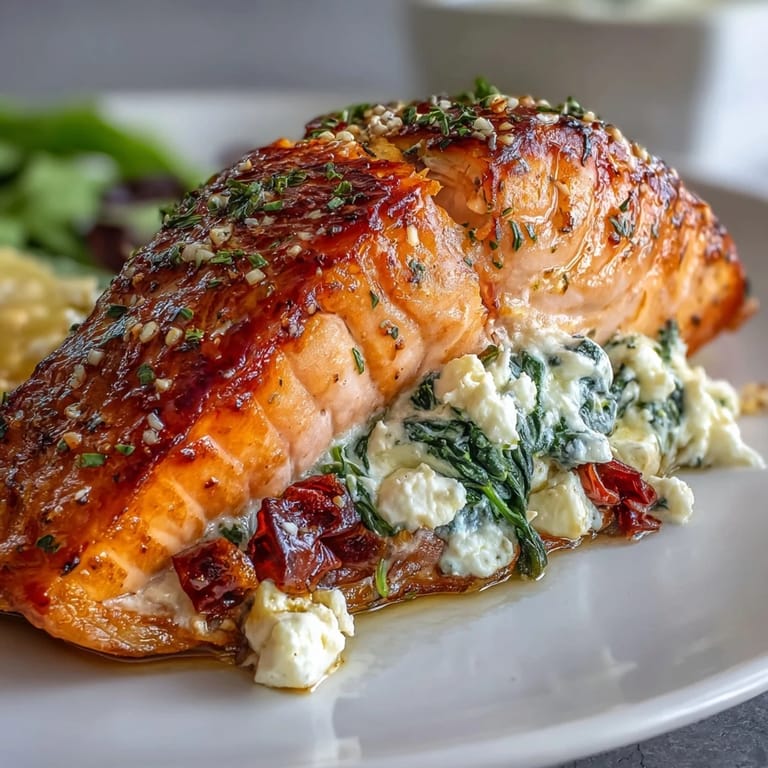
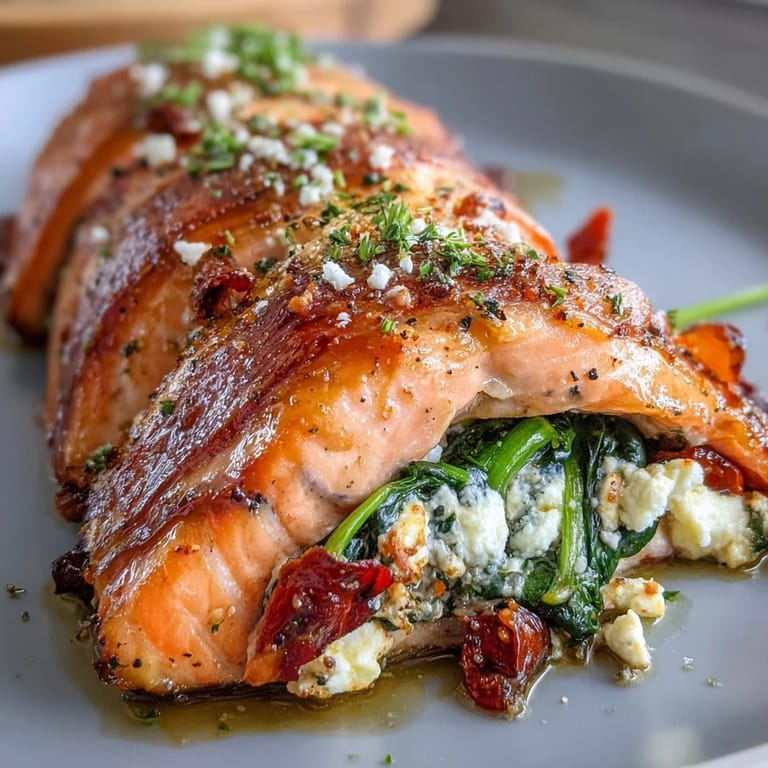
 There's something about watching salmon transform in the oven that never gets old—that moment when you crack open the door and the kitchen fills with the smell of roasted fish and melted cheese. I stumbled onto this stuffed version during a weeknight when I had spinach going soft in the crisper and a block of feta begging to be used. What started as an improvisation became the dinner I now make whenever I want to feel like I'm doing something fancy without the fuss. The pockets hide all these bright Mediterranean flavors inside, so every bite feels like a little surprise.
I made this for my neighbor once after she mentioned she was tired of plain chicken, and she literally asked for the recipe before finishing her plate. That's when I realized this dish had crossed from weeknight shortcut into something people actually want to eat again and again. Now whenever someone says they're bored with salmon, this is my go-to answer.
Ingredients
- Salmon fillets (4, about 6 oz each): Look for fillets that are roughly the same thickness so they cook evenly; skin-on adds flavor and helps hold the pocket together.
- Olive oil (3.5 tbsp total): Use a good quality oil you'd actually drizzle on bread—it makes a real difference in taste and helps everything cook gently.
- Fresh spinach (4 cups): If using frozen, squeeze it dry between paper towels or the filling will be watery and the salmon will release too much moisture during baking.
- Feta cheese (6 oz, crumbled): The salty, tangy backbone of the filling; don't skip it or try to substitute with something mild.
- Parmesan cheese (1/3 cup, grated): Adds depth and helps the filling hold together as it bakes.
- Roasted red peppers (1/4 cup, chopped): Buy them jarred to save time; they bring sweetness that balances the salty cheese.
- Italian seasoning, paprika, cayenne (1 tsp, 1/2 tsp, 1 pinch): These spices wake up the spinach and hint at Mediterranean warmth without overpowering the delicate fish.
- Garlic powder (1/2 tsp): Fresh garlic can burn in the filling if it sits on the hot baking sheet, so powder is actually the smarter choice here.
- Salt and black pepper: Season generously at each stage rather than trying to fix it at the end.
Tired of Takeout? 🥡
Get 10 meals you can make faster than delivery arrives. Seriously.
One email. No spam. Unsubscribe anytime.
Instructions
- Get your oven ready and prep the salmon:
- Heat your oven to 400°F and line a baking sheet with parchment paper if you have it (it makes cleanup easier, but a light oil coating works fine too). Pat your salmon fillets completely dry with paper towels—this helps them brown and keeps the pocket from getting soggy. Lay them skin-side down on the baking sheet, leaving a little space between each one so heat can circulate.
- Cut the pockets with a steady hand:
- Using a sharp knife, slice lengthwise into the thickest part of each fillet, angling the blade to go about three-quarters of the way through without hitting the skin or cutting all the way through. This takes a gentle touch, so go slowly and let the knife do the work rather than forcing it.
- Sauté the spinach until it's completely dry:
- Heat 1 tablespoon of olive oil in a skillet over medium heat, then add your spinach along with the Italian seasoning, paprika, cayenne, salt, and pepper. Stir it around for 2 to 3 minutes until it's wilted and any moisture has evaporated—if it stays wet, the filling will make your salmon release too much liquid. Remove from heat and let it cool slightly while you work on the salmon.
- Mix the filling and let it cool:
- Stir the crumbled feta, grated Parmesan, chopped roasted peppers, and garlic powder into the spinach until everything is evenly distributed. Taste it and adjust salt and pepper if needed, then set it aside to cool just enough that it won't shock the salmon when you stuff it.
- Season the salmon and stuff the pockets:
- Brush both the outside and inside of each fillet with the remaining 1.5 tablespoons of olive oil, then season generously with salt and black pepper. Using a spoon, gently divide the filling among the four pockets, spooning it in carefully and leaving just a tiny bit of space at the edges so it doesn't spill out during baking.
- Bake until the salmon flakes easily:
- Slide the baking sheet into your 400°F oven and bake for 12 to 17 minutes depending on how thick your fillets are. The salmon is done when it flakes apart easily with a fork and reaches an internal temperature of 145°F if you're using a thermometer.
- Rest and serve:
- Remove from the oven and let each fillet rest on the baking sheet for 2 minutes—this keeps the fish tender and gives the filling time to set. Transfer to your plates and serve immediately with lemon wedges or fresh dill if you want to add extra brightness.
 Save to Pinterest
 There was a moment last spring when I served this to my family and everyone went quiet for a second, just eating. That kind of quiet where nobody's thinking about their phone or the day they had—just present and satisfied. That's what made me realize this recipe is worth keeping around.
How to Know When It's Perfectly Cooked
The most reliable sign is when the thickest part of the fillet flakes into tender, opaque pieces when you press a fork to it. If it's still translucent or resists breaking apart, give it another 2 minutes and check again. Overcooked salmon becomes dry and mealy, so better to be slightly cautious and use that instant-read thermometer at 145°F as your safety net. The carry-over heat will continue cooking it slightly as it rests, so pull it out a hair before it feels completely done.
Why Parchment Paper Actually Matters Here
Using parchment paper isn't just about cleanup, though that's nice. It creates a gentle buffer between the direct heat of the baking sheet and the delicate bottom of the salmon, so the skin doesn't stick or cook unevenly. If you don't have parchment, a light coating of oil works, but you'll need to watch it more carefully and maybe loosen it with a spatula halfway through baking. I learned to keep a box of parchment in the kitchen after several salmon filets refused to leave the pan—now I treat it like an essential tool, not an optional step.
Make It Your Own and Store Leftovers
This recipe is forgiving enough to swap ingredients without losing its soul. If you're out of red peppers, roasted zucchini or sun-dried tomatoes work beautifully. Goat cheese can replace feta for a tangier vibe, or you can use ricotta if feta feels too sharp. Leftover stuffed salmon keeps in an airtight container in the fridge for up to 2 days and tastes just as good cold as it does warm—I've eaten leftovers straight from the container more times than I care to admit.
- Fresh dill or lemon zest scattered over the finished fish adds brightness that makes people think you tried way harder than you did.
- Serve alongside a crisp arugula salad or roasted potatoes to round out the meal without any extra cooking.
- This dish freezes well before baking if you want to prep ahead; just add a few extra minutes to the baking time straight from the freezer.
 Save to Pinterest
 This salmon has become my secret weapon for nights when I want to feel capable and creative without spending an hour in the kitchen. It's proof that simple ingredients and a little care turn into something worth remembering.
Recipe FAQs
- → How do you prepare the spinach filling for the salmon?
Sauté fresh or thawed spinach with Italian seasoning, paprika, cayenne, salt, and pepper until wilted and dry. Then mix in crumbled feta, grated Parmesan, roasted red peppers, and garlic powder before filling the salmon pockets.
- → What is the best way to stuff salmon fillets?
Cut a lengthwise pocket in each fillet without cutting through. Fill gently with the prepared spinach and cheese mixture, leaving some space at the edges to prevent overflow during baking.
- → How long should the salmon be baked?
Bake salmon fillets at 400°F (200°C) for 12 to 17 minutes, depending on thickness, until the fish flakes easily and reaches an internal temperature of 145°F (63°C).
- → Can I substitute any ingredients in the filling?
Yes, goat cheese can replace feta for a different tangy flavor. You can also adjust seasoning or add fresh herbs like dill or lemon zest for added brightness.
- → What sides pair well with this salmon dish?
Serve alongside lemon wedges, crisp salad greens, or roasted potatoes for a complete and balanced meal.
- → How should leftovers be stored?
Refrigerate leftovers in an airtight container for up to 2 days. Reheat gently to maintain texture and flavor.