 Save to Pinterest
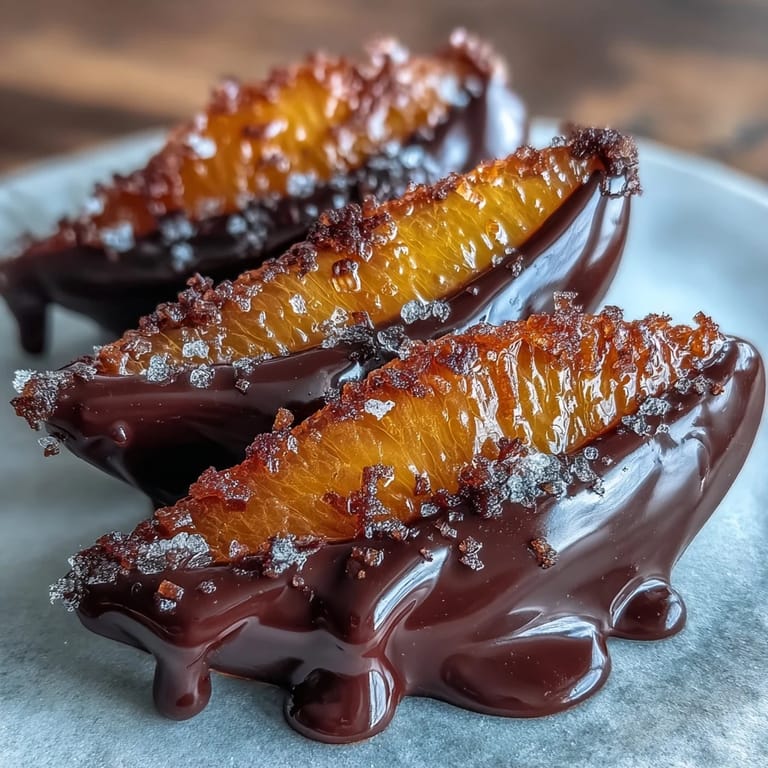
 My neighbor brought over a box of candied orange peels dipped in dark chocolate on a gray November afternoon, and I remember thinking how something so simple could taste like pure luxury. The way the bittersweet chocolate cracked between my teeth, giving way to that tender, jewel-like peel underneath, felt like a small edible secret. That visit sparked an obsession—I had to learn how to make them myself, and now I understand why she guards this recipe so carefully.
Last winter, I made three batches to give away during the holidays, and my friend Sarah texted me a photo of hers arranged on a ceramic plate with fresh mint. She said her mother-in-law asked for the recipe twice. That moment felt better than any compliment about my cooking could ever feel.
Ingredients
- 4 large organic oranges: The peel is your main character here, so choose ones with thick, unblemished skin and that bright fragrance that fills your kitchen the moment you cut into them.
- 2 cups granulated sugar: This builds the syrup that transforms tough peel into tender candy, and you'll want regular granulated sugar, not anything fancy.
- 1 cup water: The base for your candying liquid, keeping everything gentle and even as the peels soften.
- 7 oz high-quality dark chocolate (70% cocoa or higher): Don't skimp here—this final coat deserves chocolate you'd actually enjoy eating on its own, because that's essentially what you're doing.
- Extra granulated sugar, optional: A sparkly finish that catches the light and reminds you this is meant to be savored, not rushed.
Tired of Takeout? 🥡
Get 10 meals you can make faster than delivery arrives. Seriously.
One email. No spam. Unsubscribe anytime.
Instructions
- Get your oranges ready:
- Wash them under warm water and dry them completely—any lingering moisture will get in your way. Score the peel into quarters with a sharp knife, then gently peel away the rind, trying to keep as much white pith attached as you can, because that's what gives the finished candy its pleasant chew.
- Slice into ribbons:
- Cut the peels lengthwise into strips about 1/4-inch wide—think of the width of a shoelace. Consistency matters here because thinner strips cook faster and thicker ones stay chewier.
- Blanch away the bitterness:
- Place your strips in a pot, cover with cold water, bring to a boil, then drain. Do this three times total—it sounds like a lot, but each boil mellows the harsh bite that raw orange peel carries. You'll notice the water gets clearer each round.
- Make the candying syrup:
- In a clean saucepan, combine 2 cups sugar and 1 cup water over medium heat, stirring gently until the sugar dissolves completely. When it's clear and smooth, you're ready to add the peels.
- Simmer gently to perfection:
- Add the blanched peels to the syrup and reduce the heat to low—this is where patience becomes your best tool. Let them simmer for 45 to 60 minutes, stirring occasionally, until they turn translucent and bend easily without snapping. The syrup should stay pale gold, never turning dark or caramelizing.
- Dry them properly:
- Using tongs or a slotted spoon, transfer each peel to a wire rack set over parchment paper and let them sit undisturbed for at least an hour. You want them dry enough that they don't stick to your fingers, but still tender when you bend them gently.
- Optional sugar coating:
- If you want that extra sparkle, toss the dried peels in granulated sugar while they're still barely warm—it adheres better and catches the light beautifully.
- Melt the chocolate carefully:
- Set a heatproof bowl over a pot of barely simmering water (the bowl shouldn't touch the water), and add your chopped dark chocolate. Stir it slowly as it melts into a glossy, smooth pool—this gentle heat keeps it from becoming grainy or bitter.
- Dip with intention:
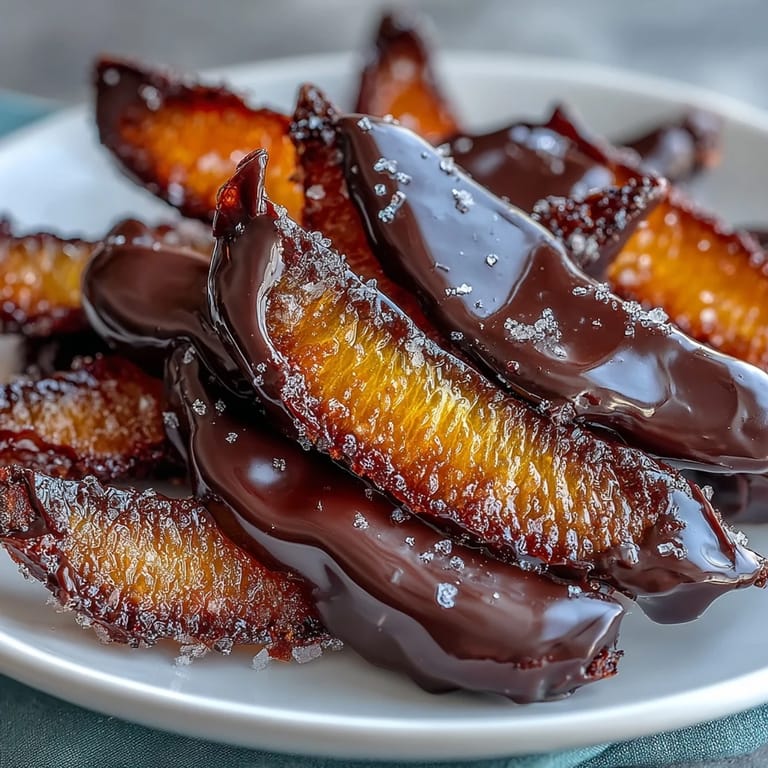
- Hold each candied peel at one end and dip it halfway into the melted chocolate, letting the excess drip off back into the bowl. Place it on fresh parchment paper and let the chocolate set completely, which takes about 30 minutes at room temperature or 10 minutes in the refrigerator if you're impatient like me.
- Store and savor:
- Once fully set, transfer them to an airtight container at room temperature where they'll keep for up to two weeks, though honestly they rarely last that long in my house.
 Save to Pinterest
 My daughter came home from school and caught me arranging the finished candies in a mason jar, and she asked if she could have one right then instead of waiting for her friend's birthday gift. I handed her one, and watching her eyes light up at that first taste—the crunch of the chocolate, the tender chew of the peel—reminded me that the best kitchen moments are often the unplanned ones.
Why Dark Chocolate Matters
The cocoa percentage in your chocolate determines how it plays with the sweetness of the candied peel. Too low and it tastes cloying; too high and it can overwhelm the delicate orange flavor. Seventy percent cocoa is the sweet spot where both flavors get to shine equally, but if you prefer something less intense, 65% works beautifully too. I've experimented with several brands, and there's genuinely a difference in how smooth they melt and how satisfied you feel after eating one.
The Secret to Transparent Peels
The magic happens during that long, gentle simmer when the peels gradually surrender their structure and become glass-like and yielding. This isn't something you can rush—turning up the heat will only make them tough and cloudy. The lower the temperature, the slower the process, and the more beautiful your finished candy. I learned this by watching the peels transform gradually rather than aggressively, and now I see why patience is the actual main ingredient in this recipe.
Storage and Gifting Ideas
These candies live longest in an airtight container at room temperature, and they actually taste even better after sitting for a day or two because the flavors meld together. They're stunning piled into a small jar, wrapped in tissue paper, or arranged on a slate board with sea salt flakes scattered around them.
- Pair them with a handwritten note about why you made them, because the story behind homemade food matters more than the food itself.
- Store them away from heat and direct sunlight so the chocolate doesn't bloom (that whitish film that appears when chocolate gets warm then cold again).
- If someone's allergic to soy, double-check your chocolate label because many brands include soy lecithin as an emulsifier.
 Save to Pinterest
 These candied orange peels are proof that the most elegant things often come from the simplest ingredients and a willingness to slow down. Make them on a quiet afternoon, and they'll remind you why cooking for people you care about feels like love in edible form.
Recipe FAQs
- → How do I reduce bitterness in orange peels?
Blanch the sliced orange peels by boiling them three times in fresh water, draining each time, to mellow the bitterness effectively before candying.
- → What type of chocolate works best for coating?
Use high-quality dark chocolate with 70% cocoa or higher for a rich and smooth coating that complements the citrus flavors.
- → Can I add extra flavor to the candying syrup?
Yes, adding spices like cinnamon sticks or cloves during simmering enhances aromatic depth; just remove them before drying the peels.
- → How should I dry the candied peels before dipping?
Place the simmered peels on a wire rack over parchment paper and let them dry for at least one hour until they lose stickiness, ensuring optimal chocolate adhesion.
- → How long do the chocolate-covered peels keep fresh?
Store in an airtight container at room temperature, where they maintain freshness and flavor for up to two weeks.
- → Can I substitute dark chocolate with other types?
Yes, you may use milk or white chocolate if preferred, adjusting for dietary preferences and sweetness levels accordingly.