 Save to Pinterest
 The first time I made Fall Minestrone was during a weekend when the leaves outside my kitchen window had just begun changing colors. I had come home from the farmers market with a butternut squash so perfect it seemed to glow. The crisp autumn air had left my cheeks flushed, and nothing seemed more fitting than a steaming pot of something that would fill my home with warmth and the earthy fragrance of herbs and vegetables simmering together.
Last October, my neighbor knocked on my door after losing power during a windstorm. I invited her in for a bowl of this minestrone that happened to be simmering on my stove. We ended up sharing stories by candlelight, steam rising from our bowls, the soup warming us as the temperature dropped outside. She asked for the recipe before leaving, and now our families trade soup containers back and forth when either of us makes a batch.
Ingredients
- Pancetta: These little cubes of cured pork belly render down to create a flavor foundation that elevates the entire soup, but save some crispy bits for topping each bowl.
- Butternut Squash: Choose one that feels heavy for its size, as these tend to have the sweetest, most concentrated flavor that balances beautifully with the savory elements.
- Kale: Remove those tough stems completely or your soup experience will be interrupted by chewy bits that never quite soften enough.
- Ditalini Pasta: These tiny tubes catch broth inside them, creating little flavor bombs in each bite, though any small pasta shape works wonderfully.
- White Beans: Cannellini beans hold their shape while still being creamy inside, adding both texture and protein to make this soup truly satisfying.
Tired of Takeout? 🥡
Get 10 meals you can make faster than delivery arrives. Seriously.
One email. No spam. Unsubscribe anytime.
Instructions
- Build Your Flavor Base:
- Heat that olive oil until it shimmers before adding your diced pancetta, letting it render and crisp up until the kitchen fills with its irresistible aroma. Set those crispy bits aside with a slotted spoon, leaving all that flavorful fat in the pot.
- Create Your Soffritto:
- Add your diced onion, carrot and celery to the pancetta fat, letting them slowly soften and release their aromatics. This trio forms the backbone of flavor that makes Italian soups so incredibly comforting.
- Introduce the Squash:
- When you add the butternut squash and garlic, youll notice the pot beginning to smell like autumn itself. Let them mingle for just two minutes until the garlic becomes fragrant but doesnt brown.
- Build Your Broth:
- As the tomatoes, beans, broth and herbs join the party, the liquid will take on a beautiful golden-red hue. Let everything simmer gently until you can easily pierce the squash with a fork.
- Finish With Freshness:
- The kale and pasta go in last, maintaining their texture and color. Watch carefully during this final cooking stage to ensure the pasta reaches that perfect al dente texture.
- Serve With Style:
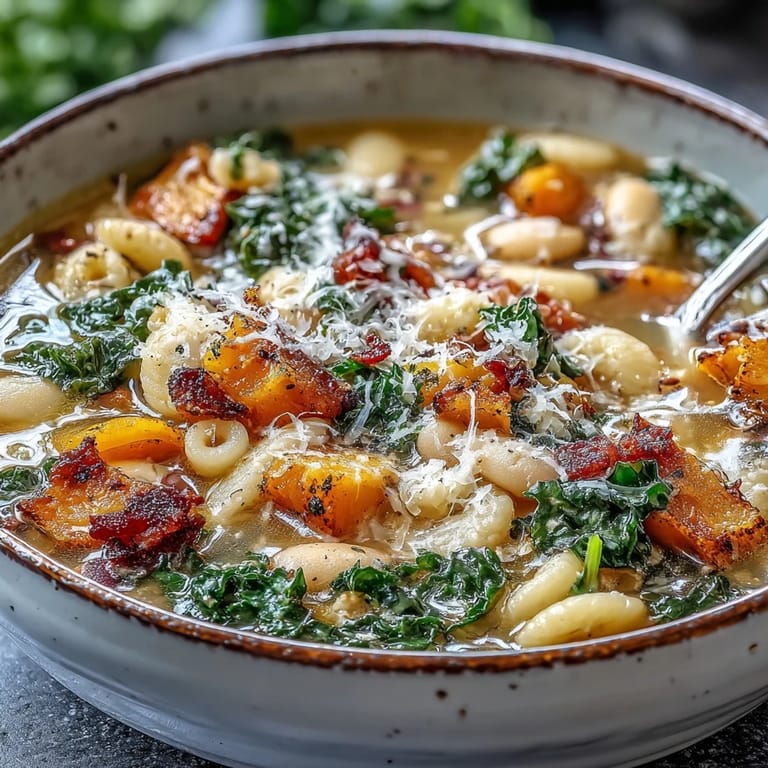
- Each bowl deserves that finishing touch of crispy pancetta, fresh herbs, and a snow-like dusting of Parmesan. The cheese will melt slightly into the hot soup, creating little pockets of savory richness.
 Save to Pinterest
 During my daughters first semester of college, she called homesick one evening as the weather turned cold. I described making this soup step by step over the phone while she followed along in her tiny apartment kitchen. The shared cooking experience bridged the miles between us, and now whenever she makes it, she says its like having a hug from home in a bowl.
Seasonal Adaptations
While butternut squash makes this a quintessential fall soup, Ive discovered this recipe transforms beautifully with the seasons. Spring calls for tender asparagus and peas, summer welcomes zucchini and fresh tomatoes, and winter embraces root vegetables like turnips and parsnips. The technique remains the same, but the character shifts with whatever the farmers market offers that week.
Making It Ahead
During particularly busy weeks, I often prep all the vegetables the night before and store them in separate containers in the refrigerator. This simple step saves nearly twenty minutes of cooking time and makes the difference between actually making the soup versus ordering takeout. I also find chopping vegetables with music playing and a glass of wine nearby turns meal prep into a moment of mindfulness rather than a chore.
Serving Suggestions
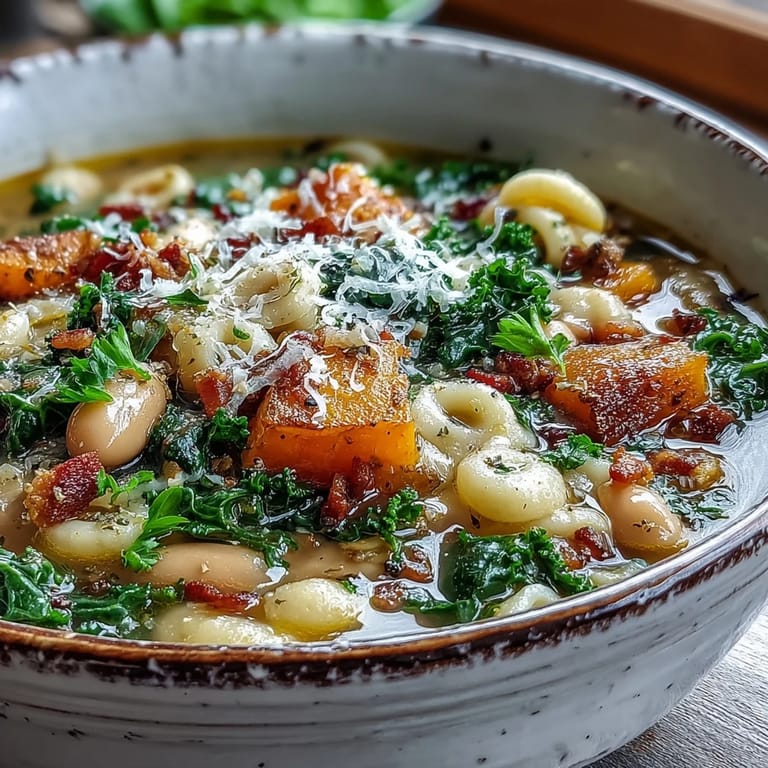
This soup creates a moment of comfort that extends beyond the bowl itself. Ive served it in mugs on the porch watching autumn rainstorms, in deep bowls alongside a simple arugula salad dressed with lemon and olive oil, and in shallow wide bowls where a thick slice of garlic-rubbed toasted sourdough can partially submerge in the broth.
- For an impromptu gathering, set out small bowls of extra toppings like red pepper flakes, extra virgin olive oil, and fresh herbs so guests can customize their portions.
- A simple wine pairing elevates the experience, with a medium-bodied red like Chianti or Barbera complementing the soups depth without overwhelming it.
- Remember to serve with spoons large enough to capture all the components in a single bite, as the magic is in experiencing all the textures and flavors together.
 Save to Pinterest
 This fall minestrone isnt just a meal, its an experience that engages all your senses from the first aromatic simmer to the final spoonful. As temperatures drop and schedules fill, having this recipe in your collection means youre never more than an hour away from something truly nourishing for both body and spirit.
Recipe FAQs
- → Can I make this vegetarian?
Yes, simply omit the pancetta and use vegetable broth instead of chicken broth. Add a pinch of smoked paprika to maintain that savory depth.
- → What pasta works best?
Ditalini is traditional, but any small pasta shape like shells, elbows, or small macaroni works wonderfully. Just adjust cooking time based on package directions.
- → How long does this keep?
Stored in an airtight container, the soup keeps well for 4-5 days in the refrigerator. The pasta will absorb more liquid over time, so you may need to add extra broth when reheating.
- → Can I freeze this?
For best results, freeze without the pasta. Cook and add fresh pasta when reheating. The soup freezes well for up to 3 months.
- → What can I substitute for kale?
Swiss chard, spinach, or chopped escarole all work beautifully. Add delicate greens like spinach in the last 2-3 minutes of cooking to prevent wilting.