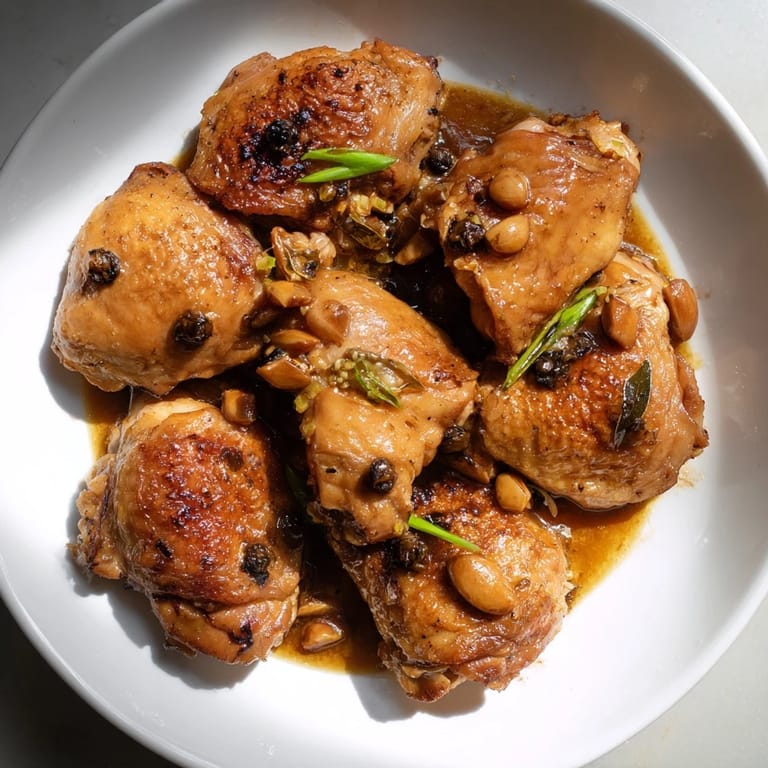
 Save to Pinterest
 The first time my tita handed me a bowl of chicken adobo still steaming from the pot, I didn't understand why she was so protective of her technique—until I tasted it. That savory-tangy balance, the way the chicken practically melted off the bone, the dark glossy sauce that clung to every piece... it made sense. Years later, I finally asked for her method, and what she shared was this: the magic isn't in any single ingredient, it's in patience and the willingness to let vinegar and soy sauce do their quiet work.
I cooked this for my roommate during a particularly rough week, and watching her eat in silence before asking for seconds—that's when I knew this dish was something to keep close. It's the kind of food that doesn't need conversation to say everything.
Ingredients
- Bone-in, skin-on chicken thighs and drumsticks (1.5 lbs): These cuts have enough fat and connective tissue to become tender rather than dry, and the bones add real depth to the braising liquid.
- Soy sauce (1/3 cup): The backbone of adobo—use full-sodium if you can, as it carries the savory weight this dish needs.
- Cane vinegar or white vinegar (1/3 cup): Cane vinegar is traditional and mellower, but white vinegar works if that's what you have; either way, it's what makes this dish sing.
- Garlic (6 cloves, smashed): Smashing rather than mincing releases the garlic's oils more generously into the braising liquid.
- Bay leaves (2): They quietly deepen the flavor without announcing themselves; don't skip them.
- Black peppercorns (1 teaspoon whole): Whole peppercorns stay milder and more nuanced than ground pepper, which can turn bitter if overcooked.
- Brown sugar (1 tablespoon, optional): A small amount rounds out the sharp edges of vinegar without making the dish sweet; I add it almost every time.
- Water (1/2 cup): This dilutes the salt just enough so the sauce is savory but not overwhelming.
- Cooking oil (2 tablespoons): Use something neutral that can handle heat—vegetable or canola work fine.
- Steamed white rice and scallions: Rice catches the sauce; scallions add a bright note at the end.
Tired of Takeout? 🥡
Get 10 meals you can make faster than delivery arrives. Seriously.
One email. No spam. Unsubscribe anytime.
Instructions
- Marinate the chicken:
- Combine chicken, soy sauce, vinegar, garlic, bay leaves, peppercorns, and brown sugar in a bowl, making sure everything is submerged or at least well coated. Marinate for at least 30 minutes at room temperature, or refrigerate for up to 8 hours if you have the time—the longer you wait, the deeper the flavor.
- Prepare to sear:
- Drain the chicken from the marinade, reserving every drop of that liquid. Pat the chicken pieces completely dry with paper towels, which helps them brown properly instead of steaming.
- Brown the chicken:
- Heat oil in a deep skillet or Dutch oven over medium-high heat until it shimmers. Place chicken skin-side down and let it sit undisturbed for 3–4 minutes so the skin develops color and crispness, then flip and brown the other side for 3–4 minutes.
- Braise low and slow:
- Pour in the reserved marinade and water, scraping up any browned bits from the bottom of the pan. Bring to a boil, then immediately lower the heat to low, cover, and simmer for 25 minutes, turning the chicken once halfway through to ensure even cooking.
- Reduce the sauce:
- Uncover the pot and simmer for another 10–15 minutes, letting the sauce thicken and darken slightly. Skim off excess fat with a spoon if you prefer, though a little fat carries flavor.
- Finish and serve:
- Taste the sauce and adjust seasoning with more soy sauce, vinegar, or salt as needed. Remove and discard bay leaves, then serve hot over steamed rice with chopped scallions scattered on top.
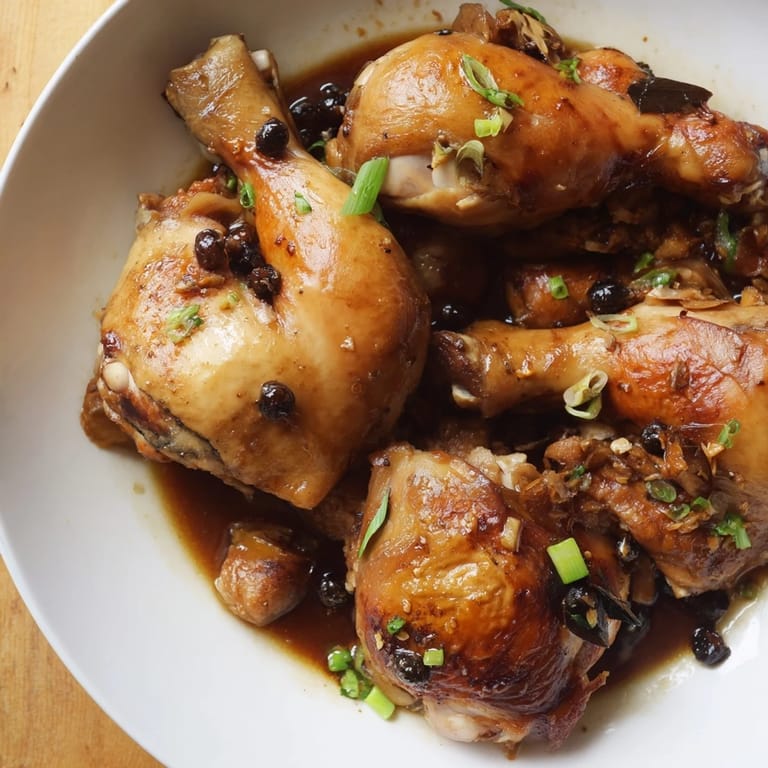 Save to Pinterest
 My neighbor once asked why I never made this dish when she visited, and I realized it was because adobo felt too personal, too tied to moments that mattered. Now I make it whenever someone needs feeding—not just their stomach, but their sense of being cared for.
Why the Marinade Does Most of the Work
The marinade isn't just seasoning—it's actually cooking the chicken slowly from the outside in, breaking down proteins and building flavor layers before the pot even gets hot. This is why adobo tastes better the longer it sits, and why an 8-hour marinate beats a 30-minute one every time if you have the patience.
The Sauce Tells You When It's Ready
Watch for the moment when the braising liquid stops looking thin and watery and starts clinging to the chicken with a glossy, reduced sheen—that's when you know the flavors have concentrated and married. You'll notice the color deepens too, shifting from a pale brown to something richer and darker.
Small Variations That Keep It Interesting
Once you've made adobo a few times, you start understanding how to play with it while honoring what makes it work. A splash of coconut milk stirred in at the end softens the sharpness of the vinegar, while a few dried chilies add warmth without heat if you crack them and leave them whole in the sauce.
- Try pork shoulder or belly instead of chicken for a richer, more luxurious version.
- Save the reduced sauce separately if you have leftovers—it keeps for a week and works beautifully over eggs or vegetables.
- Brown sugar is optional, but it's worth the extra second it takes to add it.
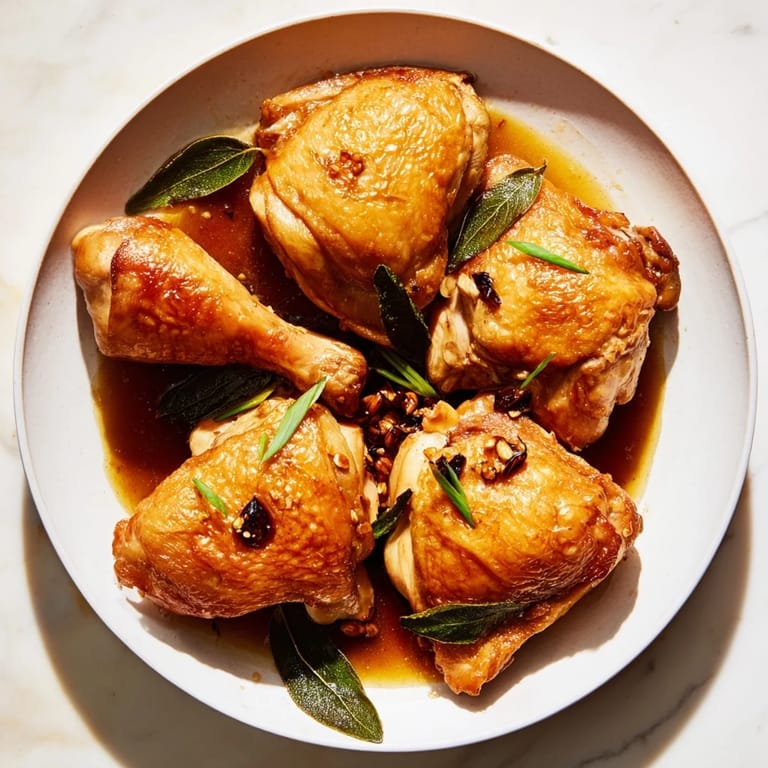 Save to Pinterest
 This is the kind of dish that makes your kitchen smell like somewhere that matters, and tastes like you're standing in it with someone you love.
Recipe FAQs
- → What cut of chicken is best for this dish?
Bone-in, skin-on thighs and drumsticks are preferred for tender texture and rich flavor.
- → Can I adjust the tanginess level?
Yes, the amount of vinegar can be modified to suit your preferred balance of acidity.
- → Is marinating necessary?
Marinating for at least 30 minutes allows the chicken to absorb the flavors deeply, enhancing the final taste.
- → What can I serve alongside this dish?
Steamed white rice is the classic accompaniment, soaking up the savory sauce beautifully.
- → Can I add sweetness to balance the sauce?
Adding brown sugar is optional but adds a subtle sweetness that complements the tangy and savory elements.