 Save to Pinterest
 There's a particular morning in late November when my kitchen smelled like nothing but ginger and steam, and I realized this soup was exactly what my body had been asking for all week. My neighbor had dropped off a knob of fresh ginger from her garden, still dusty with soil, and I couldn't resist the urge to simmer it into something warm and honest. That first spoonful—so clean, so alive with that gentle heat—reminded me why Japanese home cooks have trusted miso broths for centuries to restore balance when the world turns cold.
I made this for my partner on a day when neither of us had spoken much—just one of those quiet, heavy Thursdays—and somehow the ritual of sipping it together broke whatever knot had formed between us. There's something about a bowl of ginger-miso that invites you to slow down, to notice the small flavors layering beneath the surface, the way steam rises and clears your sinuses and makes you feel present again.
Ingredients
- Water or low-sodium vegetable broth (6 cups): Use filtered water if your tap tastes heavily chlorinated; it lets the subtle flavors of ginger and miso shine without interference.
- Fresh ginger (2-inch piece, thinly sliced): Don't peel it—the skin holds oils and nutrients, plus the thin slices release flavor faster into the broth.
- Garlic cloves (2, thinly sliced): Slice them yourself rather than mincing; whole or halved cloves infuse more gently without becoming bitter.
- White or yellow miso paste (2 tablespoons): This is the soul of the soup, so find one you actually enjoy tasting straight from the spoon—quality matters here.
- Napa cabbage (1 cup, thinly sliced): Its slight sweetness balances the umami and ginger; slice it just before cooking so it stays crisp until it hits the hot broth.
- Carrot (1 medium, julienned): Julienne means it cooks evenly and looks elegant, but if you only have a knife, thin diagonal slices work just as well.
- Shiitake mushrooms (1 cup, stemmed and sliced): Save those stems for a future stock; the caps absorb the broth and become silky and rich.
- Scallions (2, sliced): Keep them raw until the very end so they stay bright and add a sharp contrast to the warm broth.
- Toasted sesame seeds (1 tablespoon): Toast them yourself in a dry pan for thirty seconds if you have time; the difference in flavor is genuinely noticeable.
- Fresh cilantro or parsley (1 tablespoon, chopped, optional): Cilantro brings a citrusy note that some people love and others don't—trust your own palate.
- Chili oil or chili flakes (1 teaspoon, optional): A small drizzle adds warmth without overwhelming the delicate ginger and miso balance.
- Silken tofu (200 g, cubed, optional): Add it gently at the very end so the cubes stay tender and don't break apart into the broth.
- Cooked soba or rice noodles (100 g, optional): Cook them separately and add warm, not piping hot, so they don't absorb too much broth and become mushy.
Tired of Takeout? 🥡
Get 10 meals you can make faster than delivery arrives. Seriously.
One email. No spam. Unsubscribe anytime.
Instructions
- Start the infusion:
- Pour your water or broth into a large pot and bring it to a gentle simmer over medium heat. You want small bubbles rising quietly, not a rolling boil; miso broth rewards patience.
- Build the flavor foundation:
- Add your sliced ginger and garlic to the simmering liquid and let them dance around for ten minutes. The kitchen will smell herbaceous and alive, and you'll notice the broth turning slightly golden from the ginger oils.
- Welcome the vegetables:
- Slide in your napa cabbage, carrot, and shiitake mushrooms, stirring gently. Watch how the cabbage wilts almost immediately while the mushrooms release their umami into the broth, turning it deeper and more complex after five to seven minutes.
- Marry the miso (this step matters):
- Here's the part that changes everything: scoop out a ladleful of hot broth into a small bowl, add your miso paste, and whisk it smooth. This prevents clumps and keeps the beneficial probiotics alive by avoiding direct high heat.
- Bring it together:
- Pour the smooth miso mixture back into the pot in a steady stream, stirring gently so it disperses evenly. The soup will darken and deepen, and you'll taste the whole thing come into focus.
- Final warm:
- If you're using tofu and noodles, add them now and let everything warm through for about two minutes—just enough for them to soak up the flavors without the soup overcooking.
- Finish with intention:
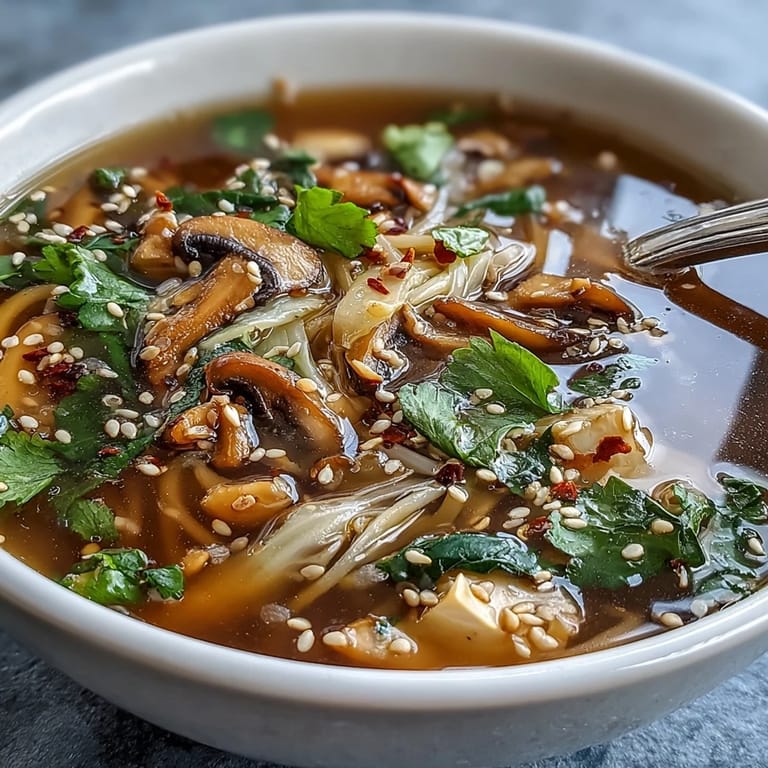
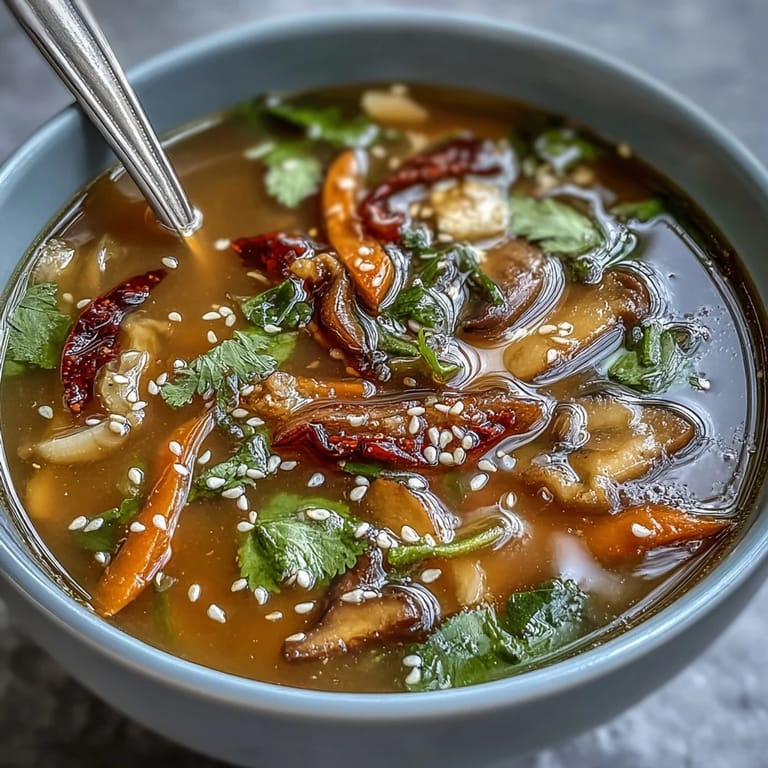
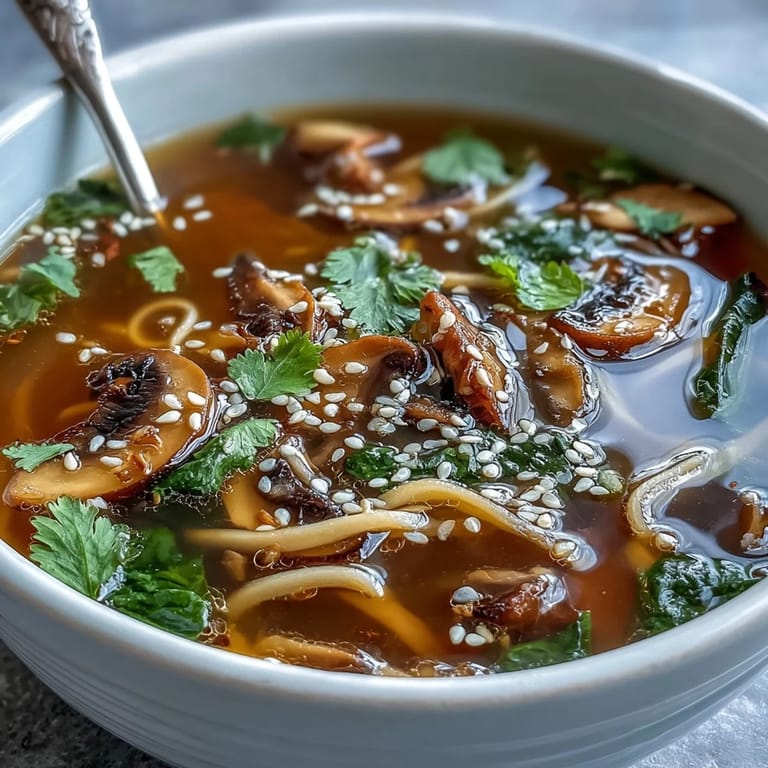
- Ladle the soup into bowls and crown each one with a scatter of raw scallions, toasted sesame seeds, fresh herbs if you're using them, and a whisper of chili oil. The garnishes are not decoration; they're the final voice in the conversation.
 Save to Pinterest
 A friend visited while I was making this, someone I hadn't seen in months, and instead of the awkward small talk we expected, we ended up sitting in my kitchen for two hours nursing bowls of this soup, talking about real things. I think the warmth and the gentle spice gave us both permission to be honest in a way we might not have been sitting across a table in a restaurant.
The Magic of Ginger in Winter
Ginger does something that other spices don't quite manage—it warms you from the inside without making you sweat, and it settles your digestion in a way that feels almost medicinal without being harsh. I learned this not from a cookbook but from watching my grandmother slice it so thin it was almost transparent, letting it do the work of infusing rather than overpowering.
Miso: More Than Just Umami
The first time I understood miso was when someone told me to taste it alone, straight from the spoon, and I realized it contains whole conversations—saltiness, sweetness, fermented depth, a hint of funk in the best possible way. After that, I stopped thinking of it as just an ingredient and started thinking of it as a secret ingredient that elevates everything it touches.
Customization That Feels Personal
This soup has become my canvas for whatever I have on hand or whatever my body seems to need on any given day. Winter is long, and eating the same thing gets boring, but miso broth accepts almost any vegetable and somehow makes it taste intentional rather than improvised.
- Swap shiitake for enoki, oyster, or even button mushrooms—they each bring their own whisper to the broth.
- Try adding bok choy, spinach, daikon radish, or even thinly shaved beets for subtle earthiness.
- A splash of soy sauce or tamari deepens the umami even further, though miso alone is usually enough.
 Save to Pinterest
 This soup has become my answer to almost every question my body asks on a cold day. It's humble enough to make on a Tuesday night and comforting enough to serve when someone you love needs gentleness and warmth.
Recipe FAQs
- → Why shouldn't I boil miso?
Boiling miso destroys the beneficial probiotics and enzymes that make it nutritious. Always whisk miso into warm broth off the heat to preserve its health benefits and delicate flavor profile.
- → Can I use red miso instead?
Red miso has a stronger, more intense flavor than white or yellow miso. Use half the amount to avoid overpowering the soup, or enjoy the deeper umami punch if you prefer robust flavors.
- → What vegetables work best?
Napa cabbage, carrots, and shiitakes are ideal for quick cooking and complementary flavors. Bok choy, spinach, daikon radish, or snap peas also work beautifully in this aromatic broth.
- → Is this soup gluten-free?
The basic soup is gluten-free when using gluten-free miso. Avoid wheat-based soba noodles and choose rice noodles or additional vegetables instead to keep it completely gluten-free.
- → How long does it keep?
Store refrigerated for up to 3 days in an airtight container. Reheat gently without boiling to preserve the miso's beneficial properties. The flavors often deepen overnight for even better taste.