 Save to Pinterest
 The first snowfall of winter always sends me straight to the kitchen to make minestrone soup. Last December, as fat flakes drifted past my window, I found myself chopping vegetables with practiced ease, the familiar rhythm of knife against cutting board a meditation of sorts. The colorful mound of diced carrots, celery, and onions reminded me why this soup has been my cold-weather companion for years. The aroma that fills the house as everything simmers together is like a warm embrace on a chilly day.
I first made this minestrone for my roommate during graduate school when we were both homesick and craving comfort. We sat cross-legged on our tiny apartment floor, steam rising from our bowls as we dipped crusty bread into the broth. The conversation flowed as easily as the soup into our spoons, and by the end of the meal, homesickness had given way to a new kind of belonging. Even now, years later, the distinctive smell of this soup simmering transports me back to that cozy evening.
Ingredients
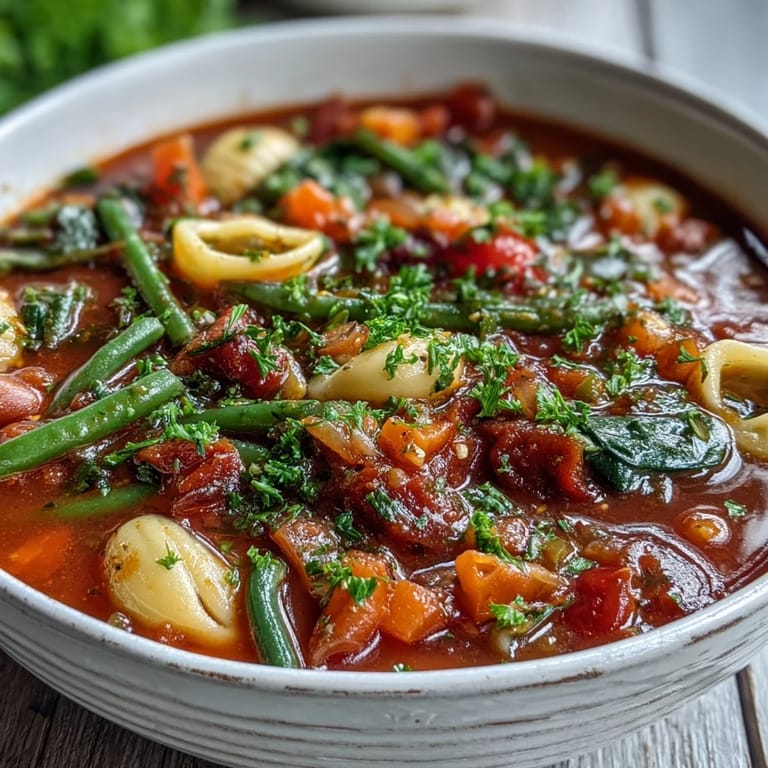
- Mirepoix (onion, carrots, celery): This trio forms the flavor foundation of the entire soup, so take your time sautéing them until they become soft and fragrant.
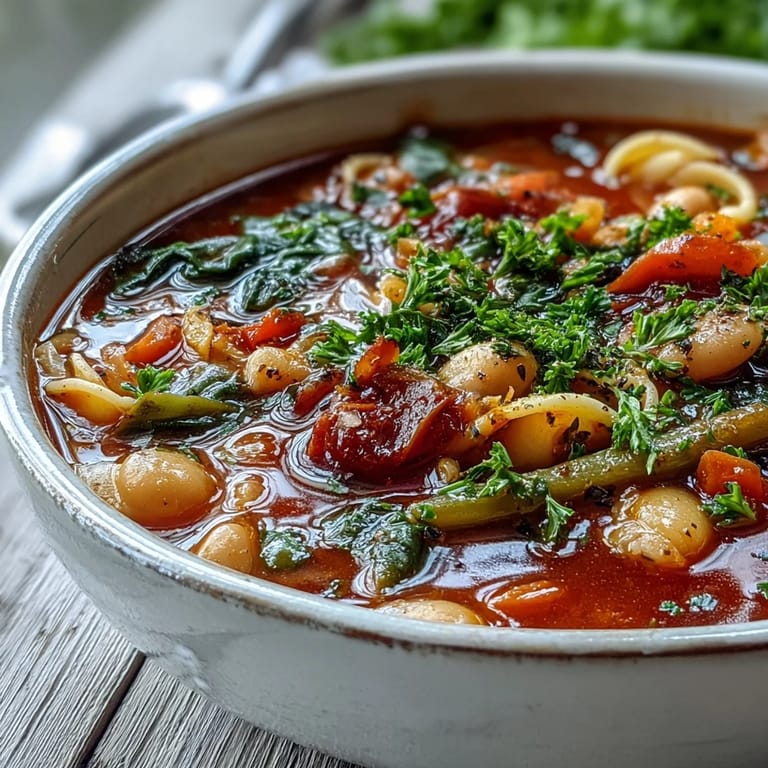
- Cannellini and kidney beans: The contrasting textures make each bite interesting, with the cannellini beans bringing creaminess while the kidney beans add a heartier chew.
- Small pasta: I prefer ditalini or small shells as they cook evenly and are the perfect size to catch little pools of broth in each bite.
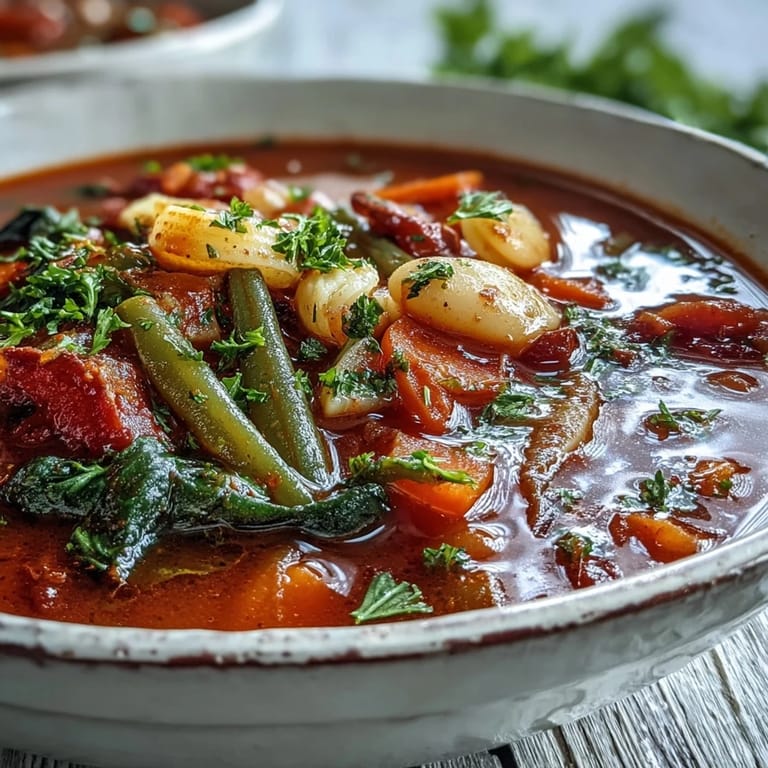
- Seasonal vegetables: Zucchini, green beans, and leafy greens bring freshness and nutrition, transforming a simple soup into a complete meal.
- Herbs and seasonings: The combination of oregano, basil, and thyme creates that quintessential Italian flavor profile that makes this soup so comforting.
Tired of Takeout? 🥡
Get 10 meals you can make faster than delivery arrives. Seriously.
One email. No spam. Unsubscribe anytime.
Instructions
- Build the base:
- Heat olive oil in a large pot over medium heat and add your diced onion, carrots, and celery, sautéing for about 5-6 minutes until they soften and become aromatic. This is where the magic begins, so resist the urge to rush.
- Layer in more vegetables:
- Add the garlic, zucchini, and green beans, cooking for another 3-4 minutes until they start to soften. The colors will brighten beautifully as they cook.
- Create the broth:
- Pour in the diced tomatoes, vegetable broth, and all your dried herbs, along with salt and pepper. Bring this fragrant mixture to a gentle boil.
- Simmer to develop flavor:
- Reduce the heat to a simmer, cover the pot, and let everything cook together for about 15 minutes. Your kitchen will start to fill with the most inviting aroma.
- Add pasta and beans:
- Stir in your pasta and both types of beans, then simmer uncovered for 10-12 minutes until the pasta reaches al dente perfection. Keep an eye on it so the pasta doesnt overcook and become mushy.
- Finish with greens:
- Add your spinach or kale and cook just until wilted, about 2-3 minutes. Remove the bay leaf before serving.
- Garnish and serve:
- Ladle the hot soup into bowls and top with freshly grated Parmesan, a sprinkle of parsley, and a drizzle of good olive oil if desired. These final touches elevate the soup from homey to restaurant-worthy.
 Save to Pinterest
  Save to Pinterest
 On a particularly chaotic Tuesday last month, when deadlines loomed and emails piled up, I stepped away from my desk to make this minestrone. The methodical chopping of vegetables became a form of stress relief, each slice a small act of self-care. As the soup simmered, filling my home with its herbaceous aroma, I felt my shoulders relax. That evening, curled up with a steaming bowl, I realized sometimes the most productive thing you can do is nourish yourself properly.
Seasonal Adaptations
One of the joys of minestrone is how seamlessly it shifts with the seasons. In summer, I load it with fresh zucchini, bell peppers, and basil from my container garden. Autumn brings butternut squash and kale variations that feel like wrapping yourself in a cozy sweater. Winter versions might include hearty cabbage and extra beans, while spring calls for tender asparagus tips, fresh peas, and delicate herbs. The soup transforms while maintaining its essential character, much like a good friend who grows with you over the years.
Make It A Complete Meal
Though substantial on its own, this minestrone becomes a feast when paired thoughtfully. A loaf of rustic Italian bread with olive oil for dipping creates a satisfying meal that needs nothing more. For dinner guests, I often serve it as a starter before a simple pasta dish, or alongside a crisp green salad dressed with lemon and good olive oil. The soup scales effortlessly for crowds, which Ive discovered makes it perfect for casual gatherings where people serve themselves throughout the evening.
Storage And Freezing
If you somehow manage to have leftovers, this soup actually improves with a day or two in the refrigerator as the flavors meld and deepen. Ive learned through many Sunday meal preps that minestrone freezes beautifully in individual portions, becoming my reliable lunch savior during hectic workweeks. The texture of the vegetables softens slightly after freezing and reheating, but in a way that feels intentional rather than compromised.
- Store refrigerated leftovers in airtight containers for up to 4 days, reheating gently on the stovetop with a splash of broth if needed.
- For freezing, cool the soup completely before transferring to freezer-safe containers, leaving room for expansion.
- Consider freezing without the pasta if you plan to store it for longer than a month, adding freshly cooked pasta when reheating.
 Save to Pinterest
 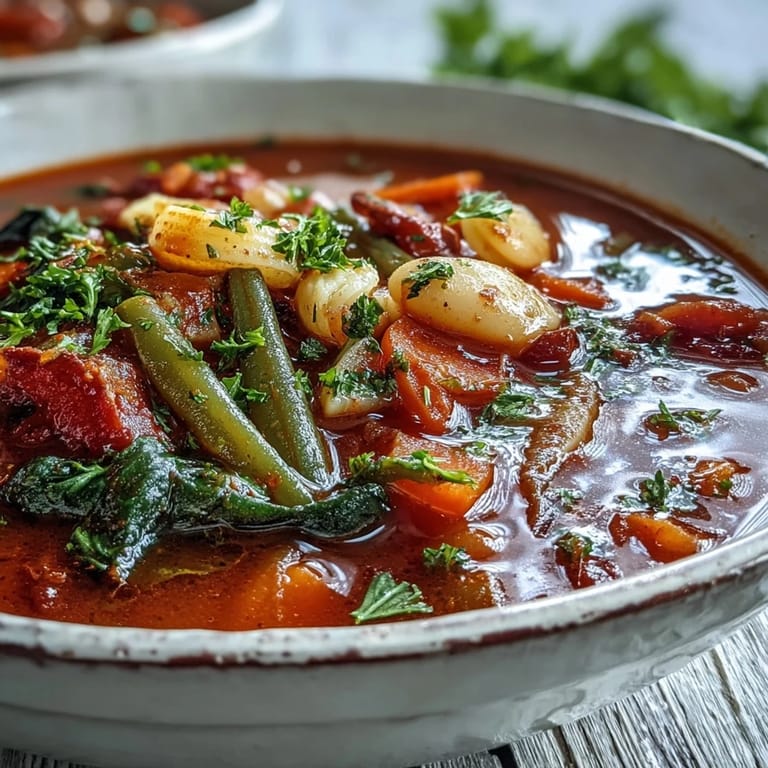 Save to Pinterest
 There is something profoundly satisfying about a pot of minestrone bubbling away on the stove, promising nourishment and comfort in equal measure. Whether shared with loved ones or savored alone, it reminds us that good food, like good memories, sustains us through all seasons.
Recipe FAQs
- → What vegetables work best in minestrone?
Traditional minestrone includes onions, carrots, celery, zucchini, green beans, and leafy greens like spinach or kale. You can also add potatoes, cabbage, or peas based on seasonality and preference.
- → Can I make minestrone soup gluten-free?
Yes, simply substitute the regular pasta with your favorite gluten-free pasta variety. Rice-based pasta, corn pasta, or chickpea pasta all work beautifully in this soup.
- → How should I store leftover minestrone?
Store cooled soup in an airtight container in the refrigerator for up to 4 days. The pasta will absorb some liquid as it sits, so you may need to add extra broth when reheating. This soup also freezes well for up to 3 months.
- → What type of pasta is traditionally used?
Small pasta shapes like ditalini, elbow macaroni, small shells, or tubetti work best. These sizes are easy to scoop with a spoon and hold up well during simmering without becoming mushy.
- → Can minestrone be made vegan?
Absolutely. Skip the Parmesan garnish or use a plant-based alternative. The soup itself is completely plant-based, using vegetable broth as its base and loaded with protein from two types of beans.
- → What herbs give minestrone its authentic flavor?
Dried oregano, basil, and thyme provide classic Italian herbal notes. Fresh parsley added at the end brightens the flavor, while a bay leaf adds depth during simmering. Remove the bay leaf before serving.