 Save to Pinterest
 The first pot of minestrone I ever made was during a thunderstorm that knocked out our power. Working by candlelight, chopping vegetables became a meditation as rain tapped against the windows. Something about the simplicity of that moment—no gadgets, just me and fresh ingredients—made that soup taste like a revelation. I could smell each herb awakening in the broth, telling its own story as the kitchen filled with earthy aromas.
Last winter, my neighbor broke her ankle slipping on ice, and I brought over a pot of this minestrone with some crusty bread. Her eyes welled up at the first spoonful, and she whispered it reminded her of her late mothers cooking. We sat quietly eating soup as the snow fell outside, and I understood again how food connects us beyond words. She now requests this soup whenever she feels under the weather, calling it her liquid medicine.
Ingredients
- Olive oil: Use a good quality extra virgin for that foundation of authentic Italian flavor—I once tried to substitute butter in a pinch and missed that distinct olive oil character.
- Seasonal vegetables: The beauty of minestrone lies in its adaptability—the zucchini and green beans shine in summer while kale works wonderfully in winter months.
- Small pasta: Ditalini or small elbow pasta creates perfect bite-sized texture without overwhelming the vegetables—I learned that adding them too early makes them absorb too much broth.
- Cannellini beans: These creamy white beans give the soup its hearty protein and a silky texture to the broth as they slightly break down during cooking.
- Dried herbs: They infuse slowly through the cooking process, but if you have fresh herbs on hand, triple the amounts and add them later in cooking.
Tired of Takeout? 🥡
Get 10 meals you can make faster than delivery arrives. Seriously.
One email. No spam. Unsubscribe anytime.
Instructions
- Soften your aromatics:
- Heat olive oil in a large pot over medium heat before adding your diced onion, celery, and carrots. Watch as they release their sweetness and begin to soften, becoming translucent after about 5 minutes.
- Build the vegetable base:
- Stir in the garlic until you catch that first whiff of its aroma, then add zucchini and green beans. The colors will brighten as they cook for another 3-4 minutes.
- Create your broth foundation:
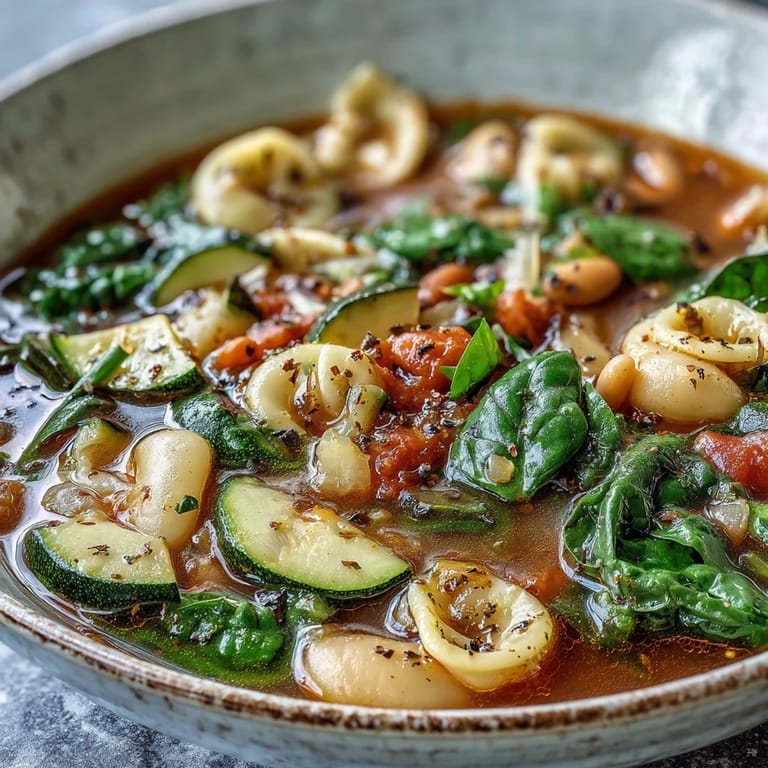
- Pour in those diced tomatoes and watch the pot transform with color, then add tomato paste and vegetable broth. The dried herbs go in now—oregano, basil, thyme, and that essential bay leaf—bringing everything to a gentle boil before reducing to a simmer for 15 minutes.
- Introduce pasta and beans:
- Add your small pasta shapes and beans, giving them about 10 minutes to cook until the pasta reaches that perfect al dente texture. The broth will begin to take on a slightly thicker quality as the pasta releases its starch.
- Finish with greens:
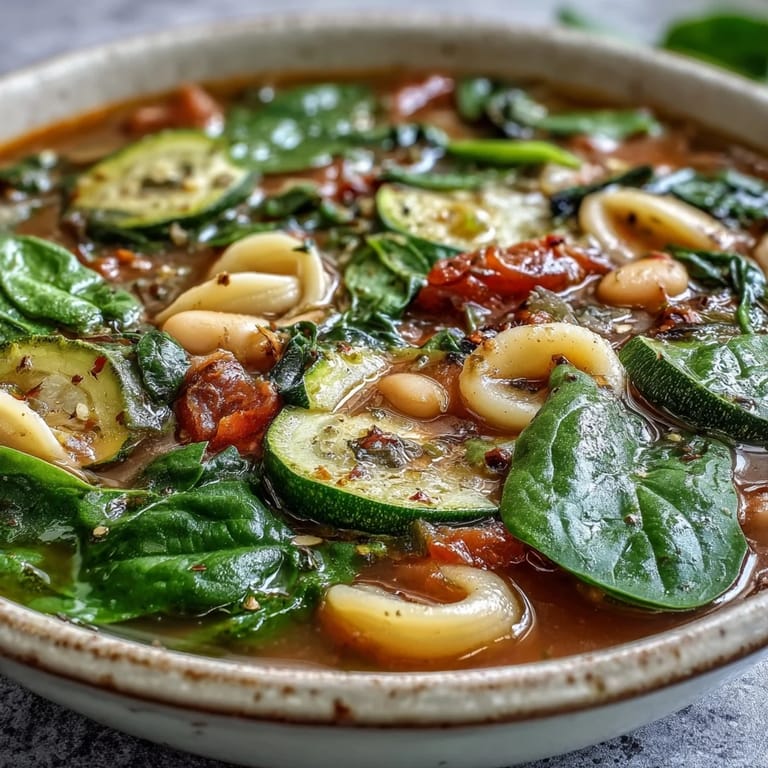
- Gently stir in the spinach or kale and fresh parsley, watching as they wilt and brighten the soup with their vibrant color. Just a couple minutes is all it takes.
- Season and serve:
- Remove that bay leaf hiding in there, then taste and adjust with salt and pepper. Ladle the steaming soup into bowls, scatter with fresh parsley, and serve immediately while the aromas fill the room.
 Save to Pinterest
 One Sunday afternoon, my kitchen filled with friends helping chop vegetables for a big pot of minestrone after we got caught in an unexpected rainstorm. Someone started humming an old Italian tune, another person opened wine, and suddenly we were sharing stories and laughing over steaming bowls of soup. What began as a simple meal turned into one of those perfect unplanned gatherings that live in memory long after the dishes are washed.
Seasonal Adaptations
Spring brings tender asparagus and fresh peas that add a sweet brightness to the broth. Summer offers an abundance of zucchini, fresh tomatoes, and basil that make the soup sing with garden-fresh flavor. Fall minestrone welcomes butternut squash and hearty greens, while winter versions benefit from root vegetables like turnips or parsnips that develop a wonderful sweetness as they simmer. This adaptability is what keeps this soup in my regular rotation regardless of whats available at the market.
Serving Suggestions
Theres something magical about dunking a piece of crusty sourdough bread into the broth, capturing all those vegetables and flavors in one perfect bite. For non-vegetarians, a sprinkle of freshly grated Parmesan adds a salty umami dimension that elevates the entire bowl. My neighbor insists on a drizzle of good olive oil on top just before serving, creating little pools of richness that distribute through the soup with each spoonful.
Storage and Leftovers
The transformation this soup undergoes in the refrigerator still amazes me after all these years. What starts as a brothy vegetable soup on day one develops into a complex, almost stew-like consistency by day three, with flavors that meld and deepen in remarkable ways. During a particularly busy week, I discovered the convenience of freezing individual portions in silicone muffin cups, then transferring the frozen pucks to a container for easy single-serving reheating.
- If freezing, slightly undercook your vegetables as theyll soften more during reheating.
- Store leftover minestrone in glass containers rather than plastic to prevent tomato staining.
- A squeeze of fresh lemon juice just before serving leftover soup brightens all the flavors that have deepened overnight.
 Save to Pinterest
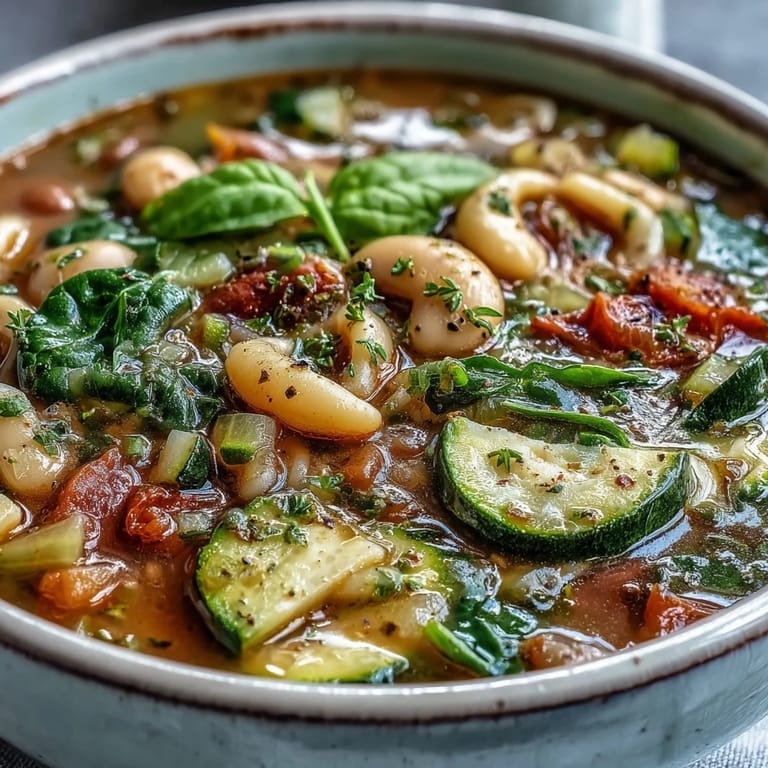
 This humble Italian soup has taught me more about cooking than almost any other dish in my repertoire. It reminds me that great food often comes from simple ingredients treated with care and patience.
Recipe FAQs
- → What vegetables work best in minestrone?
Classic minestrone features onion, celery, carrots, zucchini, and green beans as the foundation. You can easily customize with seasonal additions like butternut squash, bell peppers, or Swiss chard. The key is cutting vegetables into uniform pieces for even cooking.
- → Which pasta shape is ideal for this soup?
Small pasta shapes like ditalini, elbow macaroni, or small shells work beautifully because they spoon up easily with the broth. Larger shapes may overwhelm the vegetables. For gluten-free needs, rice-based small pasta holds up well during simmering.
- → Can I make this soup ahead of time?
Absolutely—minestrone actually tastes better the next day as flavors meld. Store cooled soup in the refrigerator for up to 4 days. Note that pasta will continue absorbing liquid, so you may need to add extra broth when reheating. For best results, cook pasta separately and add just before serving.
- → How can I make this vegan?
This soup is naturally plant-based when using vegetable broth. Simply skip the Parmesan garnish or substitute with nutritional yeast or vegan parmesan. Ensure your pasta is egg-free (most dried pasta is vegan), and choose a vegetable broth without honey or animal-derived seasonings.
- → What can I serve with minestrone?
Crusty Italian bread or garlic bread is perfect for soaking up the flavorful broth. A simple green salad with balsamic vinaigrette balances the heartiness. For a complete Italian-inspired meal, pair with bruschetta or a caprese salad on the side.
- → Can I freeze minestrone soup?
Yes, freeze for up to 3 months in airtight containers. For best texture, slightly undercook the pasta before freezing, as it will soften during reheating. Alternatively, freeze the soup base without pasta and cook fresh pasta when reheating for optimal texture.