 Save to Pinterest
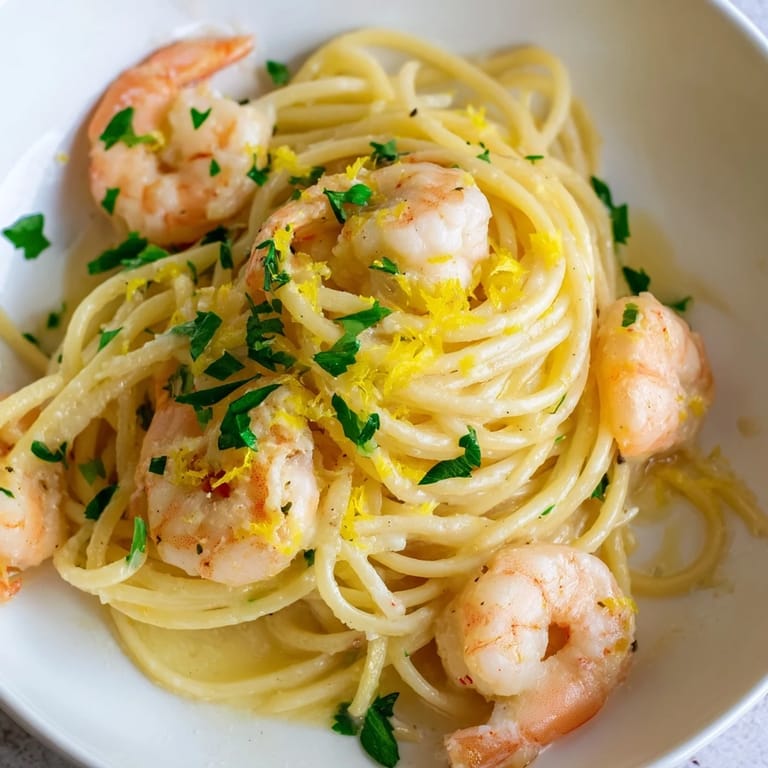
 My neighbor knocked on my door one Tuesday evening holding a bag of fresh shrimp from the fish market, asking if I knew what to do with them. I threw together what I had in the fridge: butter, garlic, a lemon rolling around in the fruit bowl, and half a box of spaghetti. Twenty minutes later, we were sitting on my porch with bowls in our laps, twirling pasta and laughing at how something so simple tasted like we'd ordered it from somewhere fancy. That spontaneous dinner became the recipe I return to whenever I want something bright, satisfying, and ready before I can talk myself into ordering takeout.
I made this for my sister the night before she moved across the country, and we ate it straight from the skillet because neither of us wanted to bother with dishes. She kept scraping her fork along the bottom to catch every bit of garlicky sauce, and we barely talked, just chewed and smiled. Now every time I make it, I think about that quiet kitchen and how food can hold a goodbye without needing to say much at all.
Ingredients
- Large shrimp, peeled and deveined: Look for shrimp that smell like the ocean, not fishy or like ammonia, and pat them completely dry before cooking so they sear instead of steam.
- Spaghetti: Any long pasta works here, but spaghetti twirls beautifully with the sauce and clings to every shrimp without feeling clumsy on the fork.
- Unsalted butter: Using unsalted lets you control the seasoning, and it melts into the lemon juice to create that silky, restaurant style coat on the pasta.
- Extra virgin olive oil: A little oil keeps the butter from burning when you sear the shrimp, and it adds a fruity richness that rounds out the garlic.
- Garlic cloves, minced: Fresh garlic is everything in this dish, cook it just until it smells sweet and toasty, not brown and bitter.
- Lemon zest and juice: The zest brings bright, floral notes while the juice adds tang, together they wake up the whole plate without tasting sour.
- Dry white wine: A splash of wine adds depth and a subtle sweetness, but if you skip it, the dish still shines with just lemon and butter.
- Crushed red pepper flakes: Just a pinch gives a gentle warmth in the background, nothing aggressive, just enough to keep things interesting.
- Fresh parsley: Chopped parsley at the end adds color and a grassy freshness that makes every bite feel a little more alive.
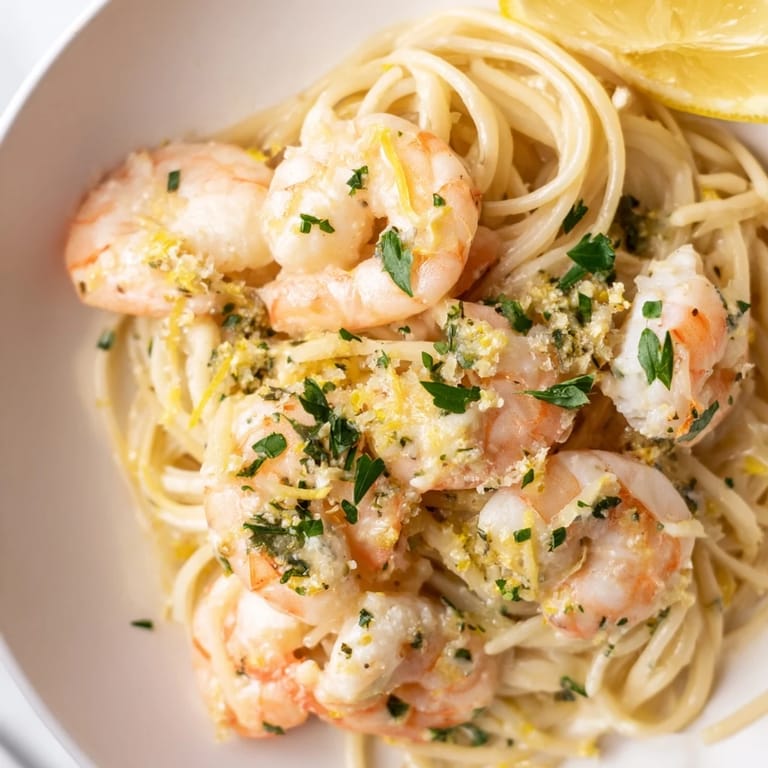
- Parmesan cheese: A small grating on top is optional, but it adds a nutty, salty finish that some people, including me, can never resist.
Tired of Takeout? 🥡
Get 10 meals you can make faster than delivery arrives. Seriously.
One email. No spam. Unsubscribe anytime.
Instructions
- Boil the pasta:
- Bring a large pot of salted water to a rolling boil and cook the spaghetti until it still has a slight bite in the center, then save a mugful of that starchy pasta water before draining. That cloudy water is liquid gold for making the sauce cling.
- Prep the shrimp:
- While the pasta bubbles away, pat the shrimp completely dry with paper towels and season them lightly with salt and pepper. Dry shrimp sear beautifully and develop a sweet, caramelized edge.
- Sear the shrimp:
- Heat a large skillet over medium high heat with a tablespoon each of olive oil and butter, then lay the shrimp in a single layer without crowding. Cook them for just a minute or two per side until they turn pink and curl slightly, then pull them out onto a plate.
- Build the garlic base:
- Lower the heat to medium and add the remaining oil and butter to the same skillet, then stir in the minced garlic. Let it sizzle gently until the kitchen smells amazing, about a minute, but watch it closely so it does not burn.
- Add the lemon and wine:
- Toss in the lemon zest, lemon juice, white wine if using, and red pepper flakes, then let everything simmer together for a few minutes until the liquid reduces slightly. The sauce will smell bright and tangy, almost like sunshine in a pan.
- Return the shrimp:
- Slide the cooked shrimp back into the skillet along with any juices that collected on the plate, and toss them gently in the sauce to warm through. This step only takes a moment, you just want to reunite the shrimp with all that lemony goodness.
- Toss with pasta:
- Add the drained spaghetti to the skillet and toss everything together with tongs, adding splashes of reserved pasta water until the sauce becomes glossy and coats every strand. The pasta should look silky, not dry or soupy.
- Season and serve:
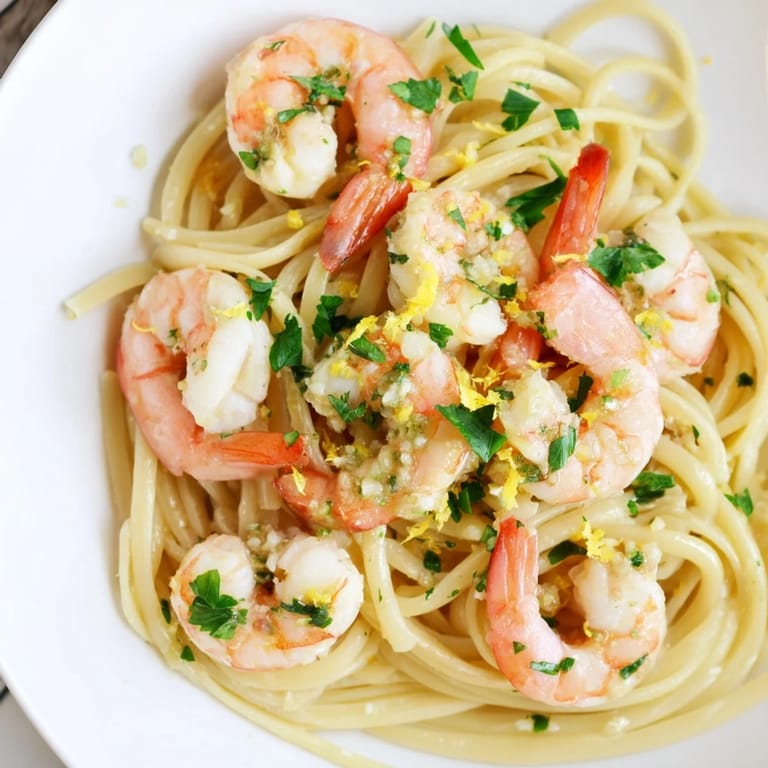
- Taste and adjust the salt and pepper, then remove the skillet from the heat and sprinkle with fresh parsley and Parmesan if you like. Serve immediately with lemon wedges on the side for anyone who wants an extra squeeze.
 Save to Pinterest
 One evening I served this to friends who claimed they did not like seafood, and they went quiet after the first bite, then asked for seconds. Watching someone change their mind about an ingredient because of one good dish is one of the best feelings in the kitchen. It reminded me that sometimes people just need to taste something made with care, not complicated technique, just honest flavors that make sense together.
What to Serve Alongside
A simple green salad with a lemony vinaigrette echoes the brightness of the pasta without competing for attention, and a crusty baguette is perfect for mopping up any sauce left in the bowl. If you want something heartier, roasted asparagus or broccolini with a sprinkle of sea salt adds a slight bitterness that balances the buttery richness beautifully. I have also set out a bowl of cherry tomatoes tossed in olive oil and basil, which people pick at between bites like a palate cleanser.
Making It Your Own
If you are feeling adventurous, toss in a handful of baby spinach or halved cherry tomatoes during the last minute of cooking for extra color and a pop of sweetness. I have swapped the spaghetti for linguine, angel hair, or even gluten free pasta when cooking for friends with dietary needs, and the dish adapts without complaint. Some nights I add a splash of heavy cream to make the sauce richer and more luxurious, turning it into something that feels a little more indulgent without much extra effort.
Storage and Leftovers
This dish tastes best when it is fresh and hot, but if you do have leftovers, store them in an airtight container in the fridge for up to two days. Reheat gently in a skillet over low heat with a splash of water or broth to loosen the sauce, because microwaving can make the shrimp tough and the pasta gummy. I have learned that adding a small pat of butter and a squeeze of fresh lemon while reheating brings back some of that just made brightness.
- Do not freeze this dish, shrimp and pasta both suffer in texture after thawing and reheating.
- If you know you will have leftovers, slightly undercook the pasta so it does not turn mushy when reheated.
- Leftover shrimp can be pulled from the pasta and tossed into a salad or grain bowl the next day for a quick lunch.
 Save to Pinterest
 This recipe has pulled me out of dinner ruts more times than I can count, and it never feels boring or predictable. I hope it becomes one of those dishes you make without thinking, the kind that feels like a small celebration even on the most ordinary weeknight.
Recipe FAQs
- → How do I prevent overcooked shrimp?
Cook shrimp only 1-2 minutes per side until they turn pink and opaque. Overcooked shrimp becomes tough and rubbery. Remove them from heat as soon as they change color for the most tender result.
- → Can I make this without white wine?
Yes, white wine is optional. Substitute it with an equal amount of chicken or vegetable broth, or simply omit it. The lemon juice provides sufficient acidity and brightness to the sauce.
- → What pasta shape works best?
Spaghetti is traditional, but linguine, fettuccine, or even pappardelle work beautifully. Use thin or medium pasta shapes that allow the butter sauce to coat each strand evenly.
- → Why reserve pasta water?
Pasta water contains starch that helps emulsify the sauce, creating a silky coating. It thins the sauce to the desired consistency without diluting the flavors, unlike regular water.
- → How can I add more vegetables?
Stir in baby spinach or cherry tomatoes during the final minutes of cooking. Asparagus, zucchini, or sun-dried tomatoes also complement the lemon garlic flavors beautifully.
- → Is this dish suitable for a pescatarian diet?
Yes, this dish is naturally pescatarian as it features shrimp as the primary protein. It's an excellent choice for those who eat seafood but avoid meat.