 Save to Pinterest
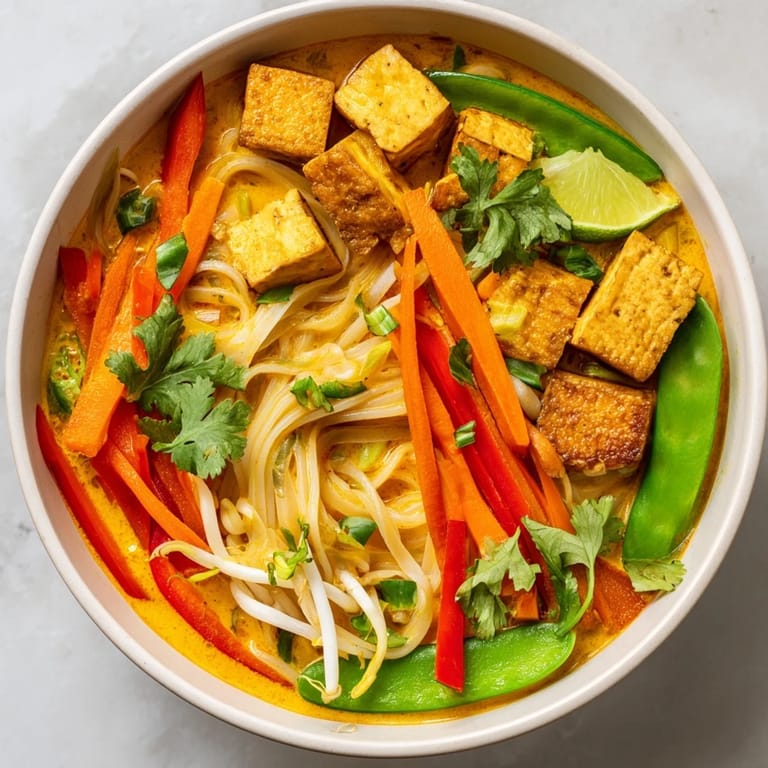
 The first time I tasted laksa was at a cramped hawker stall in Kuala Lumpur, sitting on a plastic stool with my knees practically touching the vendor's prep station. A steaming bowl arrived with ribbons of noodles disappearing into a glossy red broth, and one spoonful changed everything—that strange magic of coconut meeting spice, heat balanced by creaminess, with a brightness from the lime that made me want another bite immediately. Years later, I recreated it at home on a rainy afternoon, and somehow my version became the one my friends now ask for, even though it took three attempts to stop it from tasting like a curry soup trying too hard.
I made this for my partner on a Tuesday night when we were both exhausted, and watching their eyes light up as they took that first sip reminded me why I bother with cooking at all. The kitchen smelled incredible—ginger and lemongrass filling every corner—and by the time we sat down to eat, the day's stress had somehow evaporated into steam.
Ingredients
- Vegetable oil: Use a neutral oil that won't compete with the aromatics; I prefer peanut oil if you have it, but any mild oil works.
- Onion, garlic, ginger, and lemongrass: These four are your flavor foundation—don't skip or rush them, as they build the aromatic base that makes laksa taste authentic.
- Laksa paste: This is the shortcut that makes this recipe possible; store-bought is reliable, though homemade is magical if you have time.
- Coconut milk and vegetable broth: The coconut creates richness while the broth keeps it balanced; use full-fat coconut milk or the dish loses its soul.
- Soy sauce and sugar: These two ground the broth, adding umami depth and a whisper of sweetness that rounds out the heat.
- Rice noodles: Thick noodles hold the broth beautifully; vermicelli works if that's what you have, but the chewier texture of thicker noodles is worth seeking out.
- Firm tofu: Frying it first adds a golden crust and keeps it from getting lost in the broth.
- Fresh vegetables: Carrots, bell pepper, and snow peas add texture and color; bean sprouts and cilantro provide that fresh brightness that makes the whole thing sing.
- Lime wedges: Essential—that acid is what brings everything into focus at the very end.
Tired of Takeout? 🥡
Get 10 meals you can make faster than delivery arrives. Seriously.
One email. No spam. Unsubscribe anytime.
Instructions
- Bloom the aromatics:
- Heat your oil in a large pot over medium heat, then add the onion, garlic, ginger, and lemongrass. You'll know they're ready when the kitchen smells intensely fragrant and the onions turn translucent, usually 3 to 4 minutes—don't let them brown.
- Deepen with laksa paste:
- Stir in the laksa paste and let it cook for about 2 minutes, stirring constantly so it dissolves and coats everything. This step is crucial; the paste needs gentle heat to release its complex flavors without burning.
- Build the broth:
- Pour in the coconut milk and vegetable broth, stirring well to make sure the paste fully integrates. Bring everything to a gentle simmer, then taste and adjust with soy sauce, sugar, and salt—this is where you dial in the flavor to your preference.
- Let it marry:
- Simmer uncovered for 10 minutes, which gives all those flavors time to get to know each other and deepen. You'll notice the broth becoming richer and more cohesive as it reduces slightly.
- Prepare the toppings:
- While the broth simmers, cook your noodles according to package directions, drain them, and set aside. In a nonstick skillet, fry the tofu cubes over medium-high heat until they're golden and crispy on all sides, about 5 to 7 minutes total.
- Cook the vegetables:
- Add the carrots, bell pepper, and snow peas to the simmering broth and give them 3 to 4 minutes to become tender-crisp. You want them to keep some bite and color, not turn soft.
- Assemble and serve:
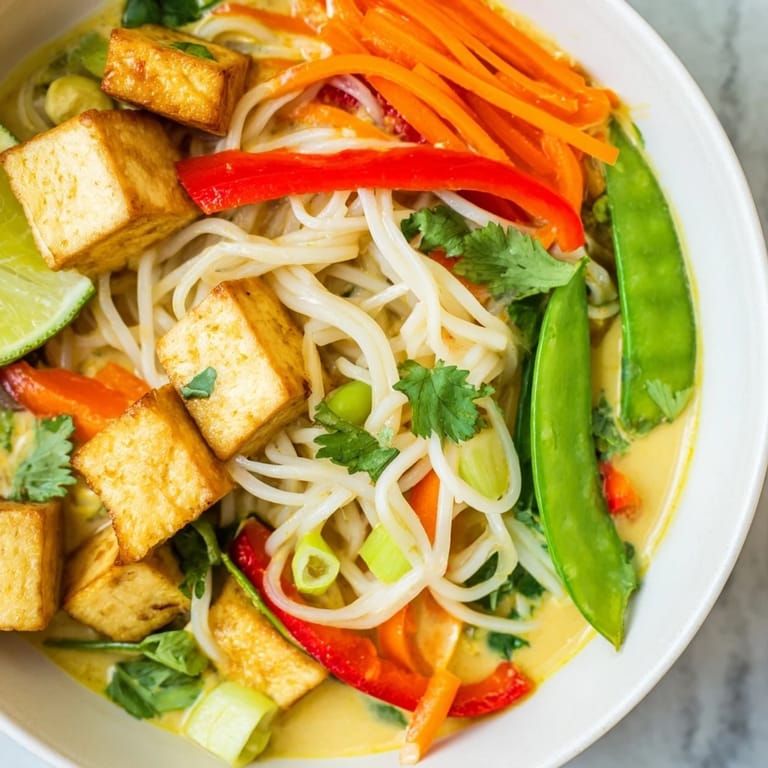
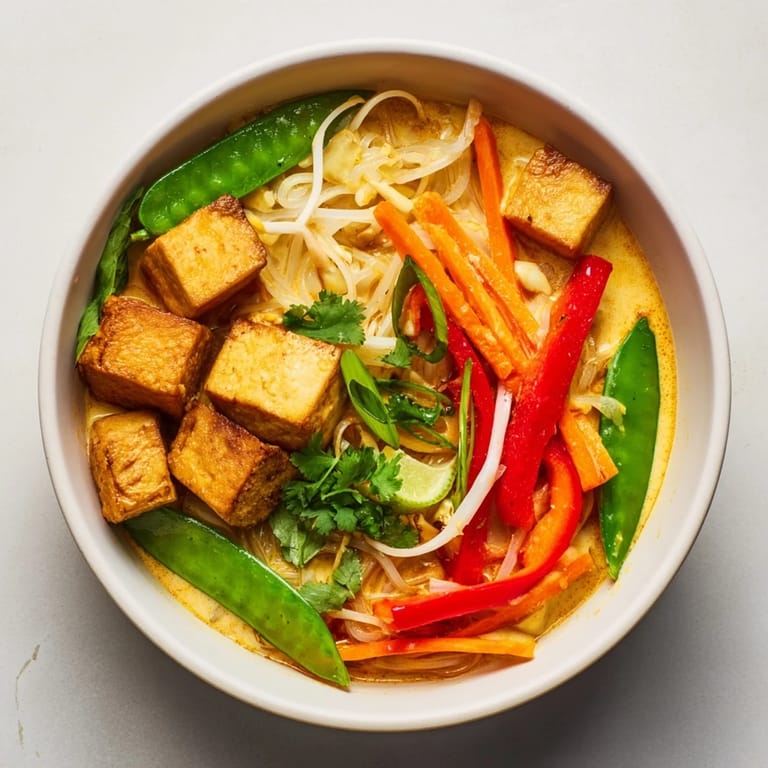
- Divide the noodles among four bowls, then ladle the hot broth and vegetables over them. Top each bowl with fried tofu, a handful of bean sprouts, sliced spring onions, fresh cilantro, and chili slices if you like heat, then serve with lime wedges on the side for squeezing.
 Save to Pinterest
 There's something almost meditative about setting up a laksa bowl for someone—the ritual of ladling the fragrant broth, arranging the toppings in layers, and watching someone's face as they lift that first spoonful to their mouth. It's the kind of dish that stops people mid-conversation because suddenly the food demands all their attention.
Why This Recipe Works
Malaysian laksa succeeds because it respects contrast: the coconut provides richness, the spices bring heat, the fresh toppings offer brightness, and the lime acts as a final equalizer. Each element has a job, and when they come together in your bowl, they create something that feels both comforting and exciting. The noodles are just a vehicle for what makes laksa special, which is why assembly matters more than technique—everything else is about building the right broth and keeping the toppings fresh.
Making It Your Own
Once you understand the basic structure, laksa becomes deeply personal. I've made it with whatever vegetables were in my fridge, swapped noodles based on what I had, and even experimented with different laksa pastes depending on the brand available. The dish is forgiving enough to accommodate your preferences while distinctive enough that it always feels authentic. Some friends add a poached egg to theirs, others drizzle in a bit of sambal, and honestly, those variations often taste better than my original.
Serving and Timing
The magic of laksa is that the broth stays hot long enough to cook down into the noodles while you eat, so the flavor deepens as you go. Serve it immediately after assembling, and don't be shy about refilling bowls—the broth is meant to be sipped and savored, not left behind. If you're feeding a crowd, you can have the broth simmering and ready to go, with all the toppings prepped and arranged on a board so guests can customize their own bowls.
- Taste the broth before serving and adjust the seasoning one final time—it should be bold enough to stand up to the noodles and toppings.
- If the broth seems too thin, let it simmer a few extra minutes; if it's too intense, add a splash more vegetable broth to mellow it out.
- Have extra lime and chili slices on the table so everyone can adjust their bowl to their exact preference.
 Save to Pinterest
 Laksa is one of those dishes that reminds me why I cook: not for perfection or technique, but for the moments it creates around a table. Make this when you want something that tastes impressive but doesn't demand your full attention, and watch how quickly bowls empty and people ask for seconds.
Recipe FAQs
- → What type of noodles are best for this dish?
Rice noodles, either thick or vermicelli, work best and should be soaked or cooked per package instructions to achieve the desired texture.
- → Can I make this dish vegan?
Yes, ensure the laksa paste you use contains no shrimp paste or fish sauce to keep it fully plant-based.
- → How do I balance the spicy and creamy flavors?
The rich coconut milk provides creaminess which mellows the heat from the spices and laksa paste, creating a well-rounded flavor profile.
- → What vegetables complement this curry broth?
Carrots, bell peppers, snow peas, and bean sprouts add fresh crunch and color, enhancing the dish's texture and taste.
- → What garnishes enhance the dish's flavor?
Fresh cilantro, sliced red chilies, spring onions, and lime wedges brighten and add layers of flavor to the final bowl.