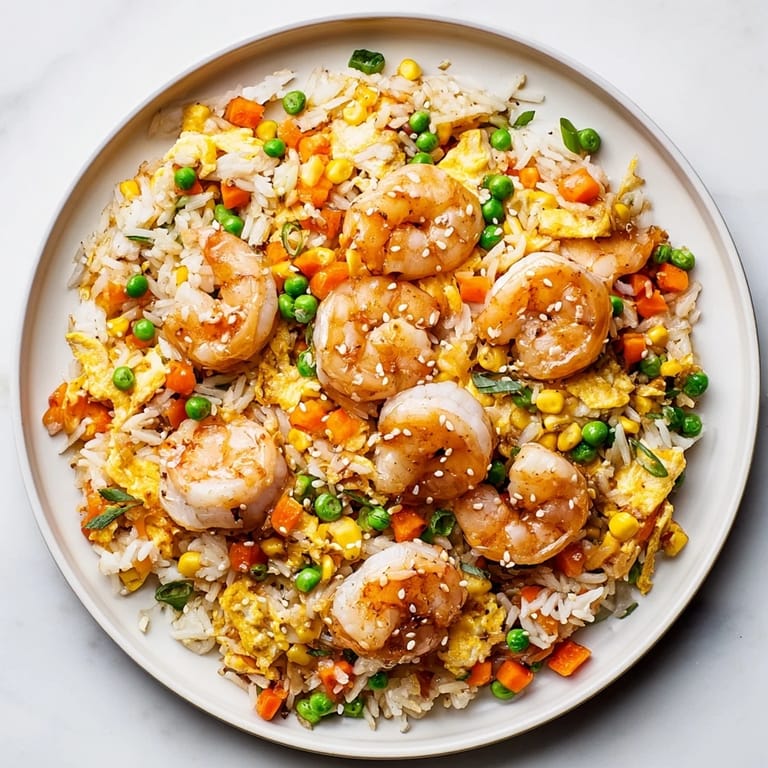
 Save to Pinterest
 One Tuesday night, I stood at my stove with hungry kids waiting and exactly ten minutes to spare. I had shrimp in the freezer, leftover rice in the fridge, and the kind of pressure that either leads to takeout or inspiration. That night, inspiration won, and this dish became my answer to the question: how do you make restaurant-quality fried rice faster than you can order it? Now it's the first thing I reach for when time is short but taste matters.
I made this for my neighbor last month when she mentioned dreading another boring dinner. The smell of shrimp and sesame oil filled her kitchen, and watching her face light up as she took that first bite reminded me why food matters so much more than just fuel. She's made it four times since.
Ingredients
- Medium shrimp, peeled and deveined (200 g): Buy them frozen if you can and thaw in the morning–they'll cook faster and stay tender.
- Large eggs (2): Beat them lightly before cooking so they scramble into soft, delicate ribbons.
- Frozen mixed vegetables (100 g): No chopping required, and they're already the perfect size for stir-frying.
- Scallions (2): Slice them thin and separate the white parts from the greens–whites cook with everything, greens scatter at the end.
- Cooked jasmine rice, chilled (300 g): Cold rice is non-negotiable; warm rice gets sticky and clumps into frustrating pockets.
- Soy sauce (2 tbsp): The backbone of flavor–taste as you go because different brands vary in saltiness.
- Oyster sauce (1 tbsp): Adds depth and a subtle sweetness that makes people ask what your secret ingredient is.
- Sesame oil (1 tsp): A little goes far; it's liquid gold in a fried rice pan.
- Ground white pepper (1/2 tsp): Dissolves invisibly into the rice, warming it from the inside.
- Vegetable oil (1 tbsp): Use an oil with a high smoke point so your pan stays hot and clean.
Tired of Takeout? 🥡
Get 10 meals you can make faster than delivery arrives. Seriously.
One email. No spam. Unsubscribe anytime.
Instructions
- Get your pan screaming hot:
- Pour the vegetable oil into a large nonstick skillet or wok and set it over medium-high heat. You want it hot enough that a grain of rice sizzles the moment it hits the pan.
- Sear the shrimp:
- Add the shrimp and let them sit for a moment before stirring–they'll turn pink and opaque in two to three minutes. Don't rush this or they'll be tough; pull them out the second they lose their gray color and set them on a clean plate.
- Scramble the eggs:
- Pour in your beaten eggs and let them set for just a few seconds before pushing them around with your spatula until they're in soft, custard-like curds. Move them to one side of the pan so you have space to work.
- Warm the vegetables:
- Scatter in the frozen vegetables and let them heat through for about a minute, stirring gently so they don't stick to the rice you're about to add.
- Add the rice and break it free:
- Tip in your cold rice and work at it with your spatula, breaking apart any clumps that formed when it cooled. This usually takes about two minutes, and you'll know it's done when every grain moves freely and starts to take on a light golden color from the hot pan.
- Bring everything back together:
- Return the shrimp to the pan and pour in the soy sauce, oyster sauce, sesame oil, and white pepper. Stir constantly for about a minute so the seasoning coats every grain and every piece of shrimp.
- Finish with brightness:
- Add the scallion whites and most of the greens, then toss everything one final time. Taste and adjust the salt or soy sauce if it needs it–some rice absorbs more seasoning than others.
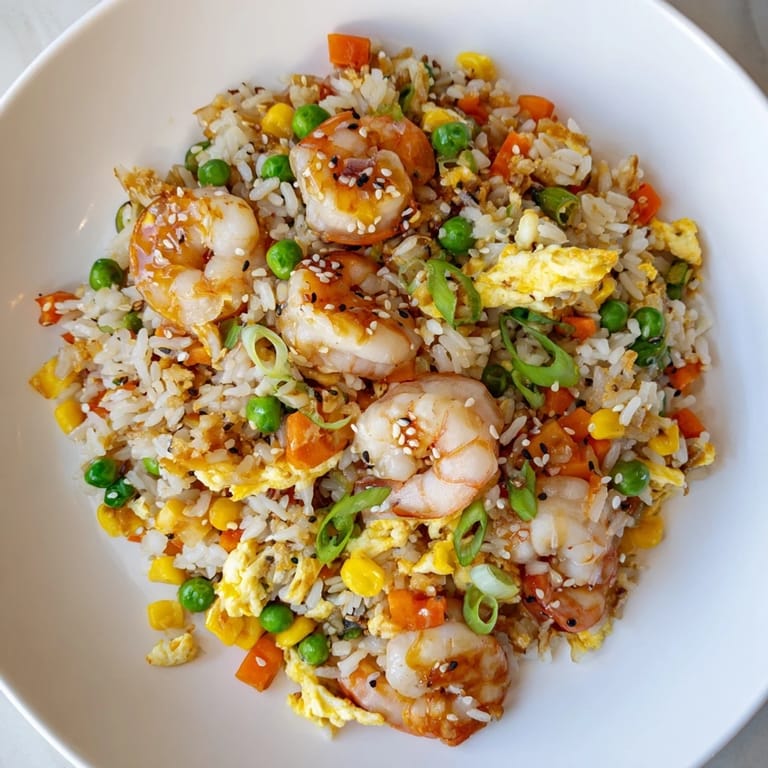 Save to Pinterest
 This dish has taught me that sometimes the best food comes not from hours of planning but from paying attention in the moment. A good recipe gives you permission to trust your senses–the sizzle tells you when it's ready, the aroma tells you when everything's coming together, and the first taste tells you if you need more seasoning.
Why Day-Old Rice Changes Everything
Fresh rice straight from the cooker is still warm and holding water, which means it will stick to itself and clump into sad, mushy pockets instead of separating into individual grains. When you cool rice overnight in the refrigerator, the starches firm up and the moisture redistributes, creating the exact texture you want for fried rice. If you absolutely can't wait, spread hot rice on a baking sheet to cool it faster, or even spread it thin and run a fan over it for a few minutes.
The Secret to Shrimp That Stays Tender
Shrimp overcooks in seconds, and overcooked shrimp turns into little rubbery pucks. The trick is to cook them just until they turn pink and feel slightly firm to the touch, then immediately pull them out of the pan. They'll continue cooking gently while you work on the other components, but they'll be done cooking properly by the time everything comes back together. Trust the color change, not the clock.
Building Flavor in a Hurry
When you have twenty minutes total, you can't afford to build flavor slowly in layers. Instead, you use a combination of ingredients that already carry flavor–soy sauce for salt and depth, oyster sauce for sweetness and umami, and sesame oil for nutty aroma. Each one does something different, and together they create a dish that tastes like you spent hours on it. Add them all at once at the end when everything is hot, which lets the flavors meld without cooking away.
- Taste before serving and adjust the soy sauce if your rice was especially bland or salty.
- A dash of white pepper adds heat and warmth that black pepper can't quite match.
- Keep sesame oil for the final drizzle; cooking with it changes its delicate flavor.
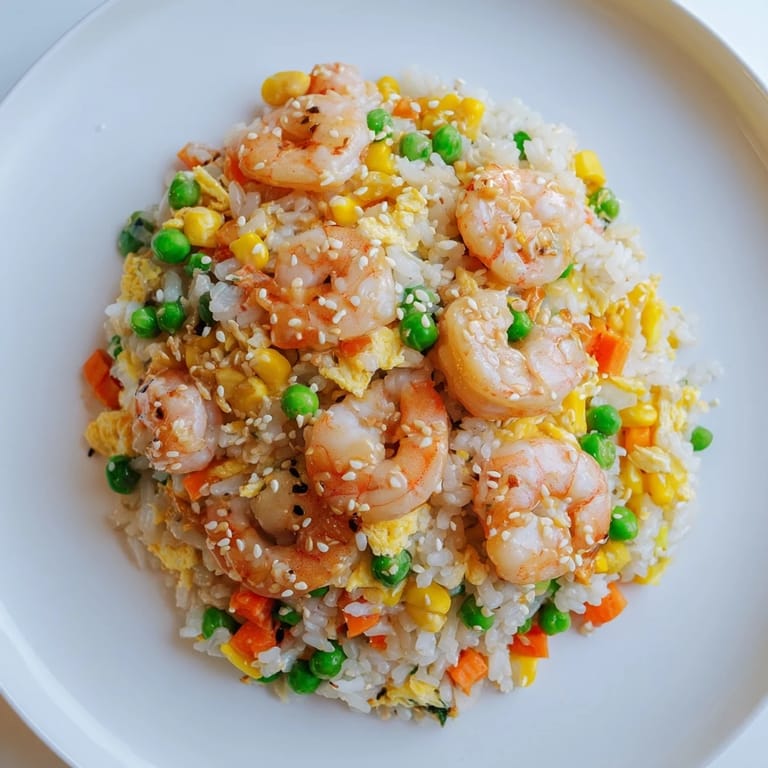 Save to Pinterest
 This is the recipe I make when I want to prove to myself that good food doesn't require endless time or complicated steps. It's proof that cooking is really about knowing what you're doing and trusting your instincts.
Recipe FAQs
- → What’s the best type of rice for this dish?
Day-old cooked jasmine rice is ideal as it’s chilled and less sticky, allowing for better stir-frying and texture.
- → Can I substitute shrimp with other proteins?
Yes, chicken, tofu, or a vegetarian option can be used to suit dietary preferences while maintaining the dish’s essence.
- → How do the sauces contribute to flavor?
Soy and optional oyster sauce add umami and depth, while sesame oil offers a toasty aroma and subtle richness.
- → What’s the purpose of scrambling eggs separately?
Scrambling eggs separately helps maintain their soft texture and allows even distribution throughout the rice.
- → How can I add a spicy element to the dish?
A dash of chili sauce or fresh chili flakes can be stirred in to enhance heat levels without overpowering flavors.