 Save to Pinterest
 The first time I encountered chili crab wasn't in a fancy restaurant but at a bustling hawker stall where an elderly man worked with such practiced speed that his hands seemed to blur over a massive wok. I watched mesmerized as live crabs tumbled into a sauce so vibrant it seemed to glow, and within minutes he'd created this glorious mess of sweet, spicy, and tangy that left my fingers sticky and my heart completely won over. That dish taught me that sometimes the most memorable food comes from watching someone cook with absolute confidence, no fuss, just pure flavor.
I remember making this for friends who claimed they didn't really eat shellfish, and watching their skepticism melt away the moment they cracked into a crab leg dripping with that burnished sauce was genuinely hilarious. One friend went so quiet I thought something was wrong until she looked up with sauce on her chin and just said, "We're making this again next week, right?" That's when I knew this recipe had the power to convert people.
Ingredients
- 2 whole live mud crabs (about 1.5 kg total), cleaned and cut into pieces: Mud crabs have sweeter, more tender meat than other varieties, though blue swimmer or Dungeness work beautifully if your fishmonger doesn't stock them—ask them to clean and portion the crabs for you if you're squeamish about doing it yourself.
- 3 tbsp vegetable oil: Use something neutral like peanut or canola so the sauce flavors shine through without any competing tastes.
- 1 medium onion, finely chopped: This dissolves slightly into the sauce, creating a subtle sweetness that balances the heat.
- 5 cloves garlic, minced: Don't bother peeling these individually beforehand—mince them right before cooking so their fragrance hits you fully when they hit the hot oil.
- 3 red chilies and 2 birds eye chilies, deseeded and chopped: The red ones give you warmth and depth, while the birds eye chilies deliver sharp heat that builds as you eat—adjust the amount to your tolerance, remembering that the sauce will concentrate slightly as it simmers.
- 2 cm piece fresh ginger, peeled and minced: Fresh ginger, never ground, gives you those little pockets of heat that wake up your palate between bites of crab.
- 250 ml tomato ketchup, 2 tbsp chili sauce, 1 tbsp sugar, 1 tbsp soy sauce, 1 tsp fish sauce: This combination is the soul of the dish—the ketchup provides sweetness and body, the chili sauce adds complex heat, soy brings umami, and fish sauce is the secret ingredient that makes people ask what's in the sauce without being able to identify it.
- 250 ml chicken or seafood stock: Seafood stock is ideal if you can find it, but chicken stock works just fine—you're really just adding liquid to create a sauce that clings to the crab.
- 1 tsp cornstarch mixed with 1 tbsp water: This slurry thickens the sauce just enough that it clings to the crab rather than pooling at the bottom of the pan.
- 2 large eggs, lightly beaten: These create those silky ribbons that catch the sauce and add richness without heaviness.
- 2 spring onions, sliced, fresh cilantro, and lime wedges: These finish the dish with brightness and textural contrast—the acidity of lime cuts through the richness of the sauce perfectly.
Tired of Takeout? 🥡
Get 10 meals you can make faster than delivery arrives. Seriously.
One email. No spam. Unsubscribe anytime.
Instructions
- Build your aromatic base:
- Heat oil in a large wok over medium heat, then add chopped onion and let it soften for about two minutes—you want it to turn translucent and sweet, not brown. Add garlic, ginger, and both types of chilies, stirring constantly for two to three minutes until the aroma becomes almost overwhelming and the mixture turns fragrant and slightly darker.
- Sear the crab:
- Toss in the crab pieces and stir-fry them for three to four minutes, coating them thoroughly in the aromatic mixture until the shells begin their color transformation from dark blue to that beautiful coral-red. This isn't really cooking the crab through yet—you're just building flavor and letting the spices cling to the shells.
- Build the sauce:
- Pour in the ketchup, chili sauce, sugar, soy sauce, fish sauce, and stock, stirring well to combine everything into a cohesive liquid. Bring the whole thing to a boil, then reduce heat and let it simmer uncovered for ten to twelve minutes, turning the crab pieces occasionally so they cook evenly.
- Thicken and finish:
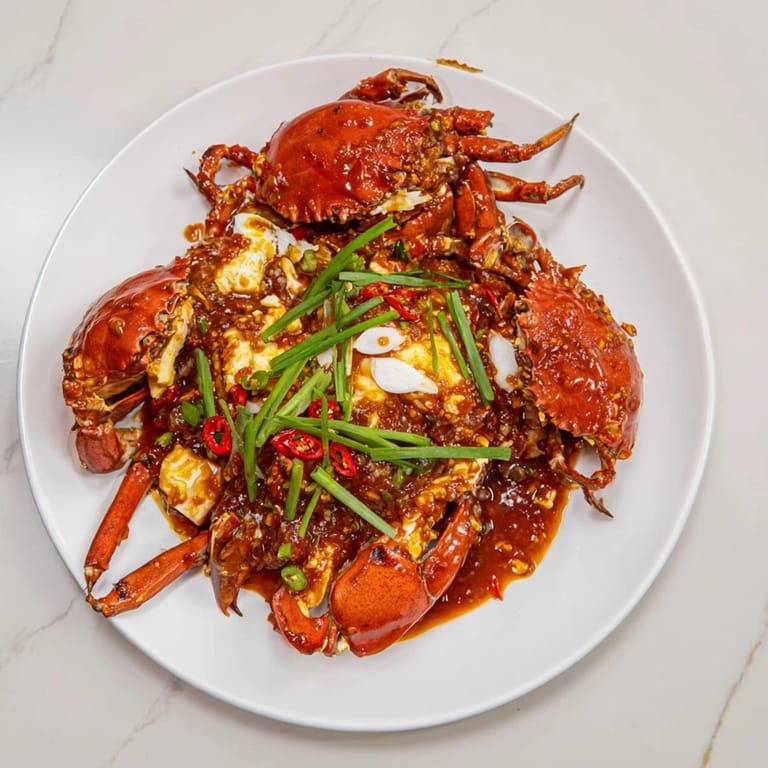
- Stir in your cornstarch slurry, which will thicken the sauce into something that coats a spoon—you want it to be syrupy and clingy, not soupy. Then, slowly drizzle your beaten eggs into the bubbling sauce while stirring gently, creating silky ribbons that will make the dish feel restaurant-quality.
 Save to Pinterest
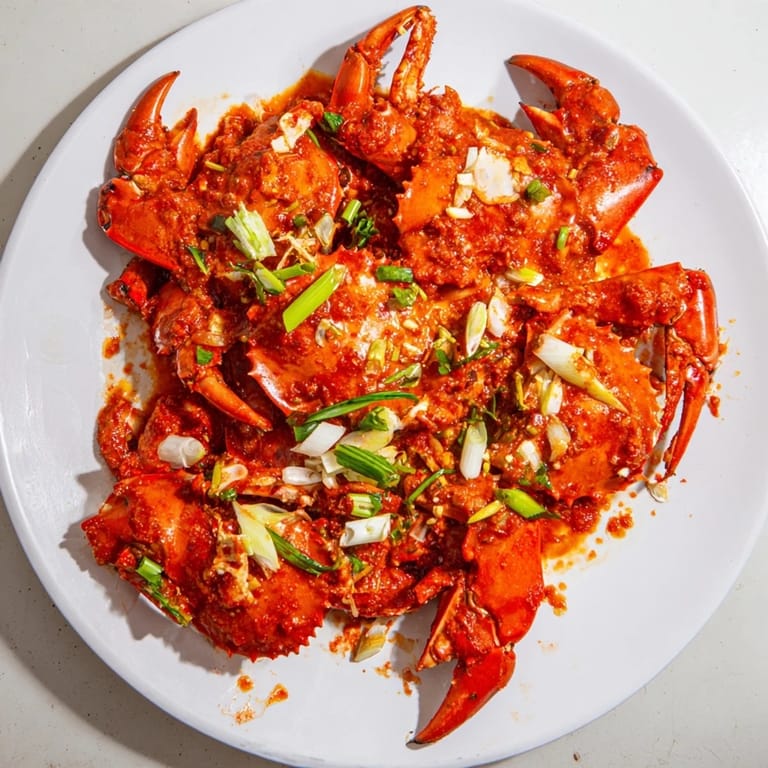
 There's something about gathering around a shared plate of chili crab that transforms a meal into an event—everyone's hands busy, voices getting louder, the ritual of cracking shells and dipping into that sauce becoming this silly, messy, completely joyful communion. In those moments, the food stops being just food and becomes permission to be unselfconscious and fully present with the people you're eating with.
The Sauce Is Everything
This dish lives or dies by its sauce, and understanding that balance of sweet, sour, spicy, and umami is the key to mastering it. The tomato ketchup provides a foundation of sweetness and body, the chili sauces deliver heat, the fish and soy bring umami depth, and the lime you squeeze at the end provides brightness that cuts through richness—if any of these elements feels off, adjust before the crab goes in, tasting as you go. I learned this the hard way by trying to adjust flavors at the last minute when the crab was already cooking, which only added stress and didn't actually improve anything.
Crab Selection and Prep
Mud crabs are ideal because they have sweet, tender meat and shells that are neither too hard nor too soft, though blue swimmer crabs or Dungeness crabs will work beautifully if that's what your fishmonger has. Ask them to clean and portion the crabs if you're not comfortable doing it yourself—there's no shame in that, and it means you can focus on nailing the cooking part. Live crabs are best, but honestly, if your fishmonger kills them on the spot before you take them home, you'll still end up with superior results compared to previously frozen ones.
Serving and Enjoyment
Serve this immediately with steamed buns (mantou) or rice, because that sauce deserves to be soaked up rather than wasted, and have plenty of napkins or wet towels nearby since eating chili crab is an intentionally messy affair. The lime wedges are non-negotiable—a squeeze of acid over each bite awakens the flavors and prevents sauce fatigue on the palate.
- Keep extra napkins at the table because the sauce will find its way onto your shirt despite your best efforts.
- Serve with ice-cold beer or a crisp white wine to balance the heat and richness.
- Leftovers can be refrigerated and reheated gently, though the dish is always best fresh from the wok.
 Save to Pinterest
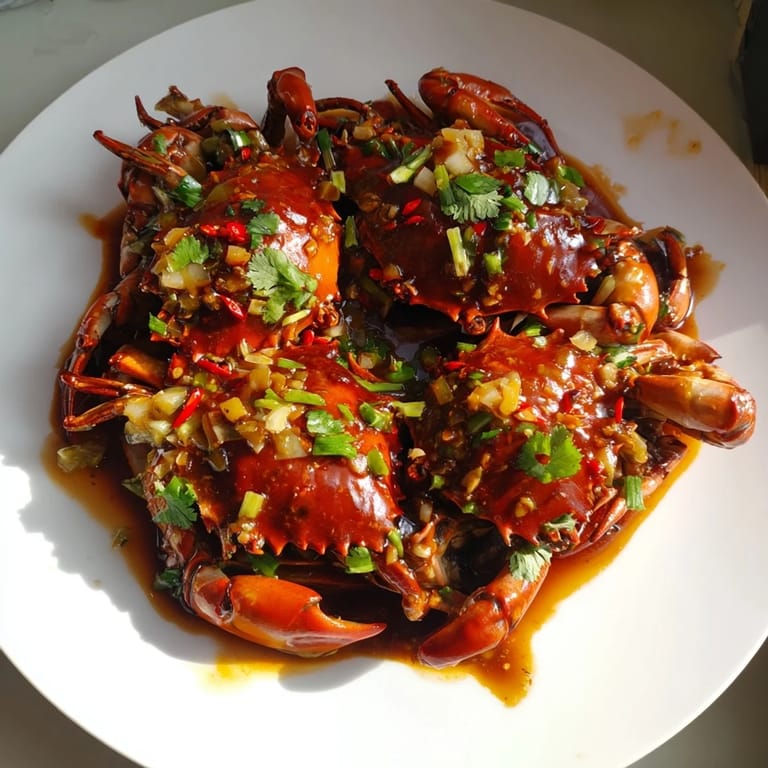
 This recipe has fed strangers, converted skeptics, and created countless messy, joyful memories around my kitchen table. Make it when you want to turn dinner into something worth remembering.
Recipe FAQs
- → What type of crab is best for this dish?
Live mud crabs are traditional, but blue swimmer or Dungeness crab can be good substitutes depending on availability.
- → How can I adjust the spiciness?
Adjust the amount of birds eye chilies according to your heat preference; adding more increases spice, while fewer will soften it.
- → What is the purpose of the beaten eggs in the sauce?
Slowly stirring in beaten eggs creates silky ribbons that enrich and thicken the chili sauce for a smooth texture.
- → Which sides pair well with this dish?
Steamed mantou buns or plain rice complement the bold and saucy flavors, helping to soak up the delicious sauce.
- → How long does it take to prepare and cook?
Preparation takes around 30 minutes, and cooking about 25 minutes, making this a flavorful dish in under an hour.