 Save to Pinterest
 I stumbled onto this bowl on a quiet Tuesday evening when my kitchen felt too predictable. I had salmon thawing, a container of gochujang I kept reaching for but never quite knew what to do with, and suddenly the scent of fresh orange hit me differently. What started as tossing things together became something I couldn't stop eating, and now it's the meal I make when I want to feel like I'm actually taking care of myself without the fuss.
I made this for my friend who's always ordering these kinds of bowls at trendy lunch spots, and watching her actually sit down and eat it—like really enjoy it—instead of rushing through her day made me realize this was more than just convenient. It became the thing I make when someone needs a reminder that good food doesn't have to be complicated.
Ingredients
- Salmon fillets (2, about 150g each): Choose thick, evenly-sized pieces so they cook at the same rate and stay tender in the middle.
- Salt and black pepper: Don't skip seasoning the salmon directly—it makes all the difference in flavor.
- Gochujang (2 tbsp): This Korean chili paste is funky, spicy, and umami-rich in a way that transforms everything it touches.
- Freshly squeezed orange juice (2 tbsp): Fresh juice matters here because it brings brightness that bottled juice just can't quite manage.
- Soy sauce (1 tbsp): The saltiness ties everything together and deepens the glaze.
- Honey (1 tbsp): This balances the heat and creates that sticky, glossy finish when it hits the heat.
- Rice vinegar (1 tsp): A small but essential splash that keeps the sauce from feeling one-note.
- Toasted sesame oil (1 tsp): Use the good stuff—the fragrance is half the magic.
- Fresh ginger (1 tsp, grated): Ginger adds a warmth and slight bite that makes the whole dish feel alive.
- Garlic (1 clove, minced): Don't use the jarred stuff here; the difference is real.
- Short-grain rice (2 cups cooked, warm): The stickiness of short-grain rice holds up better under the glaze and vegetables.
- Cucumber (1/2, thinly sliced): Cool, crisp, and necessary for cutting through the richness.
- Avocado (1, sliced): Add this just before eating so it doesn't oxidize and turn brown.
- Roasted nori (1 sheet, cut into strips): Those little strips taste like the ocean and add a textural crunch.
- Toasted sesame seeds (1 tbsp): Toast them yourself if you can; the aroma is proof they're doing something right.
- Scallions (2 tbsp sliced): The fresh onion bite at the end is what makes you want another bite.
Tired of Takeout? 🥡
Get 10 meals you can make faster than delivery arrives. Seriously.
One email. No spam. Unsubscribe anytime.
Instructions
- Heat your oven and prep the stage:
- Preheat to 200°C (400°F) and line your baking tray with parchment paper—this prevents sticking and makes cleanup actually pleasant.
- Season the salmon generously:
- Pat both fillets dry with paper towels, then season each side with salt and pepper. This simple step is what makes the salmon taste like salmon instead of just protein.
- Build the glaze:
- Whisk gochujang, orange juice, soy sauce, honey, rice vinegar, sesame oil, ginger, and garlic together until you have something smooth and glossy. If you see little gochujang lumps, keep whisking—you want it silky.
- Get the salmon in:
- Brush half the glaze onto the salmon and slide it into the oven. Set a timer for 12 to 14 minutes and don't open the door and peek every thirty seconds like I do—the salmon will cook through without your supervision.
- Prep your bowl components while you wait:
- Slice cucumbers, avocado, and scallions. Cut your nori into strips. Toast sesame seeds in a dry pan if they're not already toasted. Have everything ready because assembly happens fast.
- Finish with a glaze and optional broil:
- When the salmon flakes easily with a fork, brush the remaining glaze over the top. If you want that caramelized, sticky finish, broil for 1 to 2 minutes until it darkens slightly, but watch it like a hawk because it can go from glossy to burnt in seconds.
- Assemble your bowls:
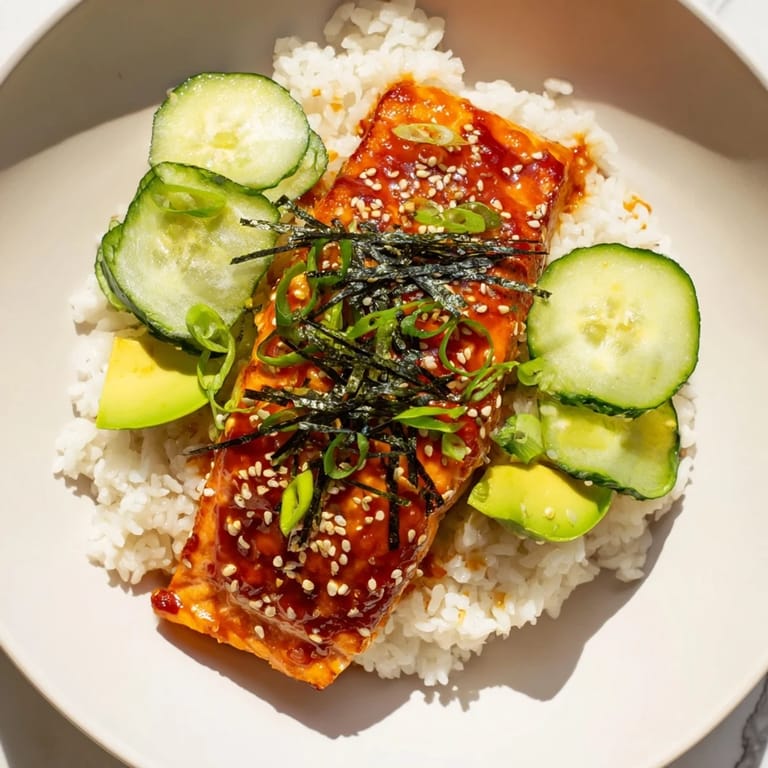
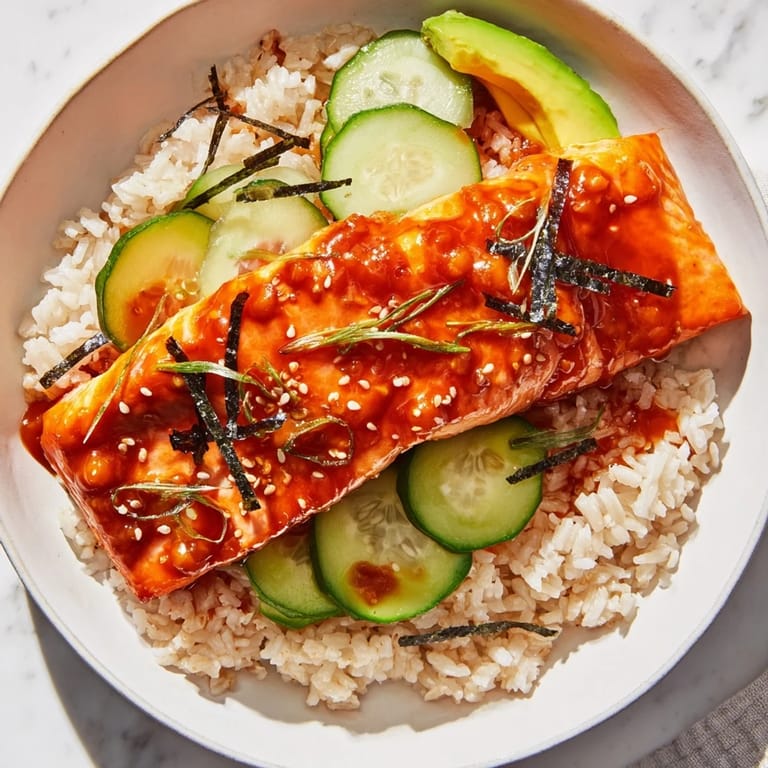
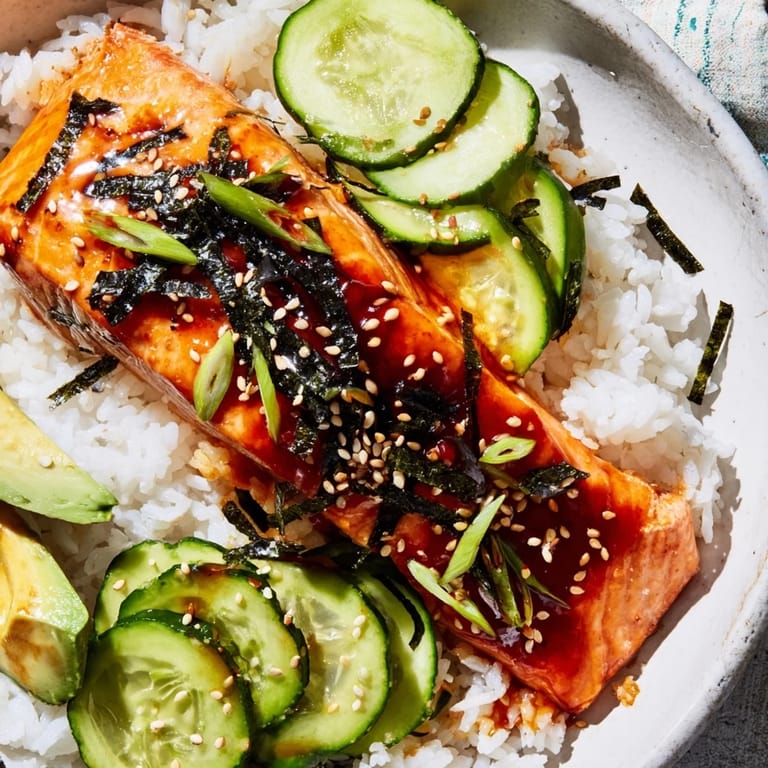
- Divide warm rice between two bowls, top each with a salmon fillet, then arrange cucumber slices, avocado, nori strips, sesame seeds, and scallions around it. The arrangement doesn't have to be perfect—it just has to look like you cared.
- Eat it immediately:
- Don't let it sit and get cold. The warmth of the rice and salmon makes this whole thing work.
 Save to Pinterest
 There was an afternoon when I made this for someone who usually skips lunch, and they actually stopped what they were doing to sit and eat. No rushing, no scrolling—just this bowl and a fork. That's when I knew this wasn't just another recipe I could throw together; it was something that made people slow down.
Why This Glaze Works
The magic is in the balance. Gochujang brings heat and funk, orange juice adds brightness and cuts through richness, honey makes it cling to the salmon, and sesame oil adds this toasted, almost nutty depth that elevates everything. It's the kind of glaze that tastes like it took way longer to develop than the five minutes it actually takes to whisk together.
Building Your Bowl
This bowl is less about following a recipe and more about understanding why each element is there. The warm rice soaks up the glaze. The cool cucumber and avocado balance the heat and richness. The nori adds a textural snap and reminds you that you're eating something intentional. Every component has a job, and when they're all there together, it feels complete.
Customizing Without Losing the Soul
Swap salmon for thick tofu slices if fish isn't your thing—the glaze works beautifully on anything. Add pickled ginger for tanginess, shredded carrots for sweetness, or edamame for extra protein. I've even thrown in kimchi on days when I wanted the bowl to feel more aggressive. The dish stays itself no matter what you add because the glaze is that good.
- Toast the sesame seeds in a dry skillet for literally two minutes if they're not pre-toasted—the aroma is worth it.
- If your salmon is thicker than usual, tent it loosely with foil halfway through baking so the outside doesn't cook faster than the inside.
- Make the glaze while the oven preheats so you're not scrambling when the salmon is ready.
 Save to Pinterest
 This bowl became something I reach for when I want to feel like I'm actually nourishing myself instead of just eating. It's one of those meals that reminds me why cooking matters.
Recipe FAQs
- → What is gochujang and how does it affect the flavor?
Gochujang is a Korean fermented chili paste that adds a rich, spicy, and slightly sweet depth to the glaze, balancing the citrus and honey elements perfectly.
- → Can I use other types of fish for this glaze?
Yes, firm and flaky fish like cod or halibut work well and absorb the sticky glaze nicely.
- → How is the glaze applied and cooked?
The glaze is brushed on before baking the salmon and then reapplied for a broil finish to enhance stickiness and caramelization.
- → What toppings add crunch and freshness to the bowl?
Thinly sliced cucumber, avocado, nori strips, toasted sesame seeds, and scallions provide varied textures and vibrant freshness.
- → Are there any common allergen concerns with this dish?
This dish contains fish, soy, and sesame. Check product labels if gluten or other allergens are a concern.
- → Can this be made vegetarian?
Salmon can be swapped with tofu for a vegetarian-friendly alternative while keeping the flavorful glaze and toppings.