 Save to Pinterest
 The first time I really tasted mango sticky rice, I was sitting in a small Bangkok restaurant where the air hung thick with humidity and the smell of grilling meat from the street vendor next door. My friend ordered it without hesitation, and when the plate arrived, I was struck by how simple it looked—just rice, mango, and sauce—yet how perfectly balanced each spoonful felt. That moment shifted something in how I understood dessert; it wasn't about complexity, but about letting good ingredients shine in their own quiet way.
I made this for my roommate after she had a rough day at work, and I still remember how her whole face changed when she took that first bite—like all the stress just melted away. It became our thing for celebration mornings, especially when fresh mangoes appeared at the market in late summer. There's something about standing in the kitchen while the rice steams, the kitchen filling with this gentle warmth, that makes you feel like you're actually taking care of someone.
Ingredients
- Glutinous rice (sweet rice): This is the non-negotiable foundation—regular rice won't give you that characteristic sticky, creamy texture that makes this dessert work. Soak it thoroughly; don't skip this step thinking you'll save time.
- Full-fat coconut milk: Light coconut milk will leave you disappointed; use the real thing from a can, and give it a good stir before measuring because the cream separates.
- Granulated sugar: Dissolves cleanly and lets the coconut flavor lead, though you can swap for palm sugar if you want deeper, more complex sweetness.
- Salt: Just a pinch, but it's the secret that makes everything taste more like itself instead of generic sweet.
- Ripe mangoes: This is where quality matters most—look for mangoes that yield slightly to pressure and smell fragrant, never hard and mealy ones.
- Coconut cream and sesame seeds: These are optional but worth the small effort; they add texture and visual appeal that makes each plate feel intentional.
Tired of Takeout? 🥡
Get 10 meals you can make faster than delivery arrives. Seriously.
One email. No spam. Unsubscribe anytime.
Instructions
- Rinse and soak the rice:
- Run cold water over the glutinous rice until it goes from cloudy to clear, then submerge it completely and let it sit for at least 4 hours or overnight. This soaking hydrates the grains so they cook evenly and develop that signature sticky quality. I usually do this in the morning for evening dessert, or overnight if I'm thinking ahead.
- Steam the rice gently:
- Drain the soaked rice and spread it in a cheesecloth-lined steamer basket, then steam for 25 to 30 minutes until the grains are tender and have absorbed the steam. The rice should look slightly translucent and feel soft when you press a grain between your fingers. Listen for when the steam changes sound—there's this moment where it gets quieter and you know the rice is almost done.
- Warm the coconut sauce:
- While rice steams, combine coconut milk, sugar, and salt in a saucepan over medium heat, stirring gently until the sugar dissolves completely. Watch for gentle steam rising but never let it bubble into a boil, which can split the coconut milk and ruin the silky texture. Keep tasting to make sure the sweetness feels right to you; you can always add a pinch more salt if it feels flat.
- Marry rice and sauce:
- Once the rice is ready, pour 3/4 of your warm coconut sauce over it while it's still hot, folding gently to coat every grain evenly. Cover the bowl and let it sit undisturbed for 10 to 15 minutes so the rice can fully absorb the coconut flavor and reach that creamy, luxurious state. This waiting time transforms plain sticky rice into something special.
- Prepare your mangoes:
- Peel and slice your ripe mangoes into clean, elegant pieces—aim for thick slices rather than thin ones so they feel substantial on the plate. If the mango is perfectly ripe, it should peel easily and smell beautifully fragrant.
- Compose and serve:
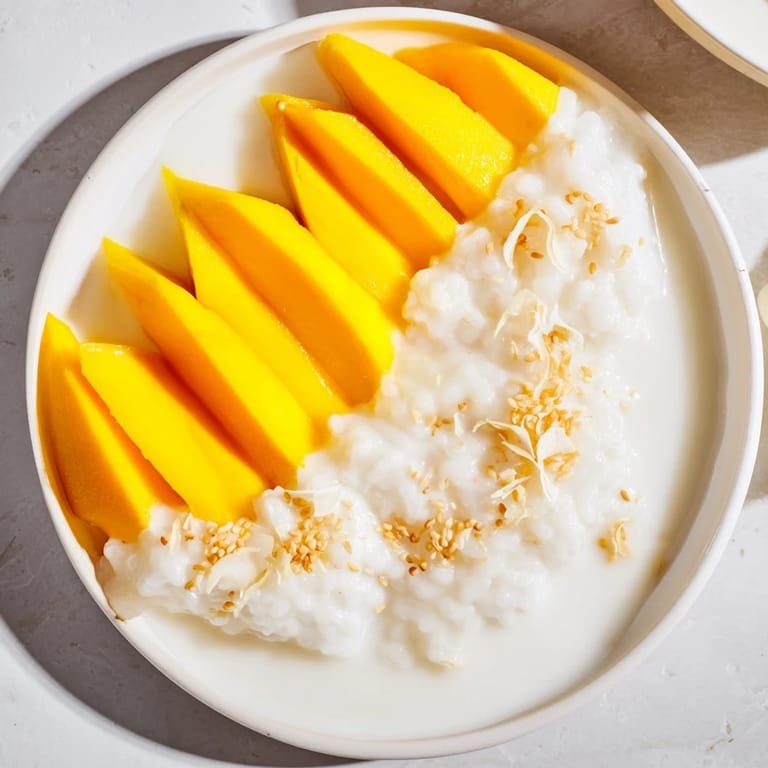
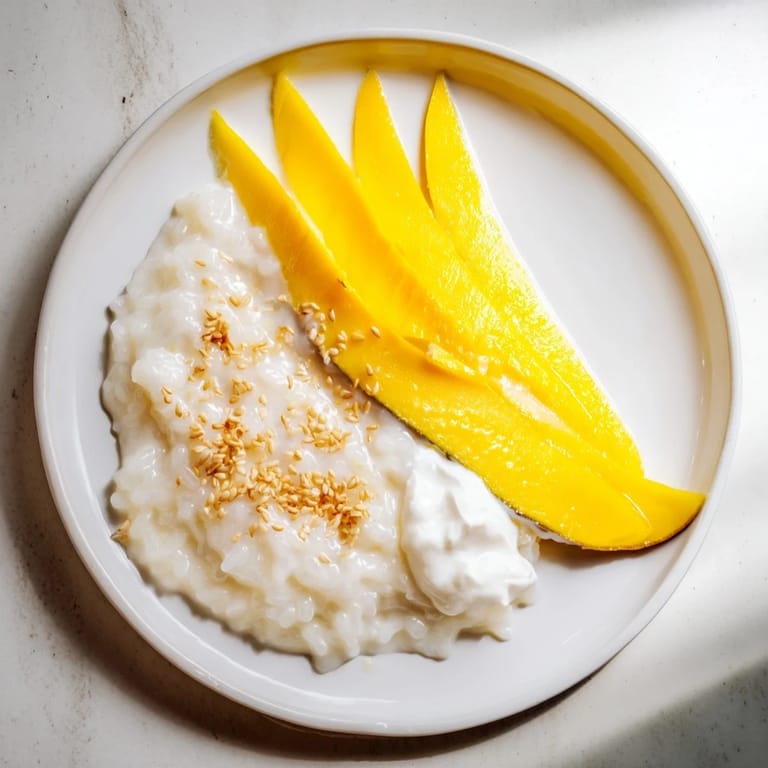
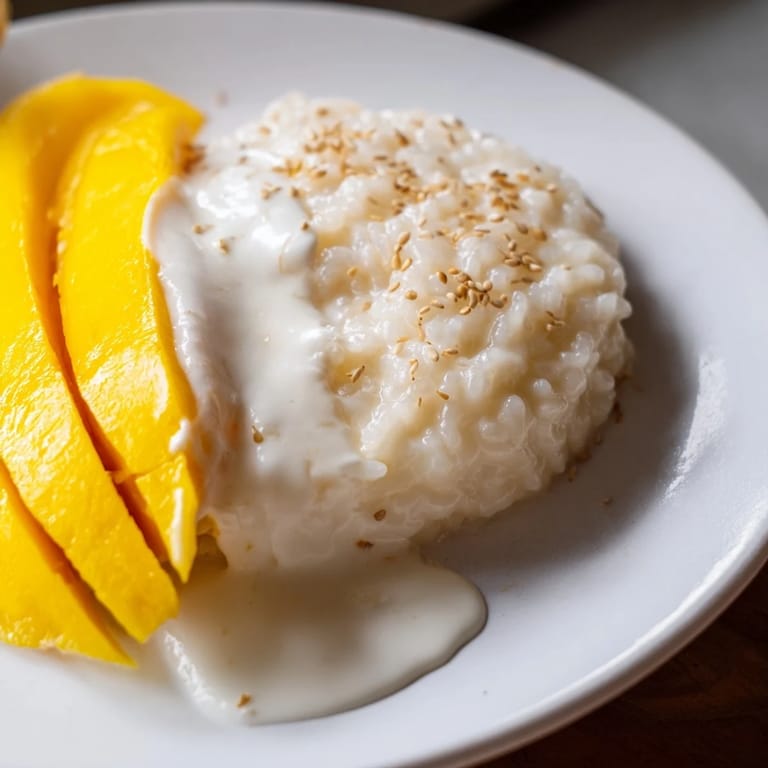
- Mound warm rice on each plate, arrange mango slices in a small pile beside it, and drizzle the remaining sauce over everything. If you're using the optional toppings, scatter a little coconut cream and toasted sesame seeds on top for texture and presentation. Serve while the rice is still warm—this is when all the flavors feel most alive together.
 Save to Pinterest
 There's a moment right when you plate this—that pause where the warm rice is still steaming slightly, the mango is gleaming in whatever light hits your kitchen, and you're about to serve something that looks almost too polished to be homemade. I realized that day that dessert doesn't need to be complicated to feel like love on a plate.
Why Mango and Sticky Rice Found Each Other
The pairing is deceptively simple but built on real contrast: creamy, warm, subtly sweet rice needs something bright and cool and juicy to balance against it, and mango delivers that perfectly. The fruit's natural acid cuts through the richness without needing anything else, and the textural difference—soft rice against firm, slippery mango—keeps every bite interesting. When you understand this balance, you start to see how it shows up everywhere in Thai cooking: the way hot meets cool, rich meets sharp, sweet meets salty.
The Soaking Secret Nobody Talks About
I learned from a Thai cooking teacher that the soak isn't just about softening the rice; it's about equalizing moisture so every single grain cooks at the same speed. Without it, you get a sad mix of overcooked and undercooked pieces, and no amount of sauce can fix that. I now treat the soaking time like an investment that saves me from disappointment later.
Small Choices That Change Everything
The difference between a good mango sticky rice and a great one often comes down to tiny decisions that don't feel important until you taste them. Using full-fat coconut milk instead of lite, letting the rice rest in the sauce instead of serving it immediately, choosing mangoes that smell incredible instead of just ones that look golden—these aren't shortcuts or optional flourishes.
- If your mangoes aren't quite ripe, you can help them along by setting them on a sunny windowsill for a day or two and they'll develop better flavor.
- Toast your sesame seeds or mung beans yourself in a dry pan for 2 minutes instead of buying pre-toasted; the aroma and freshness make a real difference.
- Make the coconut sauce ahead of time and let it cool, then gently warm it again just before serving so you're not rushing.
 Save to Pinterest
 Once you make this once and get it right, you'll find yourself making it all the time for people you care about. There's something about serving warm, creamy rice with bright fruit that feels both impressive and genuinely thoughtful.
Recipe FAQs
- → What type of rice is best for this dish?
Glutinous or sweet rice is ideal as it becomes sticky and holds coconut flavors well when steamed.
- → Can I use regular rice instead of sticky rice?
Regular rice lacks the sticky texture and won’t absorb the coconut sauce properly, so it is not recommended.
- → How do I make the coconut sauce thicker?
Simmer coconut milk with sugar gently until slightly reduced, but avoid boiling to maintain smoothness.
- → Is there a way to add extra fragrance when cooking the rice?
Adding pandan leaves during steaming infuses a subtle floral aroma that complements the dish.
- → What garnishes enhance the flavors best?
Coconut cream and toasted sesame seeds or mung beans add texture and deepen the coconut essence.