 Save to Pinterest
 The smell of ginger hitting hot oil still brings me right back to the tiny kitchen where I first attempted this bowl. I had leftover miso paste from another experiment and a jar of Thai curry paste I'd been too nervous to use. Tossing them together felt reckless, but the broth that emerged was deeper and brighter than anything I'd made before. My partner walked in, sniffed the air, and asked if we were eating out. We weren't, and that moment made me feel like I'd cracked some kind of code.
I made this for a friend who was convinced she didn't like ramen because she'd only ever had the instant kind. Watching her face change as she tasted the broth, then immediately go back for more noodles, was better than any compliment. She texted me two days later asking for the recipe, and now she makes it for her own dinner guests. There's something about a bowl this comforting that turns skeptics into believers every single time.
Ingredients
- Vegetable oil: A neutral base that lets the aromatics shine without adding competing flavors.
- Onion: Finely chopped so it melts into the broth, adding sweetness and body you can feel but not see.
- Garlic cloves: Minced small so they distribute evenly and don't burn when you add the ginger.
- Fresh ginger: Grated releases more juice and fragrance than chopped, and it dissolves into the broth beautifully.
- Thai red curry paste: This is where the fusion happens, bringing heat, complexity, and a slight sweetness that balances the miso.
- Chicken broth: Low sodium gives you control over the saltiness, especially once the miso and soy sauce go in.
- White miso paste: The umami anchor of the bowl, with a mellow sweetness that doesn't overpower the Thai notes.
- Soy sauce: Adds depth and a savory backbone that ties the two flavor profiles together.
- Fish sauce: Just a tablespoon brings a funky, oceanic richness that makes the broth taste lived-in.
- Sugar: A teaspoon rounds out the heat and saltiness, making everything taste more like itself.
- Sesame oil: Stirred in at the end for a toasted, nutty aroma that floats on top of each spoonful.
- Chicken breasts: Seared first for color, then poached gently in the broth so they stay juicy and tender.
- Fresh ramen noodles: They cook fast and have a springy chew that dried noodles can't quite match, though dried works in a pinch.
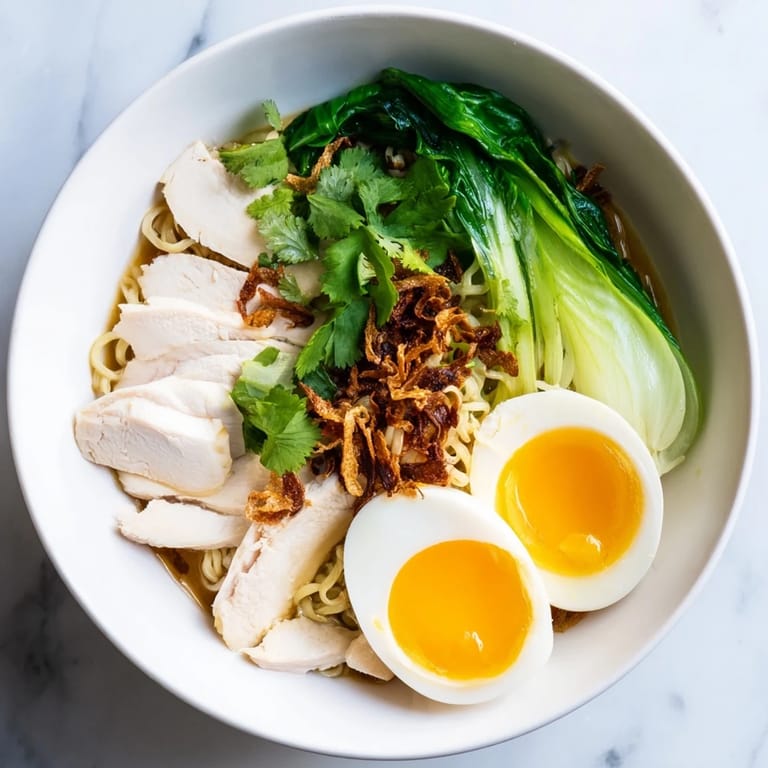
- Bok choy: Halved and blanched just until the stems turn tender but still have a little snap.
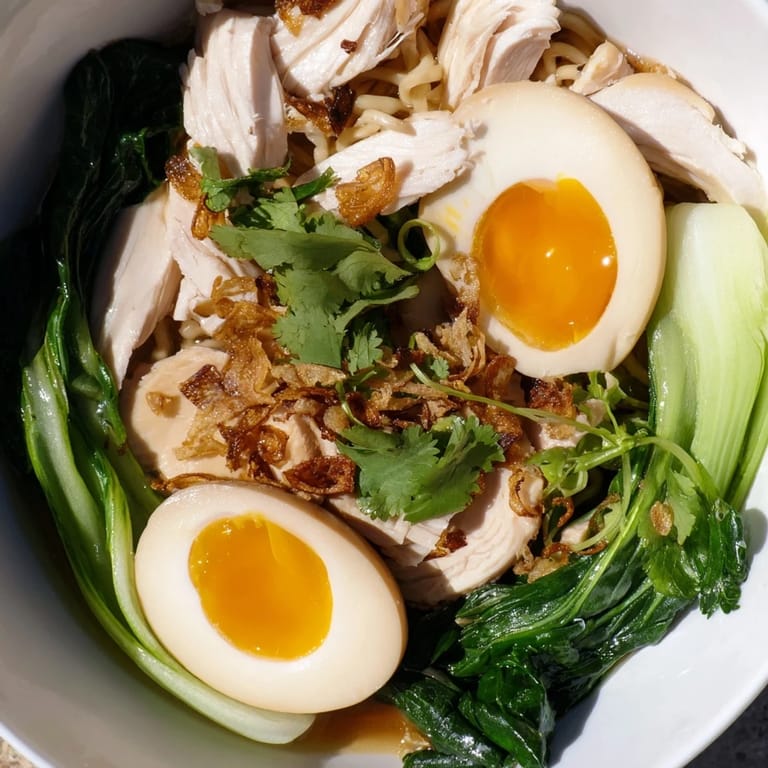
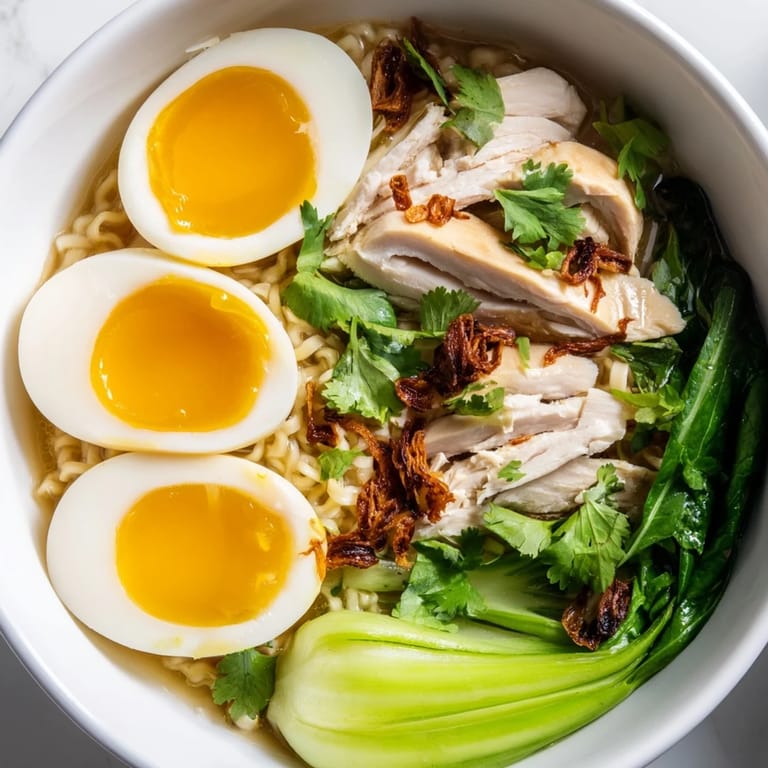
- Eggs: Soft-boiled so the yolks are jammy and spill into the broth, enriching every bite.
- Crispy fried shallots: Store-bought saves time, and they add a sweet crunch that contrasts perfectly with the silky noodles.
- Scallions: Sliced thin and scattered on top for a fresh, sharp bite.
- Red chili: Optional, but the thin slices look gorgeous and give little bursts of heat.
- Fresh cilantro leaves: A handful brightens the bowl and adds an herbal note that cuts through the richness.
- Lime wedges: A squeeze right before eating wakes up every flavor and makes the bowl taste lighter.
Tired of Takeout? 🥡
Get 10 meals you can make faster than delivery arrives. Seriously.
One email. No spam. Unsubscribe anytime.
Instructions
- Sear the chicken:
- Season both sides with salt and pepper, then sear in a hot pot with a little oil until golden and fragrant. This step builds flavor into the broth and gives the chicken a head start on cooking.
- Build the aromatics:
- In the same pot, cook onion until soft, then add garlic and ginger, stirring constantly so nothing sticks. When the curry paste goes in, let it sizzle for a full minute to bloom the spices.
- Simmer the broth:
- Pour in the chicken broth and return the seared chicken to the pot, letting it poach gently until cooked through. Remove the chicken and set it aside to rest before slicing.
- Finish the broth:
- Whisk in miso, soy sauce, fish sauce, sugar, and sesame oil, making sure the miso dissolves completely. Keep the heat low so the broth stays silky and doesn't break.
- Soft-boil the eggs:
- Boil for exactly 7 minutes, then shock in ice water so they stop cooking. Peel carefully and halve them just before serving so the yolks stay glossy.
- Cook the noodles and bok choy:
- Boil the noodles in a separate pot, adding the bok choy in the last 2 minutes. Drain everything together and divide among your bowls.
- Assemble and serve:
- Ladle hot broth over the noodles, then arrange chicken, eggs, shallots, scallions, chili, and cilantro on top. Serve with lime wedges so everyone can adjust the brightness to their liking.
 Save to Pinterest
 One night, I served this to a group of friends who'd never eaten together before, and the table went quiet except for the sound of slurping. Someone finally broke the silence to say it tasted like a hug, and everyone nodded without looking up from their bowls. That's when I realized this dish does more than feed people; it brings them into the same warm, satisfied moment, even if they arrived from completely different days.
Swapping Ingredients
If you can't find fresh ramen noodles, dried ones work just fine, though they take a minute or two longer to cook. I've also used rice noodles when I needed a gluten-free option, and they soaked up the broth beautifully. For a vegetarian version, swap the chicken broth for vegetable stock, skip the fish sauce (or use a vegan version), and add cubes of fried tofu for protein. The Thai curry paste and miso are the heart of this recipe, so those are the two ingredients I wouldn't compromise on.
Adjusting the Heat
The first time I made this, I dumped in two full tablespoons of curry paste and nearly set my mouth on fire. Now I start with one tablespoon and taste the broth before adding more, because different brands vary wildly in heat. If you like it spicy, add extra sliced chili on top or a drizzle of chili oil right before serving. That way, everyone at the table can control their own spice level, and you won't lose any friends over dinner.
Storing and Reheating
Leftover broth keeps in the fridge for up to three days and actually tastes better the next day after the flavors meld. Store the noodles separately, or they'll bloat and turn to mush. When you're ready to eat, reheat the broth gently, cook fresh noodles, and assemble a new bowl with any toppings you have on hand. I've reheated this for solo lunches more times than I can count, and it always feels like a small gift I left for myself.
- Keep cooked chicken and eggs separate from the broth to prevent them from drying out or absorbing too much liquid.
- Crispy shallots lose their crunch if stored with the broth, so add them fresh each time.
- If you're meal prepping, portion out the broth, noodles, and toppings into individual containers for quick assembly later.
 Save to Pinterest
 This bowl has become my answer to cold nights, long weeks, and moments when I need something that feels like care in a dish. I hope it does the same for you.
Recipe FAQs
- → Can I make this dish vegetarian?
Yes, easily. Substitute vegetable broth for chicken broth, omit the fish sauce, and replace the chicken with firm tofu or additional mushrooms. The miso and curry paste provide rich umami flavors without meat.
- → How do I get soft-boiled eggs with a runny yolk?
Boil eggs for exactly 7 minutes, then immediately transfer them to an ice bath to stop cooking. This timing yields a set white with a creamy, jammy yolk that's perfect for ramen bowls.
- → What's the best way to adjust the spice level?
Control heat by varying the amount of Thai red curry paste in the broth or by adding sliced fresh chili to individual bowls. Start with less curry paste and taste as you go, building heat gradually.
- → Can I prepare components ahead of time?
Yes. Make the broth up to two days ahead and refrigerate. Cook chicken and eggs in advance. Assemble bowls fresh with warm broth and noodles just before serving for optimal texture and flavor.
- → What type of noodles work best?
Fresh ramen noodles are ideal for authentic texture and flavor absorption. Dried ramen noodles work well too. Avoid overcooking; follow package instructions carefully to maintain the proper chew and firmness.
- → Are there wine pairings that complement this dish?
Crisp, citrusy white wines like Riesling pair beautifully with the aromatic spices and umami broth. The wine's acidity balances the richness and enhances the curry and miso flavors.