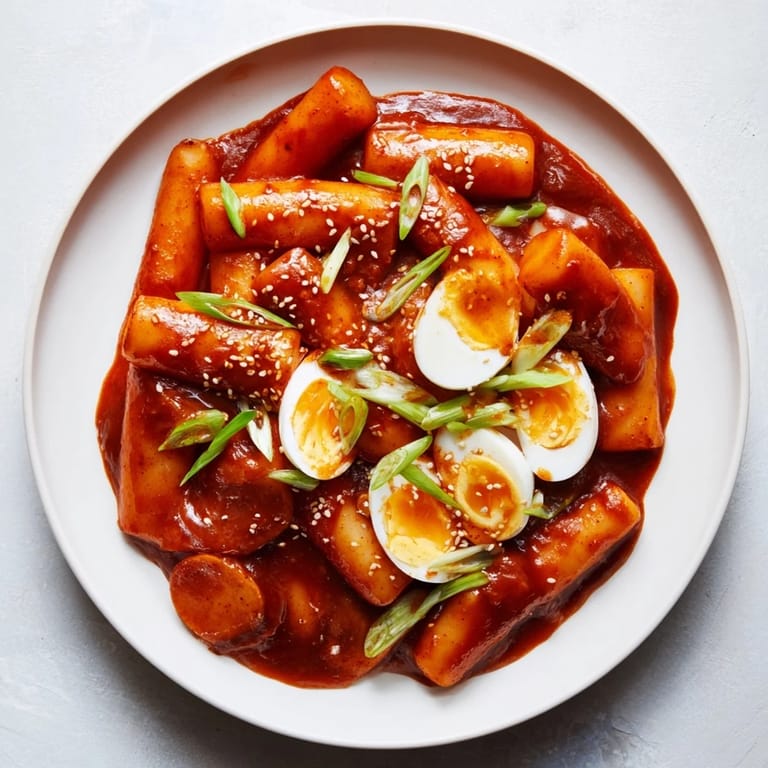
 Save to Pinterest
 My first real encounter with tteokbokki wasn't in a fancy restaurant—it was from a vendor's cart on a rainy Seoul street, the kind where steam rose off the simmering pot and people gathered despite the downpour. I bought a small cup just to warm my hands, but the first chewy rice cake coated in that fiery-sweet gochujang sauce changed how I thought about street food entirely. Now, whenever I make it at home, I chase that exact feeling: the way the kitchen fills with the aroma of garlic and gochugaru, the satisfying softness of the rice cakes, and that moment when someone takes their first bite and their eyes widen slightly at the perfect balance of heat and sweetness.
I remember making this for friends who had never tried it before, and watching them hesitate at the first spoonful because of the vibrant red color. By the third bite, they were asking if I could make it again next week. That's when I realized tteokbokki isn't just food—it's a conversation starter, a dish that brings people together around a shared experience of heat, sweetness, and something unforgettable.
Ingredients
- Rice Cakes (tteok): These cylindrical Korean rice cakes are the foundation of the dish; soaking them briefly keeps them from turning to mush while still absorbing the sauce beautifully.
- Gochujang: This fermented chili paste brings depth and umami that raw chili flakes alone can't achieve—it's worth seeking out the real thing.
- Gochugaru: Korean chili flakes add the heat and color; they're milder and fruitier than most other chili powders, so don't skip them.
- Soy sauce: A touch of salty, savory depth that keeps the dish from being one-dimensional.
- Honey and sugar: Together they create that signature slightly sticky, sweet-heat balance that keeps you reaching for more.
- Garlic: Minced fresh garlic becomes almost mellow when it simmers in the sauce, adding gentle warmth throughout.
- Toasted sesame oil: Just a teaspoon adds a warm, nutty undertone that makes everything taste more sophisticated.
- Kombu and anchovies: These build a quiet, savory broth base that has zero fishiness if done right—it just tastes deeply, comfortingly umami.
- Boiled eggs: They're creamy foils to the spicy sauce and add protein that makes this feel like a real meal.
- Green onion and sesame seeds: Fresh and toasted garnishes that add brightness and crunch at the very end.
Tired of Takeout? 🥡
Get 10 meals you can make faster than delivery arrives. Seriously.
One email. No spam. Unsubscribe anytime.
Instructions
- Start Your Broth:
- Add water, kombu, and anchovies to a saucepan and bring to a gentle boil. The kombu releases subtle sweetness and minerals; the anchovies add invisible umami that tastes savory rather than fishy. Simmer for 10 minutes, then remove both so your broth stays clear and bright.
- Prepare the Rice Cakes:
- While your broth is building, soak the rice cakes in warm water for 10 minutes—this keeps them from falling apart later and ensures they're tender enough to eat without resistance. If you forget to soak them, they'll stay chalky.
- Boil the Eggs:
- Time them for 8–9 minutes while everything else is happening, then shock them in cold water so they peel cleanly. The golden jammy center is beautiful in the finished dish, but you can cook them longer if you prefer.
- Build Your Sauce:
- Stir gochujang, gochugaru, soy sauce, sugar, honey, minced garlic, and sesame oil into your warm broth until smooth. The fermented paste can seem reluctant to dissolve—keep stirring and it will eventually let go into the liquid.
- Simmer the Rice Cakes:
- Add the drained rice cakes, sliced onion, and fish cake (if using) to the sauce and stir gently to coat. Let it simmer over medium heat for 10–12 minutes, stirring occasionally, until the sauce thickens and clings to the cakes like a glaze.
- Finish and Serve:
- Gently nestle the boiled eggs into the pot and warm them through for 2–3 minutes. Scatter green onion and toasted sesame seeds over the top, and serve immediately while everything is steaming hot.
 Save to Pinterest
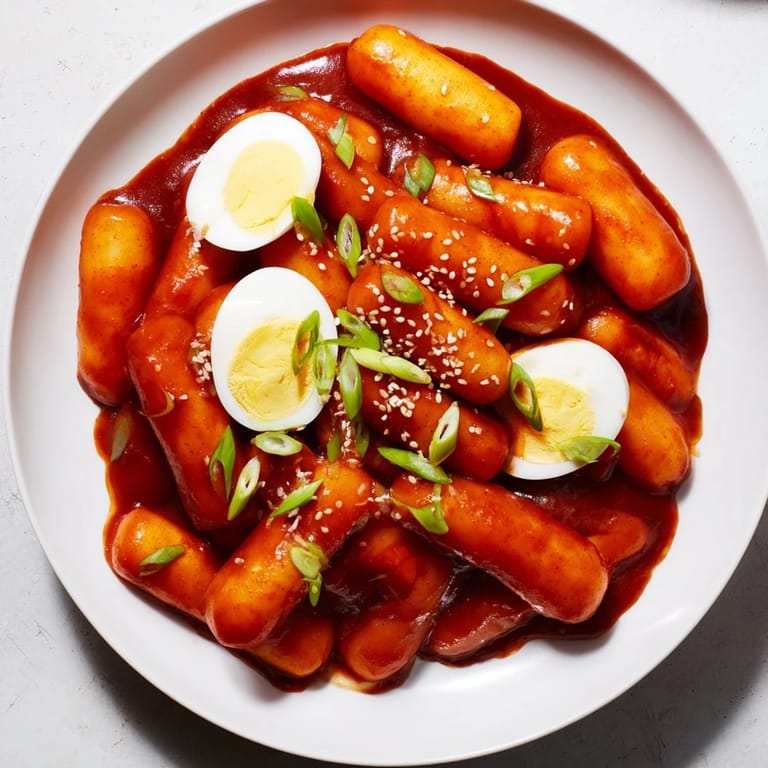
 There was one evening when I made this for my neighbor who'd been having a rough week, and she sat on my kitchen counter swinging her legs like a kid while we ate straight from the pot. She said it tasted like courage, which made me laugh—but I understood exactly what she meant. Sometimes food is just the excuse to slow down and sit with someone.
The Secret to Perfect Texture
The magic of tteokbokki lives in the texture contrast: the chewiness of the rice cakes against the silky sauce, the creamy softness of the egg yolks, the slight chew of the fish cake if you use it. I learned this by making the dish a dozen different ways—sometimes overcooking the cakes into mush, sometimes undercooking them so they had a chalky center. The window is narrow, but once you feel it, you'll know: the cakes should be soft enough to cut with a spoon but still hold their shape, and the sauce should be thick enough to coat but not so thick it's paste-like. If it gets too thick, water is your friend.
Heat Level: Making It Your Own
I used to think more gochugaru meant better tteokbokki, until I made it for people who couldn't handle the heat and realized I'd been missing half the flavor. The recipe as written is medium-spicy—enough to make you notice, but not enough to overpower. If you like it milder, reduce the gochugaru by half and add an extra tablespoon of honey for sweetness. If you want it to set your mouth on fire, increase both chili ingredients by 50 percent and skip the honey entirely. The balance is personal, and part of the fun is learning what your own tolerance is and adjusting accordingly.
Variations and Add-Ins
Once you understand the basic formula, tteokbokki becomes a blank canvas for whatever you have on hand or whatever you're craving. I've added shredded cabbage and julienned carrots for crunch, ramen noodles for extra substance, or even sliced mushrooms for earthiness. My friend who's vegetarian takes out the fish cake and anchovies and adds more garlic and a pinch of nori for that savory depth. The rice cakes are so adaptable that almost anything tastes better simmered in this spicy-sweet sauce.
- Cabbage and carrots add sweetness and crunch that balances the heat beautifully.
- Ramen noodles or regular noodles make it heartier and more filling.
- A sheet of nori torn up at the end adds a salty, umami note for vegetarian versions.
 Save to Pinterest
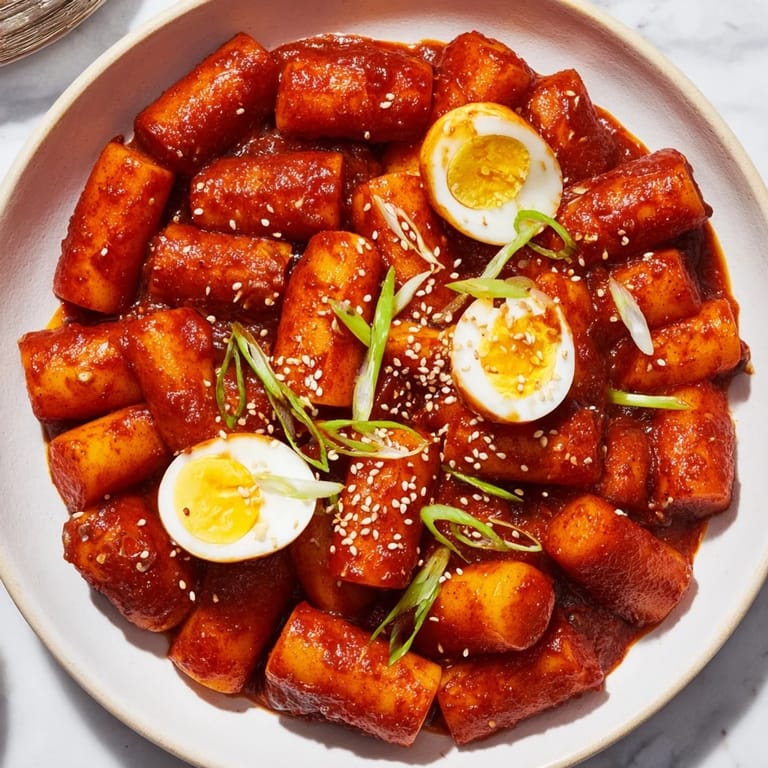
 Tteokbokki is the kind of dish that feels like a small celebration in a bowl, and there's no better reason to make it than because you want comfort, or heat, or to share something delicious with someone who matters. Make it tonight.
Recipe FAQs
- → How do I soften the rice cakes before cooking?
Soak the rice cakes in warm water for 10 minutes if they are hard or refrigerated to ensure they cook evenly and become tender.
- → What can I use as a substitute for anchovies in the broth?
For a vegetarian version, simply omit anchovies and fish cake, using vegetable broth or kombu alone for umami flavor.
- → How long should the eggs be boiled for ideal texture?
Boil eggs for 8 to 9 minutes to achieve a tender, fully cooked center that complements the spicy sauce.
- → Can I adjust the spice level?
Yes, vary the amount of gochujang and gochugaru according to your preferred heat intensity without sacrificing flavor balance.
- → What garnishes enhance the dish?
Green onions and toasted sesame seeds add freshness and a nutty crunch that pairs well with the rich sauce and chewy cakes.