 Save to Pinterest
 One Thursday evening, I was craving pho but had exactly thirty-five minutes before guests arrived. Instead of abandoning the idea, I realized the magic wasn't in simmering for hours—it was in layering the right spices and letting the heat do the work. That night, bowls of fragrant, complex broth appeared on the table without the usual marathon in the kitchen, and nobody suspected it was anything but traditional. Since then, this express version has become my go-to for weeknight dinners when the craving hits hard and time is short.
I remember my friend Sarah watching skeptically as I assembled everything—she'd grown up eating her grandmother's pho and was convinced shortcuts meant compromise. When she tasted that first spoonful and realized the broth was still silky and aromatic, her expression shifted. She asked for the recipe immediately, and now she makes it for her own family on busy weeknights.
Ingredients
- Low-sodium beef or chicken broth (8 cups): The foundation matters; start with quality broth because you're not masking it with hours of simmering, and every flavor note shows.
- Fresh ginger and onion: These charred slightly if you have the time, release deeper, more complex sweetness into the broth than raw versions.
- Star anise, cinnamon stick, and cloves: The holy trinity of pho spice; they work together to create warmth without any single flavor dominating.
- Fish sauce and soy sauce: Fish sauce is non-negotiable for authentic depth, but don't skip tasting as you go—a teaspoon too much tips it salty.
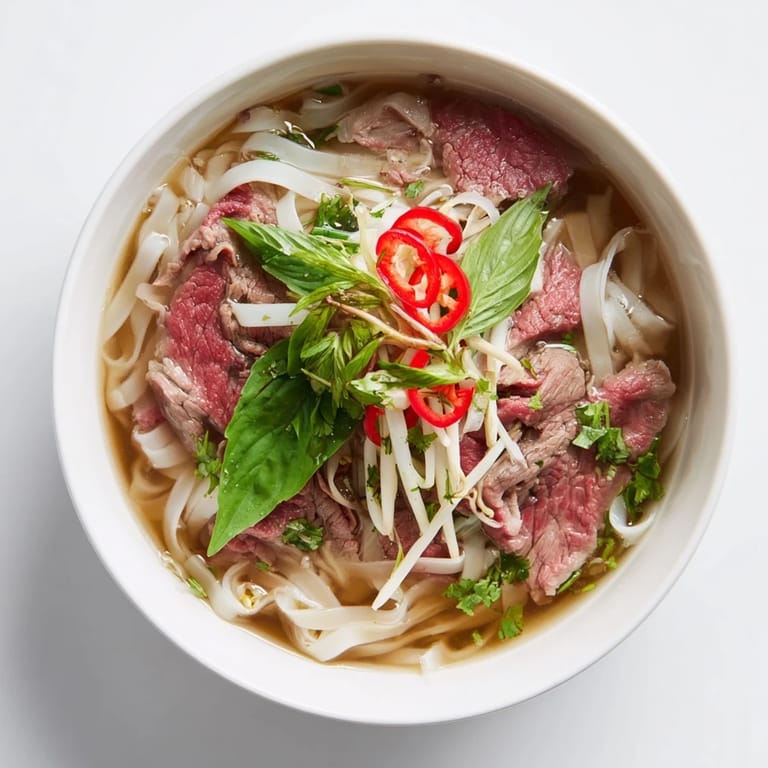
- Beef sirloin or eye round, thinly sliced: Slice it yourself if possible so you can go thinner than pre-packaged; thin slices cook perfectly in the residual heat of the broth.
- Fresh flat rice noodles (bánh phở): Fresh noodles cook faster and have better texture than dried, though dried work beautifully too.
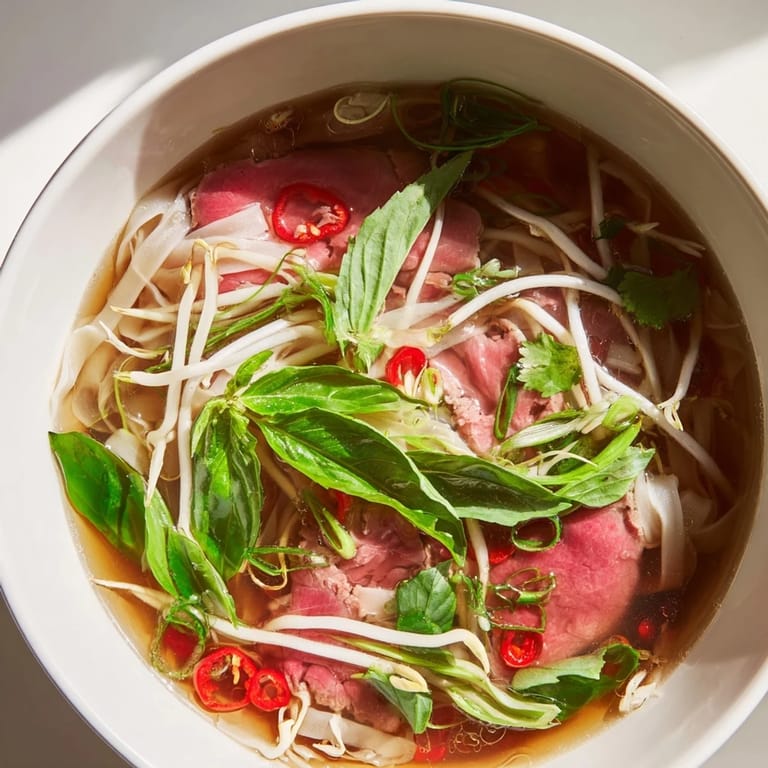
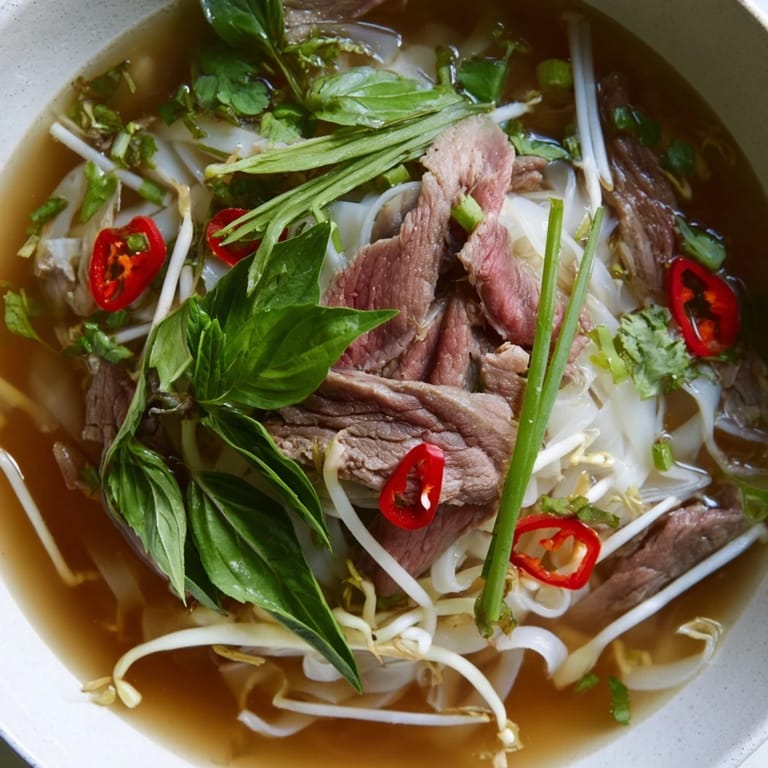
- Fresh herbs and garnishes: Thai basil, cilantro, and bean sprouts are not optional—they're the brightness that makes each spoonful feel alive and fresh.
Tired of Takeout? 🥡
Get 10 meals you can make faster than delivery arrives. Seriously.
One email. No spam. Unsubscribe anytime.
Instructions
- Build your aromatic base:
- Combine broth, onion, ginger, star anise, cinnamon, and cloves in a large pot and bring to a boil. The kitchen will start smelling incredible within moments. Reduce heat and simmer uncovered for twenty minutes so those spices infuse gently without burning.
- Season and strain:
- Add fish sauce, soy sauce, sugar, and salt, then simmer five more minutes. The broth deepens in color and aroma. Strain through a fine-mesh strainer to remove all solids, leaving you with clear, silky broth that you'll return to low heat to keep hot.
- Prepare the noodles:
- While the broth simmers, cook rice noodles according to package directions, then drain and divide among four large bowls. This timing lets you work without rushing at the end.
- Arrange the raw protein:
- Lay thin slices of beef directly over the warm noodles in each bowl. Don't worry—the hot broth will cook it perfectly in seconds.
- The magic pour:
- Ladle the hot broth directly over the meat and noodles in each bowl. Watch as the beef slices turn opaque and tender almost instantly. This is where the express magic happens.
- Top and serve:
- Scatter bean sprouts, Thai basil, cilantro, scallions, and chili over each bowl. Serve lime wedges, hoisin, and Sriracha alongside so everyone customizes their bowl exactly as they like it.
 Save to Pinterest
 There was a moment during that first dinner party when everyone fell quiet at the same time, spoons poised over their bowls. The table had transformed from casual chatter into focused appreciation. That silence told me everything—pho isn't just about tradition or hours spent simmering; it's about the care you take in those thirty-five minutes to get the details right.
The Broth is Everything
I learned this the hard way when I once tried to rush by skipping the initial twenty-minute simmer. The spices barely registered, and the broth tasted thin and flat. The second time, I let it simmer properly and understood that those twenty minutes aren't wasted time—they're the foundation transforming individual spices into a coherent, aromatic whole. There's no shortcut around it, and that's exactly why this recipe still feels special even though it's quick.
Building Flavor in Layers
The strategy here is to let each ingredient do its job: the onion and ginger provide base sweetness and sharpness, the warm spices add complexity, fish sauce brings umami depth, and the fresh herbs at the end cut through with brightness. I used to think more ingredients meant better flavor, but pho taught me that restraint and timing matter more than quantity. You're building a bowl that feels balanced and alive in every spoonful, not a bowl that tastes like you threw everything at it.
Topping Strategy and Customization
The beauty of express pho is that you can prep most toppings while the broth simmers, then let guests build their own bowls exactly how they like them. I've noticed that people are more adventurous with fresh herbs when they're controlling their own bowl, and the whole meal feels less formal and more interactive. That shift from you serving to everyone participating makes a simple weeknight dinner feel almost celebratory.
- Don't skip the lime—the acidity transforms the entire experience and makes flavors pop.
- If you have time, quickly char some fresh shallots in a dry pan; their sweetness is an incredible addition that nobody expects.
- Bean sprouts can be swapped for shredded cabbage or even thinly sliced mushrooms if that's what you have on hand.
 Save to Pinterest
 This pho has become my answer to the question of how to make something feel special and authentic without turning it into a whole production. It's proof that good food doesn't always need hours to develop depth—just the right elements, proper timing, and genuine care.
Recipe FAQs
- → What broth is used for this dish?
A light, flavorful broth made from low-sodium beef or chicken stock, infused with onion, ginger, star anise, cinnamon, and cloves.
- → Can I substitute the meat for a vegetarian option?
Yes, tofu can replace meat, and vegetable broth can be used to maintain depth of flavor.
- → How are the noodles prepared?
Flat rice noodles are cooked according to package instructions, then drained and placed in serving bowls before adding broth and meat.
- → What herbs and garnishes complement this dish?
Fresh Thai basil, cilantro, scallions, bean sprouts, and optional chili slices add brightness and texture to the dish.
- → How is the meat cooked in this preparation?
Thinly sliced beef or chicken is layered over noodles and cooked instantly by ladling hot broth over them.
- → Are there any tips for enhancing broth flavor?
Lightly charring onion and ginger before simmering enhances the broth’s aromatic depth.