 Save to Pinterest
 The first snow of winter had just blanketed our neighborhood when I felt an urge to create something warming from within. Standing at the kitchen window, watching flakes gather on bare branches, I reached for my grandmother's worn recipe notebook and found her minestrone variations. The vegetables in my fridge were calling to be transformed into something nourishing, and butternut squash seemed the perfect seasonal addition. That afternoon, the windows steamed up as my kitchen filled with a fragrance that made even my teenager emerge from his room.
Last November, I brought a big pot of this minestrone to our neighborhood potluck. My neighbor Giovanni, an Italian transplant who rarely compliments American versions of his homeland dishes, asked for the recipe with surprising enthusiasm. His wife later confessed he had made it three times the following week, each time claiming he was improving upon my recipe, but secretly following it to the letter. The warm feedback from friends huddled around steaming bowls convinced me this soup was worth sharing beyond our little community.
Ingredients
- Butternut squash: The natural sweetness balances the earthiness of the kale, and I discovered that cutting it into small, even cubes about half an inch across ensures they cook perfectly without turning to mush.
- Cannellini beans: These creamy white beans give the soup body and protein, and I always keep the liquid from half the can to add richness to the broth.
- Kale: Strip the leaves from the tough stems before chopping, as those stems never seem to soften no matter how long you simmer them.
- Small pasta: Little shapes like ditalini capture broth in their hollows, creating perfect flavor bombs in each bite.
- Bay leaf: This unassuming ingredient works quiet magic in the background, dont skip it.
Tired of Takeout? 🥡
Get 10 meals you can make faster than delivery arrives. Seriously.
One email. No spam. Unsubscribe anytime.
Instructions
- Create your flavor base:
- Heat olive oil in a large pot over medium heat, then add onion, carrots, and celery, sautéing until they begin to soften and the onions turn translucent. This trio, known as mirepoix, builds the foundation of flavor that makes this soup so comforting.
- Bloom the aromatics:
- Stir in minced garlic and cook just until you can smell its fragrance wafting up, about one minute. You'll know it's ready when the scent shifts from sharp to sweet.
- Add the hearty vegetables:
- Tumble in your butternut squash and zucchini, giving everything a good stir to coat with oil. Let these vegetables cook for about five minutes, stirring occasionally as they begin to soften slightly at the edges.
- Build your broth:
- Pour in diced tomatoes, vegetable broth, bay leaf, and dried herbs, allowing the pot to come to a gentle boil. The kitchen will start filling with a warm, herbaceous aroma that signals good things are happening.
- Simmer to marry flavors:
- Reduce heat to a simmer and cover the pot, allowing the vegetables to become tender while the herbs infuse the broth. The squash should yield easily to a fork but still hold its shape.
- Add final components:
- Stir in beans, pasta, and kale, then simmer uncovered until the pasta is al dente and the kale has wilted into the soup. The broth will reduce slightly, concentrating the flavors.
- Final touches:
- Remove the bay leaf, then taste and adjust seasoning with salt and pepper. Your soup should taste bright yet deeply satisfying.
- Serve with love:
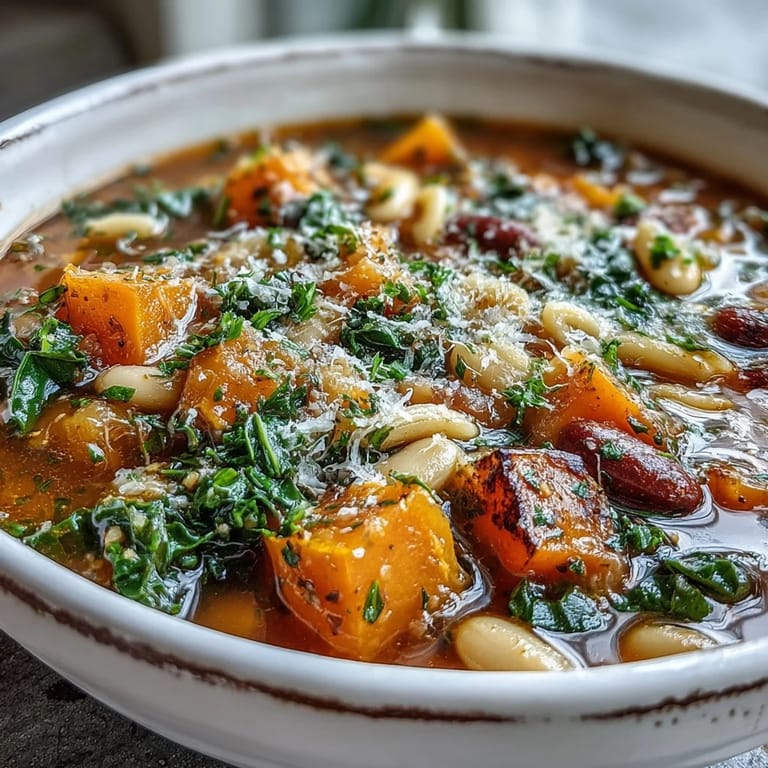
- Ladle into bowls and garnish with a sprinkle of Parmesan and fresh parsley if desired. A piece of crusty bread for dipping makes this a complete meal.
 Save to Pinterest
 One particularly harsh winter evening, when the power flickered during a storm, we gathered around our gas stove with this minestrone bubbling in the dim light. My daughter, usually picky about vegetables, asked for seconds and then thirds, claiming the warm spices made her feel safe as the wind howled outside. In that moment, this soup transcended mere sustenance, becoming a source of comfort and connection that I'll always associate with family resilience and the simple joy of sharing warmth from a single pot.
Seasonal Adaptations
Over years of making this minestrone, I've learned it's less a rigid recipe and more a template that shifts with the seasons. Spring brings tender asparagus and fresh peas. Summer calls for yellow squash and fresh tomatoes instead of canned. Autumn welcomes sweet potato or pumpkin in place of butternut squash. Winter is perfect for heartier greens like collards that need a bit more cooking time. The soup grows and changes as my garden does, each version a snapshot of a particular moment in the year.
Making It Ahead
After numerous Sunday meal preps, I've discovered this soup actually improves with age. The flavors meld and deepen overnight, with the herbs and vegetables continuing their slow dance in the refrigerator. By Tuesday lunch, what started as a good soup has transformed into something remarkable. I often make a double batch specifically to enjoy this evolution of flavor, though I've learned the hard way to add the pasta just before serving if I know we'll be eating it throughout the week.
Serving Suggestions
This minestrone deserves companions that enhance its rustic charm without overshadowing its complex flavors. A simple green salad dressed with lemon and olive oil offers a bright counterpoint to the rich soup. Garlic-rubbed toast or a chunk of grainy sourdough provides textural contrast and soaks up the broth beautifully. For special occasions, I'll serve small bowls as a first course before a main of roasted fish or a simple pasta, allowing the soup to set the tone for a meal that feels both nourishing and elegant.
- For a complete protein boost, sprinkle hemp seeds or chopped walnuts over each serving instead of cheese.
- A swirl of good olive oil just before serving adds a luxurious mouthfeel that elevates the entire experience.
- Keep a jar of quick-pickled red onions in the refrigerator to add a tangy brightness that cuts through the richness.
 Save to Pinterest
 Whether its the first snowfall or just a Wednesday needing a bit of comfort, this winter minestrone brings people together around something honest and nourishing. As my grandmother would say, a good soup feeds more than just the body.
Recipe FAQs
- → Can I make this minestrone gluten-free?
Absolutely. Simply substitute the pasta with your favorite gluten-free variety, or omit it entirely and add an extra can of beans for more protein and substance.
- → How long does this soup keep in the refrigerator?
Stored in an airtight container, this minestrone will stay fresh for 4-5 days. The pasta will absorb some liquid, so you may need to add a splash of broth when reheating.
- → Can I freeze this soup?
Yes, it freezes beautifully for up to 3 months. For best results, slightly undercook the pasta before freezing, as it will continue to soften when reheated. Thaw overnight in the refrigerator.
- → What vegetables can I substitute?
Feel free to use spinach instead of kale, swap butternut squash for sweet potatoes or acorn squash, or add other seasonal vegetables like green beans or diced potatoes. The base flavors remain delicious.
- → How can I make this soup more filling?
Add an extra can of beans, increase the pasta to 1.5 cups, or serve with crusty bread for dipping. A drizzle of olive oil and extra Parmesan on top also adds satisfying richness.
- → What's the purpose of the Parmesan rind?
Simmering a Parmesan rind in the broth adds deep umami flavor and subtle creaminess without overpowering the vegetables. Simply remove it before serving.