 Save to Pinterest
 There's something about the way prosciutto sizzles in a hot pan that makes you feel like you're cooking in a Tuscan kitchen, even if you're just standing in your apartment on a Tuesday afternoon. I discovered this salad completely by accident when I had a half-head of frisée that needed rescuing and three perfectly ripe pears sitting on the counter. The combination clicked instantly, and I realized that sometimes the best meals come from working with what you have rather than following a plan. That first bite changed how I think about salads entirely.
My mom tasted this the week I first made it and immediately asked if I'd been secretly taking cooking classes. She sat at my kitchen counter, fork in hand, asking what made it taste so much more interesting than the sad salads she usually threw together. I realized then that it wasn't complexity she was tasting, but intention, the way each ingredient actually plays a role instead of just filling the bowl.
Ingredients
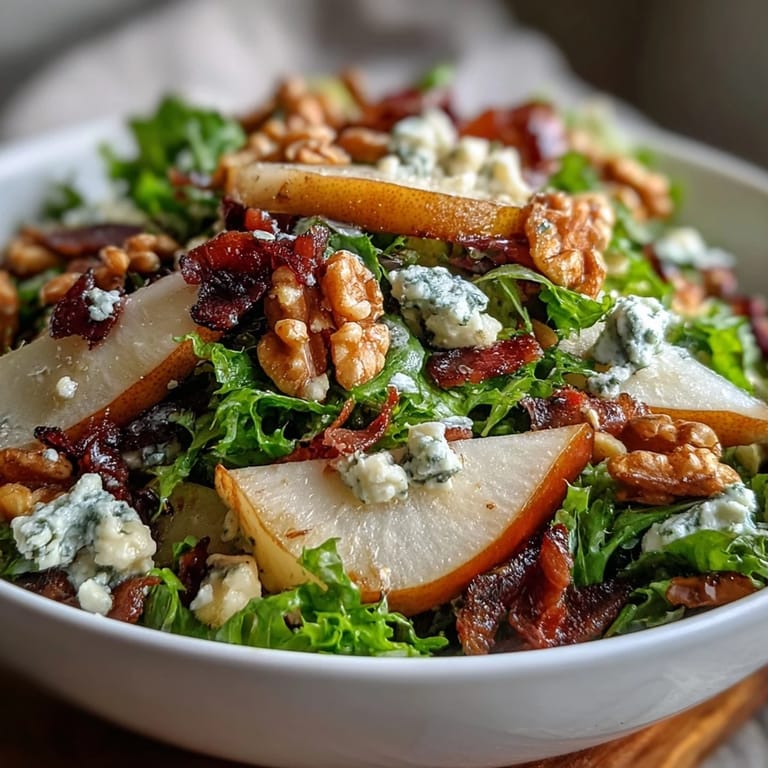
- Frisée lettuce: The bitter greens are the backbone here, way more interesting than regular lettuce and they actually hold up to the vinaigrette without getting soggy.
- Ripe pears: Make sure they give slightly when you squeeze them gently, because underripe pears will taste grainy and make the whole salad feel deflated.
- Blue cheese: Don't be shy with it, this is where the umami happens that makes people pause and ask what the secret ingredient is.
- Prosciutto: Crisping it in the pan is non-negotiable, it goes from soft and forgettable to this salty, snappy element that changes everything.
- Walnuts: Toasting them yourself makes a real difference in the flavor, the oil in the nuts actually comes alive when they're warm.
- Extra-virgin olive oil: This is not the time to use the cheap bottle, the quality really comes through in a simple vinaigrette.
- White wine vinegar: It's bright without being harsh, and the honey mellows it out so it doesn't taste aggressive.
- Dijon mustard: Just a teaspoon acts like a backbone, holding all the dressing flavors together and adding a subtle warmth.
Tired of Takeout? 🥡
Get 10 meals you can make faster than delivery arrives. Seriously.
One email. No spam. Unsubscribe anytime.
Instructions
- Crisp the prosciutto:
- Heat your skillet over medium heat and lay the slices flat, they'll start releasing their fat and curling up around the edges. After 2 to 3 minutes per side, they should sound crispy when you touch them with the fork, and that's when you know they're ready.
- Build the dressing:
- Whisk everything together in a small bowl until it's smooth and emulsified, the mustard and honey are doing the heavy lifting here to keep the oil and vinegar from separating. Taste it on a piece of frisée before you commit to the whole salad, you might want more honey or vinegar depending on your pears.
- Assemble with intention:
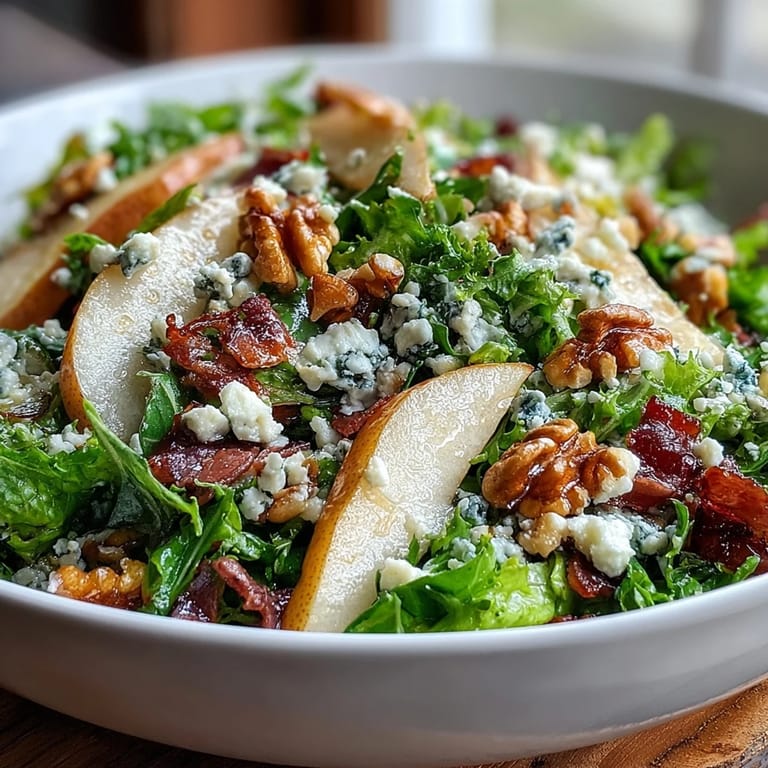
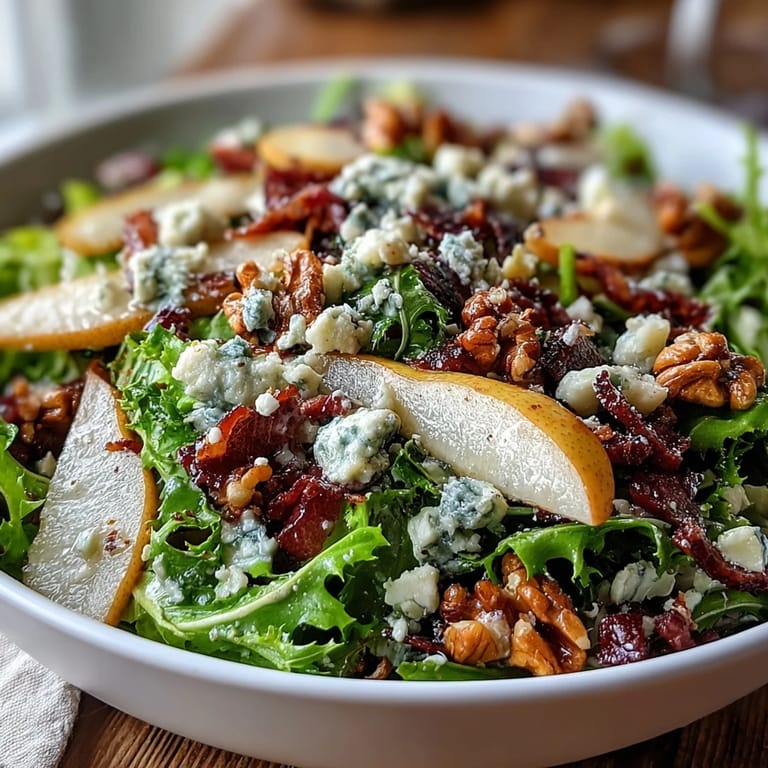
- Put the frisée in your bowl first, then scatter the pears, cheese, walnuts, and prosciutto pieces across the top like you're arranging something that matters. This way everything gets distributed evenly and people actually get a bit of everything in each bite.
- Dress and serve immediately:
- Drizzle the vinaigrette over everything and toss gently, the goal is to coat everything without bruising the frisée or mashing the pears. Serve it right away before anything gets soggy or the prosciutto loses its snap.
 Save to Pinterest
 I made this for a dinner party once and watched three different people pause mid-bite to ask what was in it, and somehow that moment made me understand why people love cooking. It's not about impressing, it's about creating something that makes people actually stop and notice what they're eating.
When to Serve This
This salad works as a first course before something rich, or as a light lunch on its own with a piece of good bread. I've also made it as a side for roasted chicken or fish, and the brightness cuts through the richness perfectly.
The Blue Cheese Question
Not everyone loves blue cheese, and that's okay, but I'd encourage you to try it at least once with a really good one. If you absolutely can't do it, a sharp aged cheddar gives you that salty funk you need, or go mild with goat cheese if you want something creamier and less intense.
Variations and Flexibility
This salad is forgiving in a way that makes it perfect for experimenting, you can substitute or add things without breaking it. The structure stays solid because the bitter-sweet-salty-tangy balance is what matters, not the exact ingredients.
- Roasted chickpeas work beautifully instead of prosciutto if you're vegetarian, giving you that textural contrast and a bit of earthiness.
- Swap the pears for ripe peaches in summer or persimmons in fall, the principle stays the same.
- A handful of pomegranate seeds adds a pop of color and tartness if you want another layer of texture.
 Save to Pinterest
 This salad taught me that sometimes the most satisfying meals are the ones that come together quickly with simple ingredients that actually respect each other. Make it when you want something that feels special but doesn't demand hours in the kitchen.
Recipe FAQs
- → What makes frisée special in this bowl?
Frisée brings a pleasant bitterness and curly, crisp texture that stands up beautifully to rich ingredients like blue cheese and prosciutto. Its sturdy leaves hold dressing well without becoming soggy.
- → Can I prepare this ahead of time?
Prepare components separately—crisp the prosciutto, toast walnuts, slice pears with lemon juice, and whisk dressing. Toss everything just before serving to maintain the ideal texture and prevent wilting.
- → What blue cheese works best?
Classic Roquefort offers sharp intensity, while Gorgonzola dolce provides creamier mildness. Stilton or Danish blue deliver balanced tang. Choose based on your preference for boldness versus subtlety.
- → How do I achieve crispy prosciutto?
Cook slices in a non-stick skillet over medium heat for 2-3 minutes per side until deeply crisped. The rendered fat creates incredible crunch. Drain on paper towels before breaking into pieces.
- → What vegetarian substitutions work well?
Replace prosciutto with crispy roasted chickpeas, pancetta-style coconut chips, or smoked salted almonds. These alternatives maintain the savory crunch and salty element that balances the sweet pears.
- → Which pear variety should I use?
Bosc and Anjou offer firm texture that holds shape when sliced. Bartlett provides sweetness but softens quickly. Choose pears yielding slightly to gentle pressure—fully ripe but not mushy for best results.