 Save to Pinterest
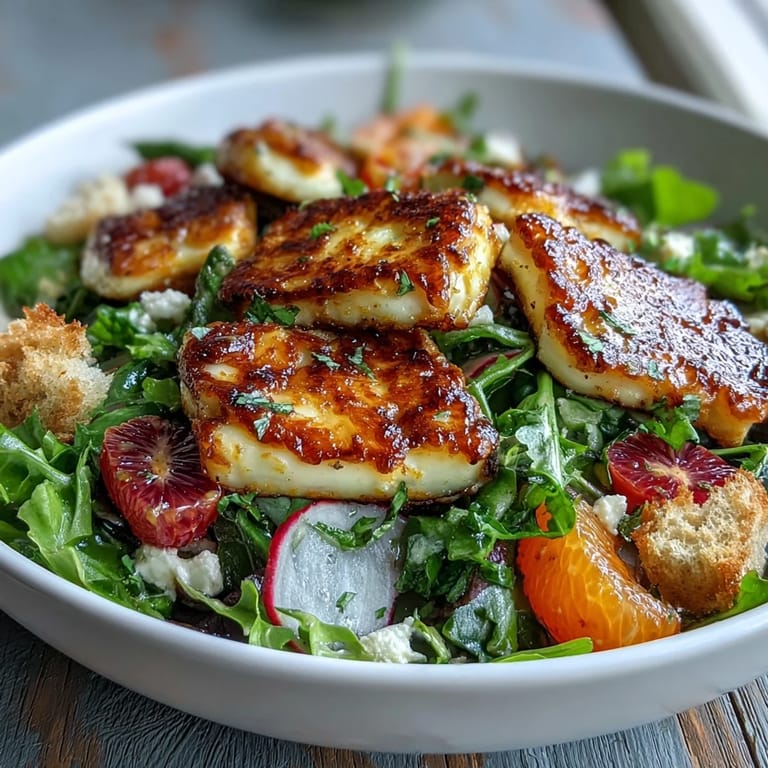
 There's something about the contrast of warm, squeaky halloumi against cool, jewel-like blood orange segments that stopped me in my tracks the first time I put them together. I was rummaging through the market one winter afternoon when the blood oranges caught my eye—deep crimson skin, almost too beautiful to cut into. That evening, I remembered a fattoush I'd eaten years ago, all tangled greens and sharp dressing, and thought: what if I brought these two things into conversation? The result was this salad, which has become my go-to when I want something that feels both celebratory and casual.
I made this for a friend who'd just moved to the neighborhood, and she arrived with the kind of hunger that comes from unpacking boxes all day. As I finished plating, the aroma of the fried halloumi filled the kitchen—salty, slightly sweet from the cheese—and I watched her face change the moment she took that first bite. She closed her eyes for a second, then laughed and said it tasted like someone had figured out exactly what she needed that day. It became her go-to request after that.
Ingredients
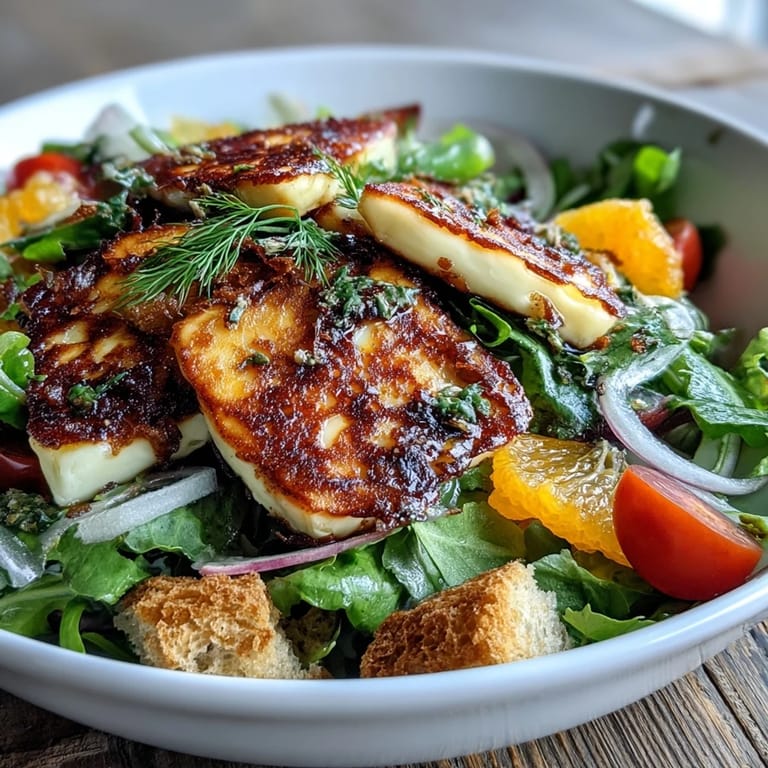
- Halloumi cheese, 200 g sliced into 1 cm thick pieces: This is the anchor of the dish—it's the only cheese that fries instead of melting into nothing, and those caramelized edges are what everything else plays off.
- Blood oranges, 2 peeled and segmented: If you can find them, use them; they're more tart than regular oranges and their color is part of the beauty here.
- Mixed salad greens (romaine, arugula, parsley, mint), 150 g: The parsley and mint are crucial—they add a green, herbaceous note that balances the richness of the cheese and the brightness of the citrus.
- Cucumber, 1 small diced: Keeps everything fresh and cool; don't peel it unless you want to lose the pleasant bitterness of the skin.
- Cherry tomatoes, 8 halved: Choose ones that smell fragrant; they're your sweetness.
- Red onion, ½ small thinly sliced: Raw red onion can be harsh, so I slice it thin and sometimes let it sit in a tiny bowl of cold water for five minutes to soften its bite.
- Radishes, 2 thinly sliced: These add a gentle peppery crunch that keeps the salad from feeling soft.
- Sourdough bread, 2 thick slices cut into cubes: Use day-old bread if you have it; fresh bread gets soggy faster, and you want these croutons to stay crispy until the last bite.
- Olive oil for croutons, 2 tbsp: A neutral extra virgin is fine here since they'll brown quickly.
- Extra virgin olive oil for dressing, 3 tbsp: This is where you use your good oil—the kind that tastes peppery or grassy, because it's the foundation of the whole flavor.
- Fresh lemon juice, 1½ tbsp: Squeeze it fresh; bottled lemon juice tastes flat and tired by comparison.
- Pomegranate molasses, 1 tbsp: This is the secret ingredient that makes people ask what you did differently—it's tart and a little floral, nothing like regular molasses.
- Sumac, 1 tsp: A spice I didn't know existed until a few years ago, and now I use it constantly; it's lemony and slightly astringent, and it turns a good salad into a memorable one.
- Ground black pepper and sea salt: Season to your taste; I always add a touch more than the recipe calls for because the cheese is salty.
Tired of Takeout? 🥡
Get 10 meals you can make faster than delivery arrives. Seriously.
One email. No spam. Unsubscribe anytime.
Instructions
- Make the croutons while the oven wakes up:
- Heat your oven to 200°C (400°F). Toss sourdough cubes in olive oil and sea salt—they should glisten but not swim in oil. Spread them on a baking tray in a single layer and slide them in for 8–10 minutes; you're listening for a gentle crackle and watching for that moment when they turn from pale to golden. Set them aside to cool and crisp up further.
- Fry the halloumi until it's golden and chatty:
- Place a non-stick skillet over medium heat—don't rush this step, let the pan get warm. Lay the halloumi slices in without crowding and listen for them to start singing after about a minute; flip after 2–3 minutes when the bottom is that gorgeous caramel color. The other side needs just as long. Transfer to a paper towel to drain the excess oil while they're still warm.
- Build your salad foundation:
- In a large salad bowl, combine all your greens, cucumber, cherry tomatoes, red onion, radishes, and blood orange segments. This is where you get to handle everything gently—you're building, not crushing.
- Whisk the dressing with intention:
- In a small bowl, combine the olive oil, lemon juice, pomegranate molasses, sumac, pepper, and salt. Whisk until the molasses is fully dissolved and the whole mixture looks vibrant and slightly thick. Taste it on a leaf of salad greens and adjust the salt or lemon to your preference.
- Bring it all together:
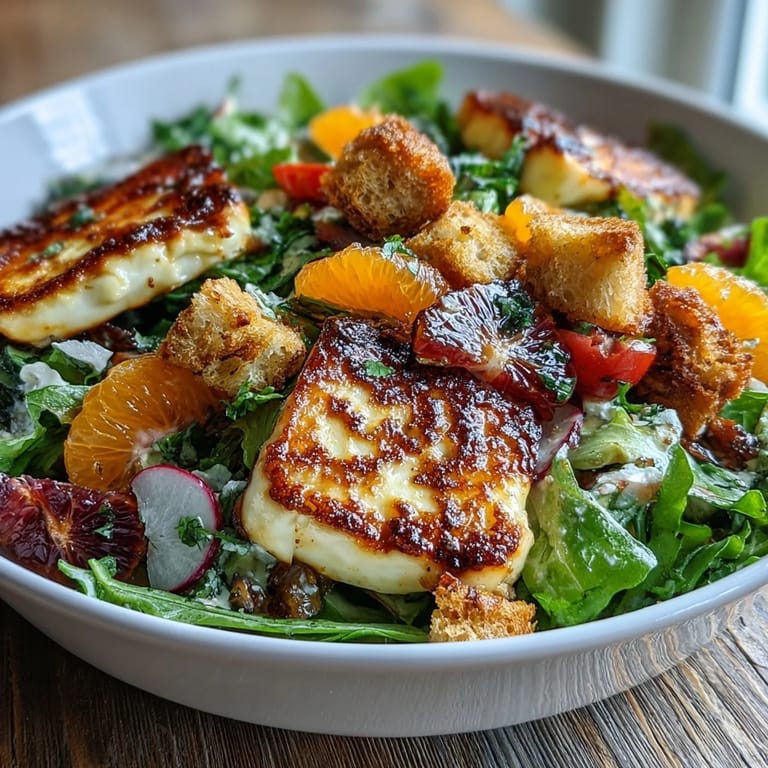
- Add the warm halloumi and cooled croutons to the salad bowl, then drizzle the dressing over everything. Toss gently but thoroughly so every leaf gets coated and the warm cheese mingles with the cool greens.
- Serve immediately while the halloumi is still warm:
- This is non-negotiable—the salad is at its best when the cheese still has some give to it and the croutons haven't started to absorb too much dressing.
 Save to Pinterest
 What I love most about this salad is that it tastes like someone really thought about how to make you happy. There's texture and brightness, warmth and coolness, and enough complexity that you keep tasting new things with each bite. It's the kind of dish that reminds me why I love cooking—not because it's difficult, but because getting the simple things right can feel like a small magic.
Why Blood Oranges Matter
Blood oranges have a deeper, almost wine-like flavor compared to regular oranges, with subtle notes of raspberry underneath. The first time I used them, I was skeptical—the color alone felt like a lot of theater. But once I tasted how they balanced the saltiness of the halloumi without being aggressively sweet, I understood why they're worth seeking out. If you absolutely can't find them, regular oranges work, but the salad loses some of its complexity. Pink grapefruit is a good alternative if you're feeling adventurous.
The Dressing Is Everything
I learned this the hard way by rushing through the dressing one evening, using whatever olive oil was closest and not bothering to whisk properly. The result was a salad that tasted pleasant but forgettable. The next time, I slowed down, used oil I actually cared about, and whisked until the pomegranate molasses had fully dissolved into the oil and lemon juice. The transformation was immediate—suddenly the dressing didn't just coat the greens, it enhanced every other flavor in the bowl. This is where your technique actually matters.
How to Make It Your Own
Once you've made this salad a few times, you'll start seeing variations everywhere. I've added crispy chickpeas for extra protein, scattered pomegranate seeds for visual drama, and tossed in toasted pistachios when I had them on hand. The framework is flexible—the important thing is keeping that interplay between warm and cool, creamy and crisp, rich and bright. Here are the things I always keep in mind:
- Toasted nuts like pistachios or walnuts add crunch and richness if you want the salad to feel more substantial.
- Pomegranate seeds are both beautiful and delicious, giving you pops of tartness and a jewel-like appearance.
- If you're feeding people with dietary restrictions, the halloumi is easily swappable for grilled paneer or even thick slices of grilled peach for a vegetarian twist.
 Save to Pinterest
 This salad has become my answer to the question of what to make when I want to impress without stress. It's a reminder that sometimes the best dishes aren't the most complicated—they're the ones where you listen to what the ingredients are telling you and let them speak.
Recipe FAQs
- → What makes halloumi unique in salads?
Halloumi is a Cypriot cheese that maintains its structure when cooked, developing a golden crust and salty, savory flavor. Unlike other cheeses that melt, halloumi stays firm, making it perfect for frying and adding substantial protein to salads while still being warm and satisfying.
- → Can I prepare the components ahead?
You can prepare the croutons, dressing, and chop vegetables up to a day in advance. Store them separately in airtight containers in the refrigerator. Fry the halloumi just before serving to maintain its signature crispy exterior and warm, soft interior.
- → What if I can't find blood oranges?
Regular oranges or pink grapefruit work beautifully as substitutes. While blood oranges offer a unique raspberry-like undertone and stunning color, navel oranges provide similar sweetness, and grapefruit adds a slightly more bitter, complex note that complements the salty halloumi.
- → Is sumac essential for this dish?
Sumac provides a tart, lemony flavor that's characteristic of Middle Eastern cuisine. If unavailable, substitute with additional lemon juice and a pinch of paprika for color, though the distinct citrusy tang of sumac adds authentic regional flair to the dressing.
- → How do I prevent halloumi from becoming rubbery?
Avoid overcooking—fry just 2-3 minutes per side until golden. Use medium heat to allow the interior to soften while the exterior crisps. Patting the slices dry before cooking helps achieve better browning and prevents excessive moisture during frying.
- → What proteins can I add besides halloumi?
Grilled chicken, lamb kofta, or chickpeas work well as additions or alternatives. For a vegan version, try pan-fried tofu cubes seasoned with sumac, or simply increase the quantity of mixed greens and vegetables for a lighter, plant-based option.